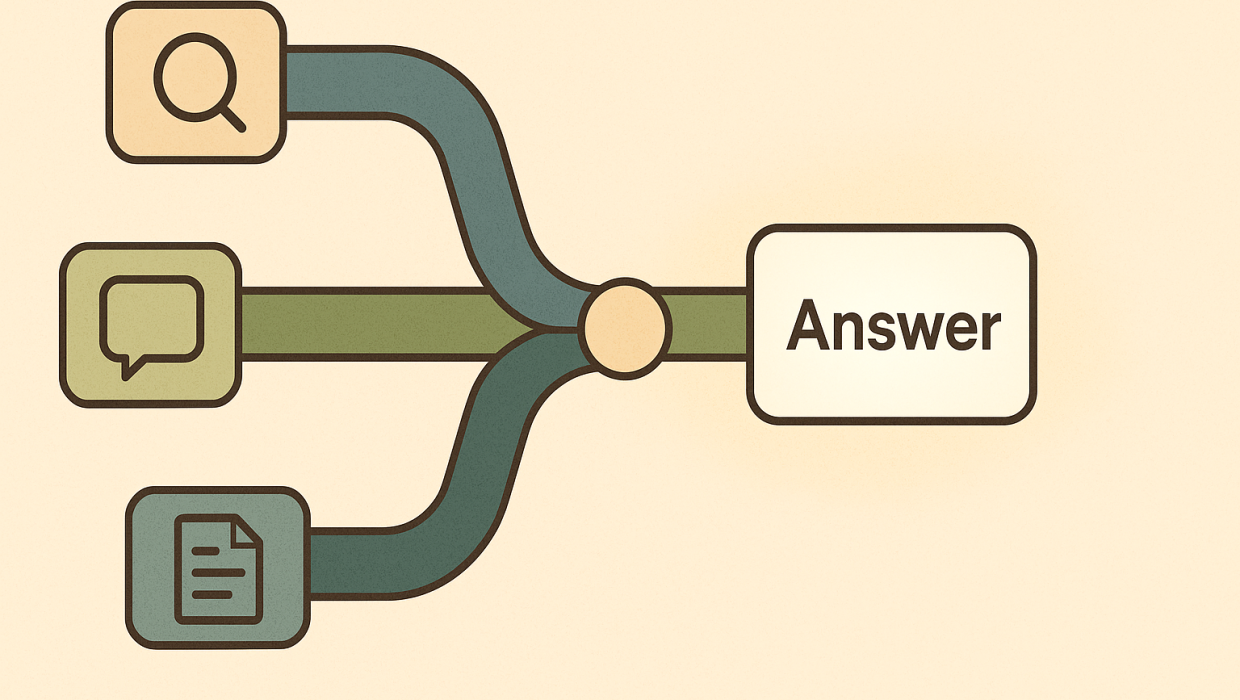
Every enterprise leader has heard the promise: feed a model enough data and it will find patterns no human ever could. That promise is real, but incomplete. The organizations getting durable value from machine learning aren’t the ones who automated the most — they’re the ones who figured out where human insights in machine learning still matter and built accordingly. Data without context is just noise with better math. The real differentiator is knowing which decisions belong to the algorithm and which ones still need a person in the loop.
This distinction sits at the center of how we approach custom software development at Sapiens + Machines. It’s also the reason our philosophy is “Augment, don’t replace” — not as a slogan, but as an actual constraint on how systems get designed.
Why Machine Learning Alone Isn’t Enough for Enterprise Applications
Machine learning models are exceptional at finding statistical patterns across large datasets. What they’re not good at is understanding why those patterns exist, whether they’ll hold up under changing conditions, or whether a pattern is even something the business should act on. A churn-prediction model might flag a customer as low-risk because their historical behavior resembles retained accounts — but it has no way of knowing that account just lost its champion to a competitor, a fact your sales team learned in a hallway conversation yesterday.
This is the gap human insight fills. Domain expertise, institutional memory, and contextual judgment don’t show up in training data, but they shape whether a model’s output is actually useful. Enterprise applications built without that layer tend to be technically impressive and operationally fragile — accurate on paper, wrong in practice, and quietly eroding trust with the teams who are supposed to rely on them.
We see this constantly in case studies across industries: the models that get adopted and sustained are rarely the most sophisticated ones. They’re the ones where someone who understood the business was in the room during design, not just during deployment.
The Diagnosis-Before-Build Approach to Human Insights in Machine Learning
Most vendors start with the model. We start with the decision the model is meant to support. Before a single line of training code gets written, we ask what the human process looks like today, where the friction actually lives, and which parts of that process genuinely benefit from pattern recognition at scale versus which parts require judgment that can’t — and shouldn’t — be automated.
This diagnosis-before-build methodology is what separates systems innovation from technology for its own sake. It’s tempting to reach for machine learning because it’s available and impressive-sounding. It’s harder, and far more valuable, to map the actual workflow, interview the people who live inside it daily, and identify the three or four specific junctures where a model adds real leverage. Skipping that step is how companies end up with expensive tools nobody trusts enough to use.
When we bring this approach into custom software development engagements, the diagnosis phase almost always surfaces something the client didn’t expect — a manual review step that’s doing more work than anyone realized, or a data source that’s more reliable as a human-verified signal than as raw model input.
The real differentiator is knowing which decisions belong to the algorithm and which ones still need a person in the loop.
Where Human Judgment Belongs in the ML Pipeline
Human insight isn’t a single checkpoint bolted onto the end of a pipeline. It shows up at several distinct stages, each with a different job to do.
Data Labeling and Feature Selection
Models learn what you teach them, and teaching starts with labeling and feature selection — both deeply human activities disguised as technical ones. A fraud-detection model is only as good as the definitions of “fraudulent” that went into its training set, and those definitions come from analysts who understand the difference between an unusual transaction and an actually risky one. Get this stage wrong and no amount of downstream tuning fixes it.
Model Validation and Edge Cases
Automated accuracy metrics tell you how a model performs across the distribution it was trained on. They tell you almost nothing about how it behaves on the edge cases that matter most to your business — the unusual client, the seasonal anomaly, the regulatory exception. Human reviewers, particularly subject-matter experts, are essential for stress-testing models against scenarios that rarely appear in historical data but carry outsized consequences when mishandled.
Human-in-the-Loop Feedback Systems
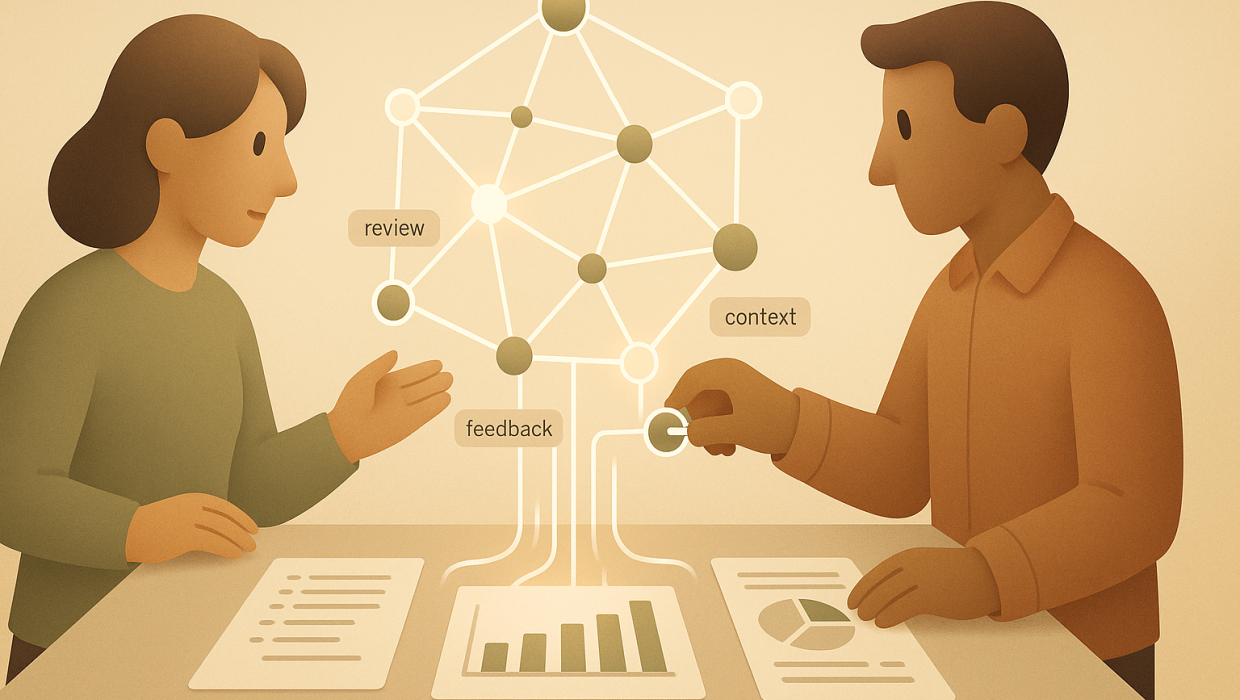
The strongest enterprise applications treat human feedback as an ongoing input, not a one-time audit. When a customer service model misclassifies an inquiry and a human agent corrects it, that correction should flow back into the system as a signal, tightening the model over time. This is where AI automation done well starts to look less like a black box and more like a colleague that gets better with coaching — because in a real sense, it is being coached.
Real-World Applications Across the Enterprise
The pattern holds across functions. In sales operations, a lead-scoring model can rank prospects by conversion likelihood, but a sales director’s read on which accounts are strategically important — even if statistically less likely to close soon — keeps the pipeline aligned with actual business priorities rather than pure probability. In supply chain, demand-forecasting models handle the baseline math beautifully, but they miss the supplier relationship context that a procurement lead carries in their head. In HR, resume-screening tools can surface qualified candidates faster, but bias audits and human review remain non-negotiable for fairness and legal defensibility.
The common thread: technology solutions perform best when they’re explicitly designed to hand judgment calls back to humans at the right moments, rather than trying to engineer judgment out of the system entirely. That’s a design philosophy, not a limitation of the technology — and it’s one worth discussing early with any partner responsible for your systems development roadmap.
If you’re weighing whether your organization is ready to have that conversation, it’s worth starting with a direct one — you can start a conversation with us about where your current systems are creating friction before committing to a specific technical direction.
The Risks of Removing Humans Entirely
Fully automated decision systems carry risks that don’t show up in a demo but surface painfully in production. Models drift as underlying conditions change, and without human oversight, that drift goes unnoticed until outcomes deteriorate. Automated systems also tend to encode and amplify whatever biases existed in historical data, and only human review catches that before it becomes a legal or reputational problem. There’s also a trust cost: employees who don’t understand or believe in a system’s outputs will quietly work around it, undermining the investment regardless of how technically sound the model is.
None of this is an argument against machine learning. It’s an argument for building it with the right guardrails from the start, supported by solid IT infrastructure and integration practices that make human review a built-in step rather than an afterthought bolted on after something goes wrong.
Building Systems That Augment, Not Replace
The most effective enterprise applications we design don’t ask “can this be automated?” as the first question. They ask “what does the person doing this job wish they had more of — time, information, or confidence?” Sometimes the answer points toward automation. Often it points toward better-surfaced information that still requires human judgment to act on.
This is the practical meaning behind augmenting rather than replacing: build systems that make your people faster and more informed, not systems designed to make them unnecessary. It’s a subtler engineering challenge than pure automation, and it requires genuine collaboration between technical teams and the people who understand the business context — which is exactly why our own technology approach treats human insight as a core design input, not a compliance checkbox added at the end.
Getting the Balance Right
There’s no universal formula for how much human involvement any given system needs — that balance depends on the stakes of the decision, the quality and stability of available data, and how much your team already trusts automated recommendations. What’s consistent is the need to diagnose that balance deliberately rather than defaulting to either extreme. Full automation without oversight is risky. Full manual process with no augmentation leaves real efficiency on the table.
Getting this right takes a partner who understands both the technical mechanics of machine learning and the organizational realities of how your teams actually work — which is a big part of what we do at Sapiens + Machines. If you’re evaluating how to bring more intelligence into your internal tools without losing the judgment that makes your business work, we’d welcome the conversation.
Ready to Build ML Systems That Learn From Your People, Not Just Your Data?
Start a conversation with Sapiens + Machines to discuss your goals, challenges, and next steps.