Most B2B companies don’t have a lead generation problem. They have a lead routing problem — and it’s costing them deals they already paid to win. A prospect fills out a form, downloads a whitepaper, or books a demo, and then sits in a queue while someone manually checks territory assignments, deal size, or which rep is “up next.” By the time a human replies, the prospect has moved on. This is the quiet failure point in otherwise well-funded pipelines, and it’s exactly why lead routing techniques deserve as much strategic attention as the campaigns that generate the leads in the first place.
This is the quiet failure point in otherwise well-funded pipelines, and it’s exactly why lead routing techniques deserve as much strategic attention as the campaigns that generate the leads in the first place.
Getting routing right isn’t about buying another tool. It’s about designing the logic — the rules, the data, the handoffs — that determine what happens in the seconds after a prospect raises their hand. Done well, it turns marketing spend into revenue faster. Done poorly, it becomes an invisible tax on every campaign you run.
Why Lead Routing Is the Hidden Bottleneck in B2B Funnels
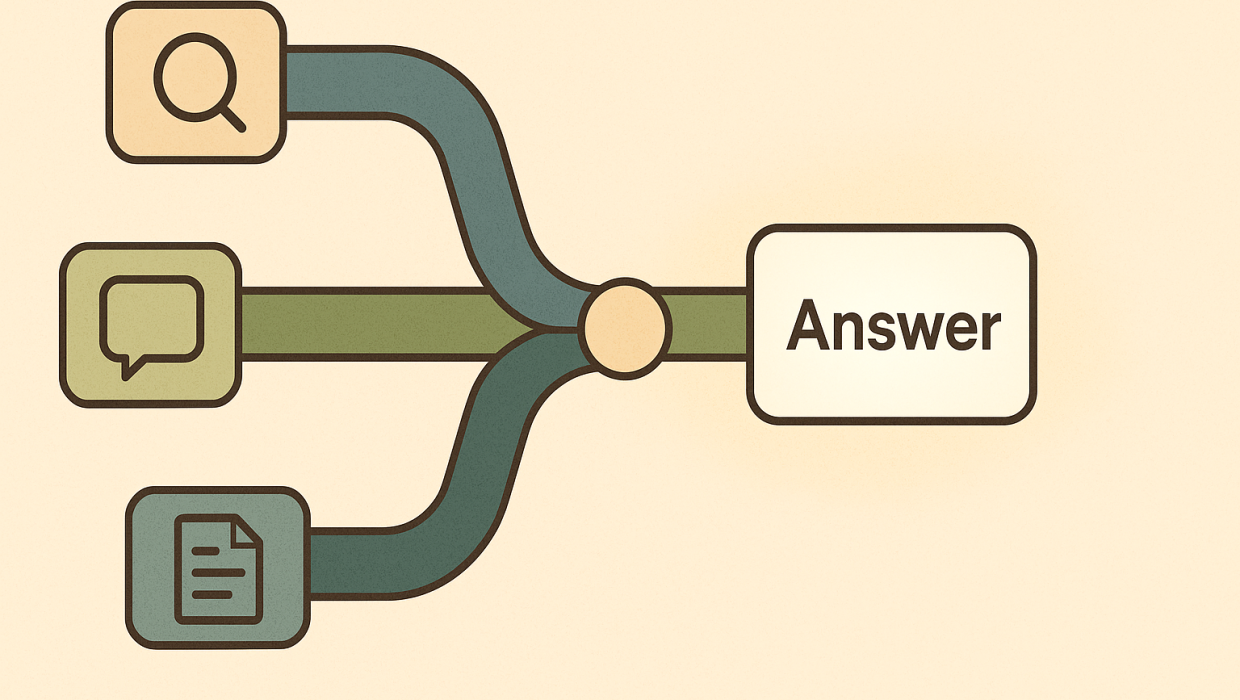
Speed-to-lead is one of the most reliable predictors of conversion in B2B sales, yet it’s also one of the most neglected. A lead that waits an hour for a response converts at a meaningfully lower rate than one contacted within five minutes, and the gap widens with every additional hour of delay. The irony is that most organizations have already invested in demand generation, content, and paid channels — but the system that decides what happens after the click is often duct-taped together from spreadsheets, email alerts, and tribal knowledge about who “owns” which account.
This is where a properly engineered lead routing system earns its keep. It’s not a nice-to-have layered on top of your funnel — it’s the connective tissue between marketing’s work and sales’ ability to act on it.
The Anatomy of a Modern Lead Routing System
Before any routing logic can work, two things have to be true: the lead has to be qualified, and the data behind it has to be trustworthy. Skip either step and you’re just routing noise faster.
Automated Lead Qualification Before Routing
Automated lead qualification is the filter that decides whether a lead is worth routing at all, and how urgently. This typically combines firmographic fit (company size, industry, tech stack), behavioral signals (pages visited, content consumed, demo requests), and explicit intent (form fields, chatbot responses). The goal isn’t to replace a rep’s judgment — it’s to make sure that judgment is applied to the right ten leads instead of the wrong hundred. Scoring models should be transparent enough that sales trusts them; a “black box” score that reps quietly ignore defeats the entire purpose.
CRM Integration as the Nervous System
CRM integration is what makes routing operational rather than theoretical. Your CRM needs to receive enriched, scored, deduplicated lead data in real time — not as an overnight batch job — and it needs to trigger the right workflow the moment a lead crosses a threshold. This means clean field mapping between your marketing automation platform, your CRM, and any enrichment tools in between. When these systems don’t talk cleanly, routing rules break silently, and leads fall into generic queues where they age out unnoticed. We’ve written more about how these systems connect under the hood on our automation services page, since much of this integration work overlaps with broader workflow automation.
Advanced Lead Routing Techniques That Actually Move the Needle
Once qualification and integration are solid, the routing logic itself is where the real gains show up.
Rules-Based Routing vs. Predictive Routing
Rules-based routing — by territory, industry vertical, or company size — is the foundation almost every B2B team starts with, and it’s still the right starting point for most organizations. But it has limits: it treats all leads within a rule as equal, when they rarely are. Predictive routing layers in historical conversion data to route leads based on which rep or team has actually closed similar deals before, not just who’s next in a rotation. This is a meaningful upgrade, but it only works if there’s enough historical deal data to train against — which is why we always assess data maturity before recommending it.
Territory, Tiering, and Round-Robin Logic
Most mature systems blend multiple logics: territory rules handle geography, tiering logic prioritizes enterprise accounts for senior reps, and round-robin distribution keeps volume balanced among the rest of the team. The trick is sequencing these correctly — territory first, then tier, then round-robin as the tiebreaker — so leads don’t get caught in conflicting rules or, worse, routed to nobody because two rules contradict each other.
Real-Time Enrichment and Scoring
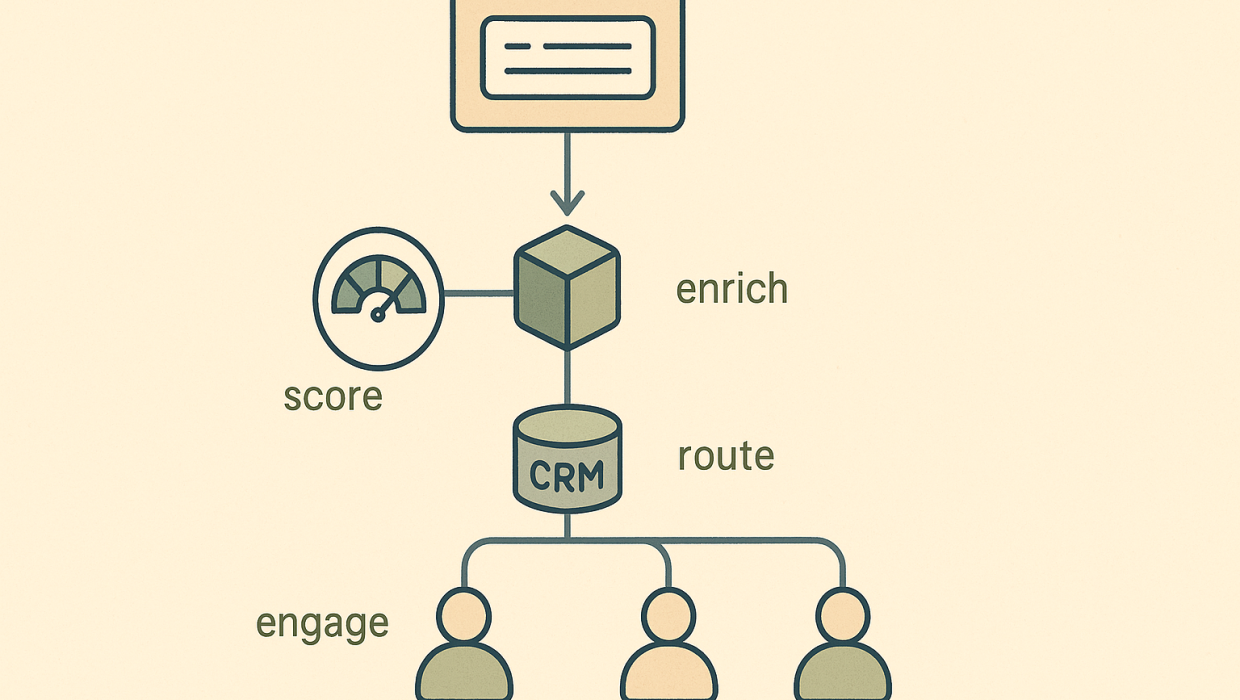
A lead that looks unremarkable on submission can look very different once enriched with firmographic and technographic data. Real-time enrichment — pulling in company size, funding stage, or current tech stack the instant a form is submitted — allows routing decisions to reflect the full picture, not just what the prospect typed into a form field. This is also where automated lead qualification and routing start to blur together: the enrichment data feeds the score, and the score determines the route.
Prospect Engagement Doesn’t End at Handoff
Routing a lead correctly is only half the job. What happens in the next interaction determines whether that routing decision pays off. Prospect engagement needs to be immediate, relevant, and consistent with whatever the lead just did — a demo request should trigger a very different follow-up than a whitepaper download, even if both land with the same rep.
This is also where a lot of otherwise well-designed systems quietly fail: the routing logic is sophisticated, but the follow-up sequence is generic. A prospect who just researched a specific product line shouldn’t get a boilerplate “thanks for your interest” email. Engagement should reflect context, and that context has to travel with the lead through every handoff — from form, to CRM, to rep, to first outreach.
If your current stack can technically route a lead but can’t preserve that context along the way, it may be worth a broader look at how your systems are wired together. That’s a conversation worth having before you invest in more top-of-funnel spend — you can start that conversation with our team whenever it makes sense for where you are.
Funnel Strategy: Aligning Routing With the Buyer Journey
Lead routing techniques only work in service of a coherent funnel strategy. Routing logic should mirror how your buyers actually move — not how your org chart is structured. If your funnel has distinct stages for education, evaluation, and procurement, your routing rules should recognize which stage a prospect is in and route accordingly, rather than treating every inbound lead as equally sales-ready.
This is also where diagnosis matters more than tooling. We consistently find that companies buy routing software before they’ve mapped their actual funnel stages, which means the software ends up automating a broken process faster. A funnel and routing strategy built around your real buyer journey — not a generic template — is what makes the rest of the system worth building.
Common Pitfalls We See in the Field
A few patterns show up repeatedly when we audit existing routing systems:
Stale scoring models. Lead scores built two years ago rarely reflect current buyer behavior, product positioning, or ideal customer profile. Scoring needs periodic recalibration, not a set-it-and-forget-it setup.
Orphaned leads. Leads that don’t cleanly match any routing rule often fall into a default queue that nobody actively owns. Over time, this queue becomes a graveyard of otherwise viable prospects.
Disconnected systems. Marketing automation, CRM, and enrichment tools that don’t sync in real time create routing delays measured in hours, not seconds — which defeats the entire purpose of automation. Strong custom integration work often resolves this more durably than adding another point solution.
Rules without ownership. Routing logic that isn’t reviewed quarterly by both sales and marketing tends to drift out of alignment with how the business actually sells.
Diagnosis Before Build: Getting Routing Right the First Time
It’s tempting to treat lead routing as a software purchase — pick a tool, configure some rules, move on. But the systems that actually perform are the ones built on a clear-eyed diagnosis of the current funnel, the data quality feeding it, and the sales motion it needs to support. That diagnosis often surfaces problems that no routing tool alone can fix — a scoring model with no predictive value, a CRM with duplicate and conflicting records, or a sales team that doesn’t trust the leads it’s handed.
We’ve seen this play out across industries in our own client work, and the patterns are consistent enough that they’re documented in our case studies: the highest-performing routing systems are the ones built after an honest look at what’s actually broken, not the ones assembled from a vendor’s best-practices template.
Bringing It Together
Advanced lead routing techniques aren’t a single feature you switch on — they’re the sum of qualification logic, clean CRM integration, contextual engagement, and a funnel strategy that reflects how your buyers actually behave. Get the sequencing right, and marketing’s best leads reach the right person while they’re still warm. Get it wrong, and even a brilliant campaign quietly leaks value at the exact moment it should be converting.
If your current setup feels more like a patchwork than a system, that’s usually a sign the underlying architecture needs attention before another tool gets added on top. It’s worth understanding what technology stack actually supports this kind of routing before committing to a fix.
RELATED QUESTIONS
What is lead routing and why does it matter for B2B sales?
Lead routing is the process of automatically directing inbound prospects to the correct sales rep, team, or workflow based on rules like territory, company size, or engagement behavior. It matters because delayed or incorrect routing directly reduces conversion rates — prospects contacted within minutes convert at significantly higher rates than those who wait hours or days for a response.
How does CRM integration improve lead routing?
CRM integration ensures that enriched, scored lead data flows into your system in real time rather than in delayed batches, allowing routing rules to trigger immediately when a lead qualifies. Without clean integration, routing rules often fail silently, causing qualified leads to land in generic queues where they go unnoticed for hours or days.
What’s the difference between rules-based and predictive lead routing?
Rules-based routing assigns leads according to fixed criteria like territory, industry, or company size, treating every lead within a rule as equal. Predictive routing uses historical conversion data to route leads to the rep or team most likely to close that specific type of deal, which requires enough historical data to be reliable but generally outperforms static rules once in place.
What is automated lead qualification and how does it work with routing?
Automated lead qualification uses firmographic data, behavioral signals, and explicit intent to score a lead’s fit and readiness before it’s routed anywhere. This score then determines which routing rule applies, ensuring that sales teams spend their time on well-matched, sales-ready prospects instead of manually sorting through every inbound lead.
Why do lead routing systems fail even after a company invests in the right tools?
Lead routing systems commonly fail because companies buy software before mapping their actual funnel stages and buyer journey, so the tool automates a broken process rather than fixing it. Other frequent causes include stale scoring models, disconnected marketing and CRM systems, and routing rules that no one reviews or updates as the business changes.
Ready to Fix How Your Leads Get Routed?
Start a conversation with Sapiens + Machines to discuss your goals, challenges, and next steps.