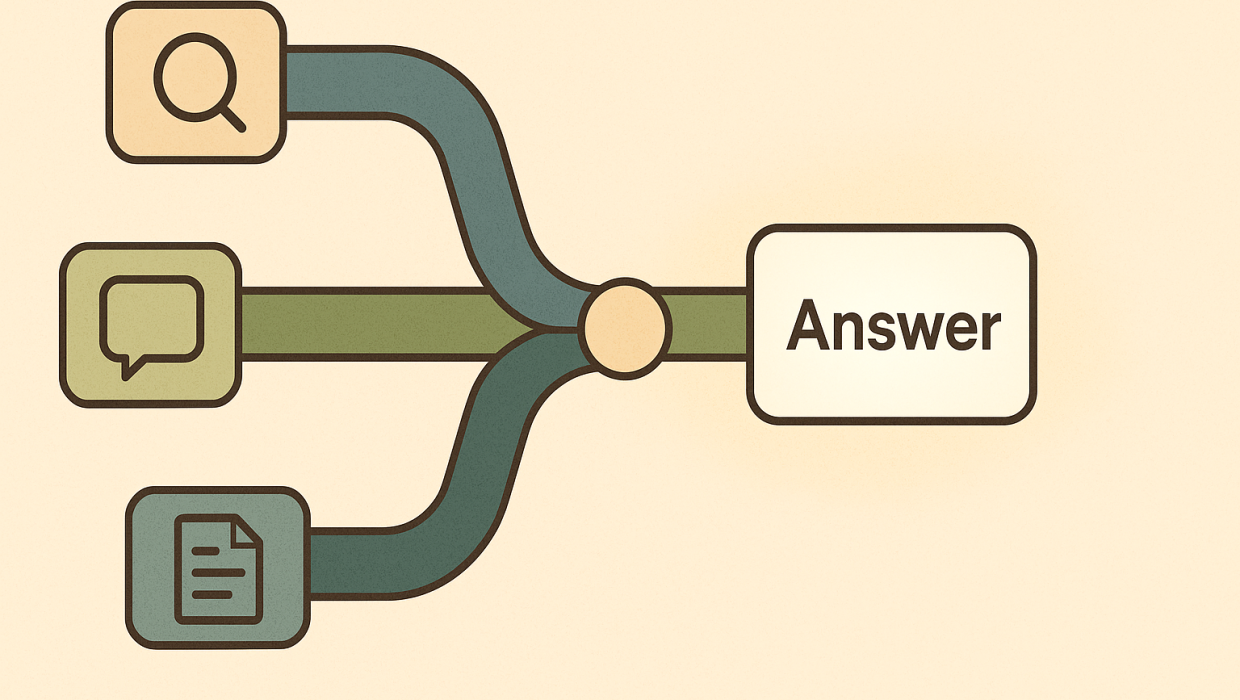
Most companies don’t have a workflow problem. They have a coordination problem wearing a workflow costume. Tasks get automated in isolated pockets — a chatbot here, a Zapier trigger there — while the connective tissue between systems stays manual, brittle, and invisible until something breaks. AI-driven process orchestration is the discipline that fixes this: it treats an entire workflow, end to end, as a single intelligent system that can sense conditions, make routing decisions, and adapt in real time, rather than a chain of disconnected automations hoping to line up.
This distinction matters more than it sounds like it should. Businesses that automate tasks get incremental relief. Businesses that orchestrate processes get compounding returns — because the value isn’t in any single step running faster, it’s in the entire system becoming coherent.
What Makes Orchestration Different from Automation
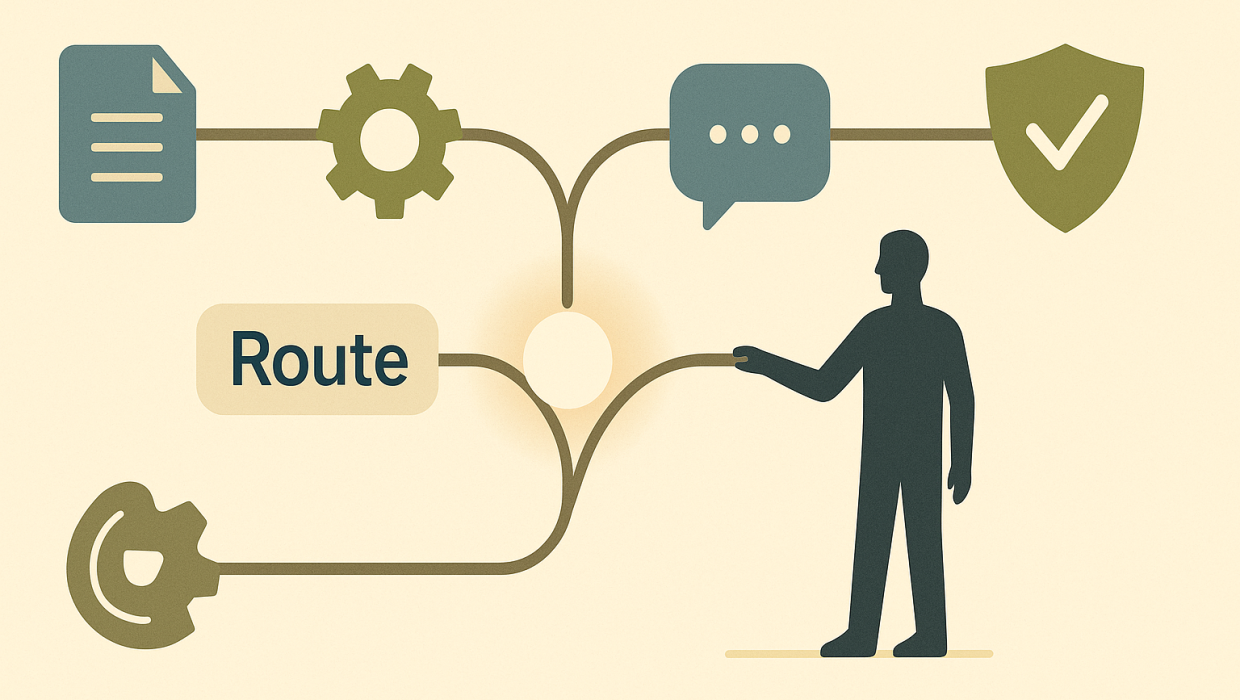
Automation executes a rule: when X happens, do Y. It’s deterministic, narrow, and — critically — blind to context outside its own lane. Orchestration is the layer above that. It watches multiple automated (and manual) steps at once, understands the state of the whole process, and makes decisions about sequencing, exceptions, and escalation based on that broader context.
Think of a loan application, a customer support ticket, or a content production pipeline. Each involves several systems — a CRM, a document processor, a communications platform, maybe a human reviewer — that all need to hand off to each other cleanly. Traditional automation might handle each handoff individually. AI-driven process orchestration monitors the entire chain, flags when a step is stalling, reroutes work when a bottleneck appears, and decides which cases genuinely need a human expert versus which can proceed on their own. This is the same philosophy we bring to every AI integration and automation engagement we run: the goal isn’t fewer humans in the loop, it’s smarter placement of the humans who remain.
A Practical Distinction
If you’re unsure whether you have automation or orchestration today, ask this: when something goes wrong in the middle of a process, does a person find out because a dashboard tells them proactively, or because a customer complains three days later? The former is orchestration. The latter is automation with gaps.
If you’re unsure whether you have automation or orchestration today, ask this: when something goes wrong in the middle of a process, does a person find out because a dashboard tells them proactively, or because a customer complains three days later?
Why Diagnosis Has to Come Before the Build
The temptation in AI and automation projects is to start with tools — pick a platform, wire up some agents, call it done. This is backwards, and it’s the single most common reason orchestration initiatives underdeliver. You cannot orchestrate a process you haven’t mapped, and you cannot map a process without understanding where the actual friction lives, not where people assume it lives.
A proper diagnosis phase involves shadowing the real workflow (not the org chart version of it), identifying every handoff point, and quantifying where time and accuracy are actually being lost. Frequently, the answer is surprising. A marketing director might assume the bottleneck is content production speed, when the real drag is a three-day approval cycle buried in email threads. A CTO might assume it’s engineering capacity, when it’s actually duplicate data entry across four disconnected tools. Orchestration built on top of the wrong diagnosis just automates the wrong problem faster.
This is why we treat diagnosis as a distinct, non-negotiable phase rather than a sales formality. It’s also why the strongest orchestration work tends to sit close to custom software and systems work — because sometimes the honest finding is that no amount of orchestration will fix a workflow sitting on top of software that was never built to support it.
Where Orchestration Actually Pays Off
Abstract principles are easy to nod along to. The value becomes obvious in specifics.
Lead Handling and Qualification
Most B2B pipelines lose deals not from a lack of leads but from delay and inconsistency in how leads move between marketing, sales, and fulfillment. An orchestrated system can score incoming leads, route hot ones to the right rep instantly, trigger nurture sequences for the rest, and flag stalled deals for manager attention — all while a human still owns every actual conversation and decision that matters. The technology handles velocity and visibility; people handle judgment and relationships.
Document and Data-Heavy Operations
Contracts, invoices, compliance filings, onboarding paperwork — these are workflows built almost entirely out of handoffs. Orchestration here means documents are classified, extracted, and routed automatically, exceptions are surfaced to a reviewer with full context instead of a blank inbox, and nothing sits untouched because someone forgot to check a folder.
Cross-System Operations
Any process that touches more than two platforms — a CRM, a billing system, a support desk, a marketing tool — is a prime orchestration candidate, because the failure points are almost always in the gaps between systems, not within any single one. This is where AI-driven orchestration and workflow automation tends to produce the fastest, most visible wins, precisely because those gaps are usually costing far more in hidden labor than anyone has bothered to measure.
The Architecture Behind Intelligent Systems
Orchestration platforms generally sit on three layers, and understanding them helps decision-makers ask better questions of any partner or vendor.
The data layer is the foundation — clean, connected, real-time information flowing between systems. If your CRM data is stale or your systems don’t talk to each other via reliable APIs, orchestration has nothing solid to reason over. Integration work here often overlaps with broader IT infrastructure decisions, since orchestration is only as reliable as the systems underneath it.
The decision layer is where AI models, business rules, and predictive scoring live — the logic that determines what should happen next given the current state of a process. This is the layer people usually mean when they say “AI,” but it’s the smallest and least important of the three without the other two supporting it.
The action layer is where decisions actually execute — triggering a workflow step, notifying a human, updating a record, generating a document. Good orchestration design keeps this layer transparent, so every automated action is traceable and reversible, not a black box that quietly did something nobody can explain later.
Common Failure Points to Watch For
Orchestration projects tend to fail in predictable ways, and most of them are avoidable with the right design discipline upfront.
Over-automating judgment calls. Some decisions genuinely benefit from a model’s speed and consistency. Others — nuanced client situations, high-stakes exceptions, anything with reputational risk — need a human’s context and accountability. Systems that don’t clearly separate these two categories tend to erode trust fast, because one bad automated decision undoes months of goodwill.
Orchestrating a broken process. As covered above, layering intelligence on top of a fundamentally inefficient workflow just produces faster inefficiency. Diagnosis has to come first, every time.
Treating orchestration as a one-time build. Processes change — new products, new regulations, new team structures. An orchestration system needs monitoring and iteration built into its lifecycle, not a one-and-done deployment that quietly drifts out of alignment with how the business actually operates six months later.
A Practical Path Toward Orchestration
You don’t need to orchestrate everything at once, and you shouldn’t try. The most durable approach is to pick one high-friction, high-volume process — something with clear handoffs and measurable outcomes — and build orchestration around it end to end before expanding. Prove the model with a contained scope, measure the actual time and error reduction, and use that evidence to justify the next expansion.
This is also where it’s worth being honest about what “intelligent systems” really means in practice. It’s not a single AI tool bolted onto an existing process. It’s a deliberate architecture — data, decisions, and actions working together — designed around how your specific business actually operates, which is exactly why our own methodology starts with a structural review before a single line of automation gets built. You can see how that plays out concretely in some of our recent client work, where the diagnosis phase changed the entire scope of what got built.
If any of this sounds like your organization — automation in patches, visibility in gaps, a team that’s tired of manually stitching systems together — the most useful next step isn’t picking a tool. It’s mapping the actual process first. That’s a conversation worth having before a build begins, and it’s one we’d genuinely welcome; you can start that conversation here whenever you’re ready to look at your workflows honestly.
Where This Is Heading
The next phase of process orchestration isn’t more automation — it’s tighter feedback loops between systems and the people who oversee them. As models get better at surfacing exceptions instead of just executing rules, the human role shifts from doing repetitive work to reviewing judgment calls the system correctly identified as needing a human. That’s the version of intelligent systems worth building toward: not fewer people in the process, but people spending their time exactly where their expertise actually matters. You can explore how we think about the broader technology stack behind this shift on our technology overview page.
Workflow dynamics aren’t optimized by adding more tools. They’re optimized by understanding, precisely, where a process breaks down — and then building intelligence around that specific truth.
RELATED QUESTIONS
What is the difference between workflow automation and AI-driven process orchestration?
Workflow automation handles a single task or rule — when X happens, do Y — in isolation. AI-driven process orchestration coordinates an entire multi-step process across systems, monitoring overall state, rerouting work around bottlenecks, and deciding which cases need human review. Automation optimizes individual steps; orchestration optimizes the whole system those steps belong to.
How do I know if my company needs process orchestration instead of more point automations?
If problems in your workflow are typically discovered by a customer complaint or a manager noticing something stalled, rather than by a system flagging it proactively, you likely have automation gaps rather than true orchestration. Another sign is when work regularly stalls at handoffs between two or more systems or teams, since that’s exactly the kind of cross-system friction orchestration is designed to solve.
Why is diagnosing a workflow important before automating or orchestrating it?
Building automation or orchestration on top of an undiagnosed workflow risks automating the wrong problem, making an inefficient process run faster without fixing what’s actually causing delays or errors. A proper diagnosis maps real handoff points and quantifies where time and accuracy are genuinely being lost, which is often different from where teams assume the friction lives. Skipping this step is the most common reason orchestration projects underdeliver.
Does AI-driven process orchestration replace human decision-making?
No — well-designed orchestration is built to separate decisions that benefit from a model’s speed and consistency from decisions that require human context and accountability, such as nuanced client situations or high-stakes exceptions. The goal is to route routine, high-volume decisions to automated systems while ensuring human experts review the cases that genuinely need judgment. Systems that blur this distinction tend to erode trust quickly.
What kinds of business processes benefit most from AI-driven orchestration?
Processes that involve multiple systems and frequent handoffs benefit most, since failure points typically occur in the gaps between platforms rather than within any single one. Common examples include lead qualification and routing, document- and compliance-heavy operations like contracts and invoices, and any cross-departmental workflow touching a CRM, billing system, and support desk simultaneously. These are high-volume, high-friction processes where orchestration produces measurable, fast returns.
Ready to Orchestrate Your Workflows Instead of Just Automating Them?
Start a conversation with Sapiens + Machines to discuss your goals, challenges, and next steps.