Most technology leaders don’t notice their custom software architecture has become a liability until it’s already slowing everything down. A new integration takes three sprints instead of three days. A promising AI pilot stalls because the data layer can’t support it. A marketing team asks for a small feature and engineering flinches. If any of that sounds familiar, the problem probably isn’t your team — it’s the foundation they’re building on.
Custom software architecture is supposed to be a competitive advantage: a system tailored to how your business actually operates, built to flex as you grow. But architecture decisions made five or ten years ago — often reasonable at the time — have a way of calcifying into constraints. What was once a smart, lean build becomes the reason your best ideas take twice as long to ship as your competitors’.
The Hidden Cost of Legacy Thinking in Custom Software Architecture
Architecture debt doesn’t announce itself. It shows up as a string of small frustrations that leadership attributes to “process issues” or “resourcing.” Engineers spend more time working around the system than building on top of it. Every new feature request comes back with a longer timeline than it should. The roadmap starts optimizing for what the system can tolerate rather than what the market actually needs.
This is the quiet tax that under-engineered or over-engineered systems place on software innovation. It’s rarely a single catastrophic failure — it’s death by a thousand workarounds. And because the symptoms look like management or talent problems, companies often respond by hiring more developers or switching project management tools, when the real issue is structural.
The financial impact compounds over time. Slower release cycles mean slower response to market shifts. Fragile integrations mean every new tool — a CRM upgrade, a marketing automation platform, an AI layer — requires custom glue code that has to be maintained forever. Enterprise innovation doesn’t fail because people lack good ideas; it fails because the underlying systems can’t absorb them fast enough to matter.
Enterprise innovation doesn’t fail because people lack good ideas; it fails because the underlying systems can’t absorb them fast enough to matter.
Signs Your Architecture Is Holding You Back
Not every organization needs a rebuild. But certain patterns are reliable indicators that architecture, not ambition, is the bottleneck.
Brittle Integrations
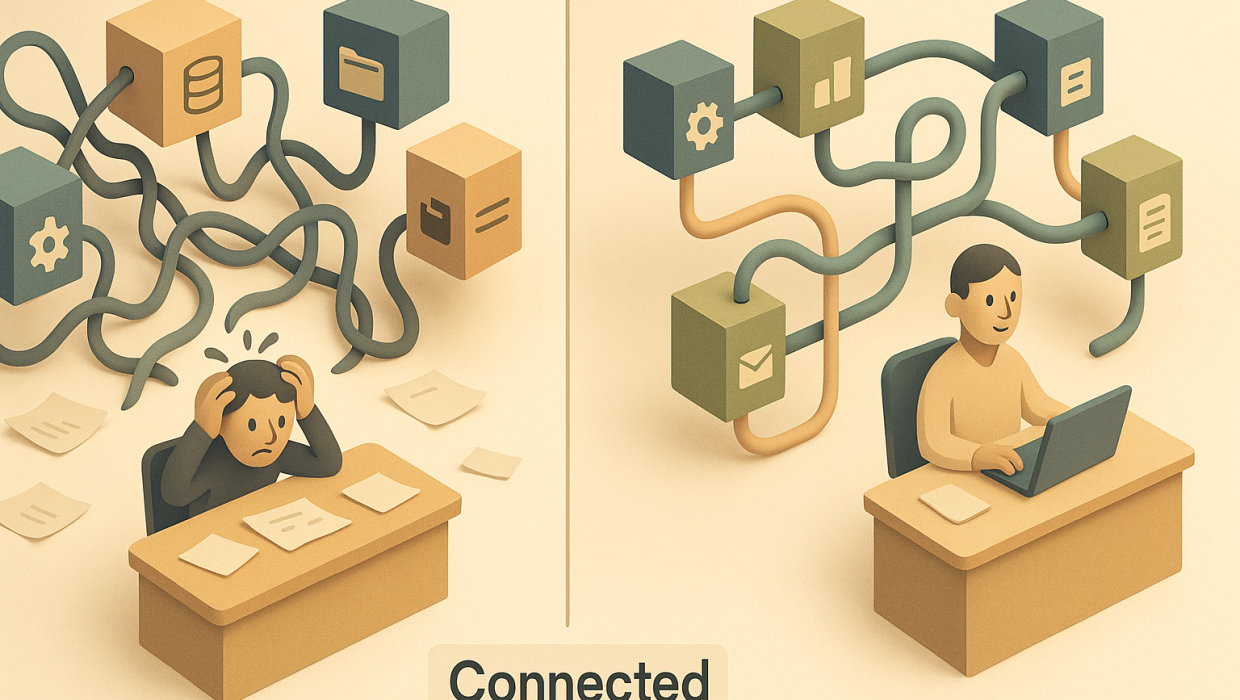
If connecting a new tool to your existing stack requires weeks of custom scripting and constant babysitting, your architecture likely wasn’t designed with extensibility in mind. Modern systems should expose clean, well-documented interfaces that let new tools plug in without threatening the stability of everything else. When every integration feels like surgery, that’s a structural signal, not a staffing one.
Slow Time-to-Market
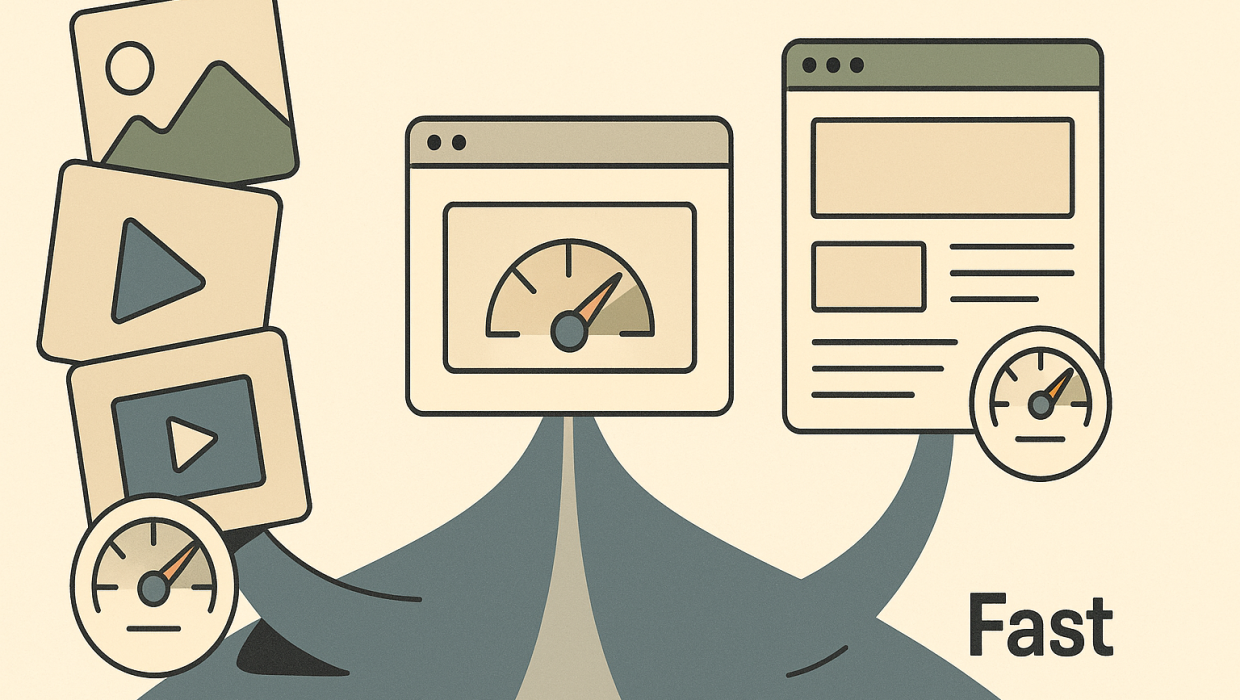
Teams inside a healthy architecture can ship a meaningful feature in weeks. Teams working around a strained one measure the same work in quarters — and much of that time isn’t spent building the feature itself, it’s spent navigating dependencies, working around fragile modules, and re-testing things that shouldn’t have been affected in the first place.
Innovation Theater
This is the most dangerous sign because it’s the easiest to miss. Companies run pilots, launch “innovation labs,” and experiment with AI tools — but nothing makes it into production because the core systems can’t support what the pilot proved was possible. The energy is real. The output isn’t. This is often where teams discover they need dedicated AI and automation capability built directly into their architecture, rather than bolted on as an afterthought.
Why Diagnosis Must Come Before Rebuild
The instinct, once these symptoms are visible, is often to propose a full rip-and-replace. That instinct is usually wrong, and it’s expensive to be wrong about. A ground-up rebuild without a clear diagnosis tends to replicate the same structural mistakes in new technology — just with a bigger price tag and a longer timeline.
The more disciplined approach is diagnostic first: mapping the actual system, understanding which components are genuinely constraining growth versus which are simply unfamiliar or undocumented, and identifying where the real leverage points are. Sometimes the fix is targeted — decoupling one brittle module, introducing an API layer, modernizing a single data pipeline. Sometimes it is more extensive. But you can’t know which until you’ve actually looked.
This is the philosophy behind how we approach every engagement in custom software architecture work: diagnose before you build. It’s a discipline borrowed from clinical practice, and it applies just as well to enterprise systems as it does to anything else — treating symptoms without a diagnosis tends to make things worse, not better.
What Modern, Adaptive Architecture Looks Like
Good architecture isn’t defined by which framework or cloud provider you use. It’s defined by how gracefully the system absorbs change. A few characteristics separate architecture that enables software innovation from architecture that quietly resists it.
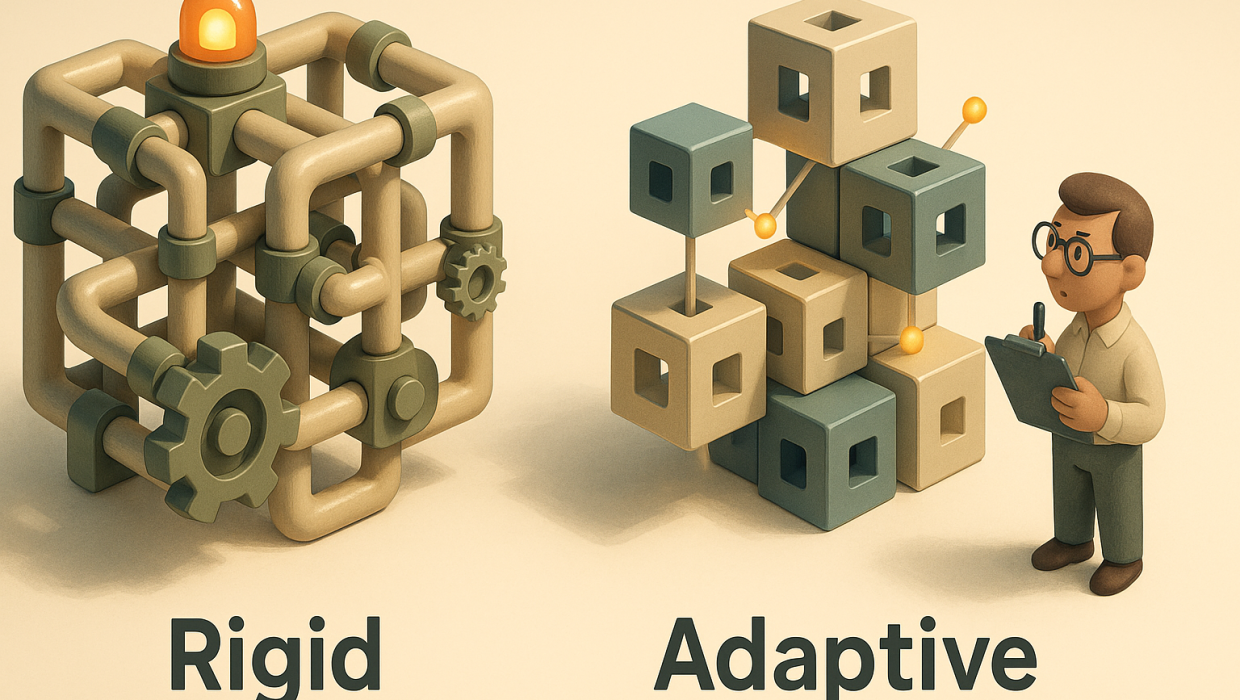
Modularity over monoliths. Systems built as a collection of well-bounded services — rather than one tightly coupled application — allow teams to update, replace, or scale individual pieces without destabilizing the whole. This is what makes it possible to adopt new technology solutions incrementally instead of betting the company on a single, high-risk migration.
Data as a shared asset, not a siloed byproduct. In brittle systems, data lives wherever it was first collected, and every team builds its own export process to get at it. In adaptive systems, data is structured to be accessible, governed, and reusable — which is exactly what’s required to support predictive scoring, reporting, or AI-assisted decision-making down the line.
Infrastructure that scales without babysitting. Reliable uptime, sensible backup and recovery practices, and infrastructure that doesn’t require a full-time firefighting team are the unglamorous foundation everything else depends on. Organizations that treat this as an afterthought inevitably pay for it later in outages and technical debt — which is why solid IT infrastructure planning belongs in the same conversation as architecture, not a separate one.
Interfaces designed for what’s next, not just what’s now. APIs and integration points should be built with the assumption that the business will need to connect to tools that don’t exist yet. That’s a hard thing to plan for perfectly, but it’s the difference between a system that welcomes new capability and one that fights it.
The Human Element: Augmenting Judgment, Not Replacing It
There’s a temptation, especially with AI tools everywhere now, to treat architecture modernization as purely a technology problem — swap in smarter systems and the organization gets smarter by extension. It doesn’t work that way. The best architecture in the world still depends on the humans operating it to make good decisions, and the goal of any technology investment should be to make those decisions faster and better informed, not to remove the people making them.
That means building systems that surface the right information at the right moment for the people who understand the business best — engineers, marketers, operators — rather than systems that try to automate judgment out of the process entirely. We’ve seen this play out concretely across client work; a few examples are documented in our case studies, where targeted architectural changes unlocked capability that had been sitting dormant for years, simply because the system finally got out of the team’s way.
Getting Started: From Audit to Action
If parts of this article felt uncomfortably familiar, the next step isn’t a redesign kickoff meeting. It’s an honest audit. That means bringing in a perspective that isn’t emotionally invested in the original architectural decisions, mapping the system as it actually functions today (not as it was documented three reorganizations ago), and identifying the two or three structural issues doing the most damage to velocity.
From there, prioritization matters more than ambition. Fix the constraint that’s actually blocking software innovation before chasing the one that’s merely inconvenient. Sequence changes so the business keeps running while the architecture improves underneath it. And build in checkpoints to validate that each change is actually delivering the flexibility it promised, rather than assuming the plan was right and moving on.
Our software solutions team approaches every engagement this way — diagnostic first, build second, always with an eye toward what the organization needs to be capable of eighteen months from now, not just today. If your team is feeling the friction described here, it’s worth a conversation before it’s worth a proposal. You can start a conversation with us to talk through what’s actually happening inside your systems.
The Real Test of Good Architecture
The organizations that out-innovate their competitors over the next several years won’t necessarily have the most advanced technology stack. They’ll have the architecture that lets good ideas move from concept to production the fastest, with the least friction and the fewest workarounds. That’s a structural advantage, and structural advantages compound.
If your custom software architecture is making your team’s job harder instead of easier, that’s not a talent problem or a process problem. It’s a signal worth listening to — and one that gets more expensive to ignore the longer it goes unaddressed.
RELATED QUESTIONS
How do I know if my custom software architecture is stifling innovation?
Common warning signs include integrations that take weeks instead of days, feature requests that consistently take longer than expected, and pilot projects or AI experiments that never make it into production. If your roadmap is being shaped by what the system can tolerate rather than what the business actually needs, that’s a strong signal the architecture itself is the bottleneck.
Should I rebuild my entire software system if it feels outdated?
Not necessarily, and jumping straight to a full rebuild is one of the most expensive mistakes companies make. A diagnostic audit almost always reveals that only a few structural components are actually causing the friction, and targeted fixes to those areas are often far more effective and less risky than starting over.
What does “diagnosis before build” mean in software development?
Diagnosis before build means thoroughly mapping and understanding how a system actually functions today before proposing any new development work, rather than jumping straight into a redesign based on assumptions. It ensures that resources go toward fixing the real constraints limiting growth, instead of replicating old problems in new technology.
How does software architecture affect a company’s ability to adopt AI?
AI tools depend heavily on clean, accessible, well-structured data and flexible integration points to function effectively inside a business. If a company’s architecture keeps data siloed or requires custom workarounds for every new connection, AI pilots tend to stall before they ever reach production, regardless of how promising the underlying model is.
What are the signs a business needs to modernize its internal systems?
Businesses typically need to modernize when engineering teams spend more time working around the system than building new capability on top of it, when infrastructure requires constant manual firefighting, and when integrating new tools becomes a multi-week custom project every time. These patterns indicate structural limitations rather than simple resourcing or process issues.
Ready to Find Out What Your Architecture Is Costing You?
Start a conversation with Sapiens + Machines to discuss your goals, challenges, and next steps.