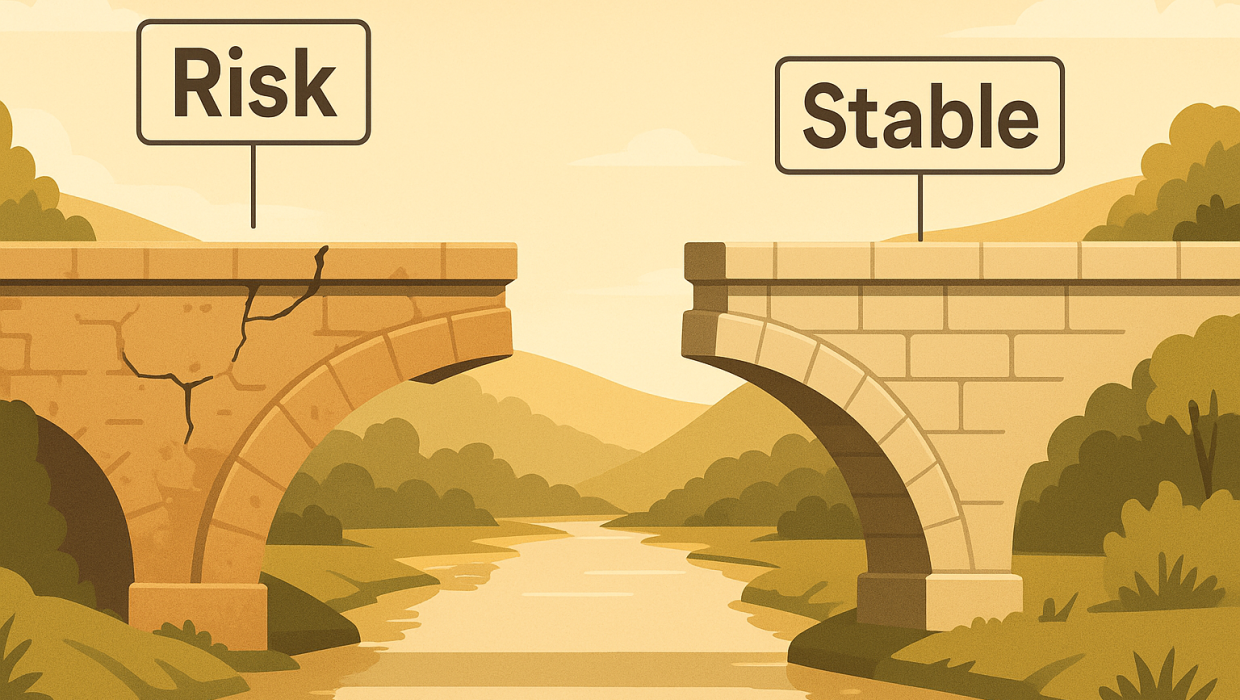
Most IT problems don’t announce themselves. They accumulate quietly — an unpatched server here, a workaround there, a vendor contract nobody’s revisited in three years — until the day something breaks at the worst possible moment. That’s the real risk of neglecting a future-proof IT infrastructure: it’s not one catastrophic failure, it’s a slow accumulation of fragility that eventually costs far more to fix than it would have to prevent.
For CTOs, marketing directors, and agency owners, infrastructure decisions rarely feel urgent until they suddenly are. This article breaks down exactly what happens when infrastructure isn’t built to last — and what a more deliberate approach to future-proofing actually looks like.
The Hidden Cost of “It Still Works”
There’s a dangerous phrase that circulates in growing companies: “it still works, so why touch it?” This logic feels sound in the short term. Systems that function today seem like a safe bet to leave alone. But infrastructure doesn’t fail on a schedule that’s convenient for budgeting cycles — it fails when load increases, when a key vendor deprecates support, or when a security patch window closes and nobody was watching.
Common IT infrastructure challenges rarely show up as a single dramatic outage. More often, they show up as:
- Slower response times as data volume grows beyond what the original architecture was designed to handle
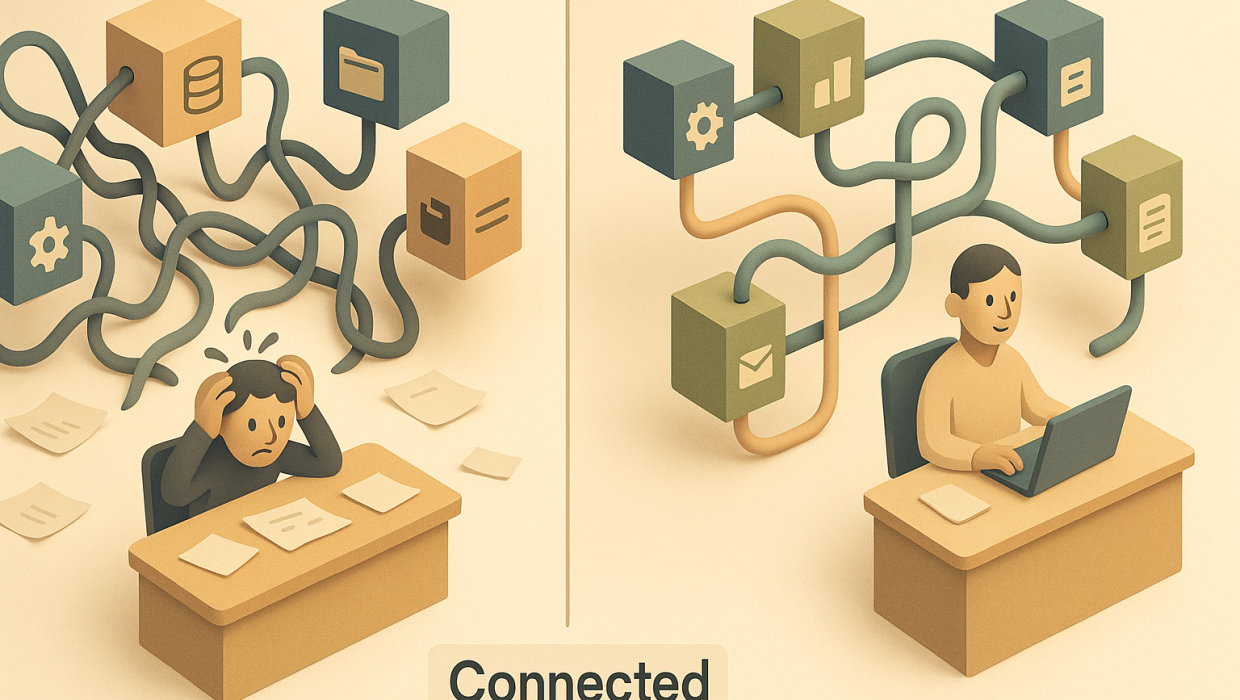
- Integration headaches every time a new tool needs to talk to an old system
- Rising support costs as engineers spend more time patching legacy issues than building anything new
- Security gaps that widen as vendors stop issuing updates for aging software
- Compliance risk when data handling practices no longer meet current regulatory standards
None of these individually feels like a crisis. Together, they represent a business that is quietly losing speed, resilience, and trust — while leadership assumes things are “fine” because nothing has visibly broken yet.
What Actually Happens When Infrastructure Isn’t Future-Proofed
Downtime Becomes a Recurring Cost, Not a Rare Event
Unplanned downtime is often treated as a rare, unlucky event. In reality, aging infrastructure makes outages more frequent and more severe, because there’s less redundancy, less monitoring, and less institutional knowledge of how the pieces actually connect. Every hour of downtime has a compounding cost: lost revenue, lost customer confidence, and internal teams pulled off strategic work to fight fires.
Technical Debt Quietly Takes Over the Roadmap
Every unaddressed infrastructure gap becomes technical debt, and technical debt behaves like financial debt — it accrues interest. A workaround implemented today to hit a deadline becomes next year’s fragile dependency that three other systems now rely on. Eventually, technical debt doesn’t just slow down new projects; it starts dictating what’s even possible. Teams stop asking “what’s the best solution?” and start asking “what can our current systems tolerate?” That’s a serious constraint on strategy, and it’s one of the clearest signs that IT infrastructure has moved from an enabler to a liability.
Security Vulnerabilities Multiply
Outdated infrastructure is disproportionately targeted by attackers, not because it’s more valuable, but because it’s easier. Unpatched systems, deprecated software, and poorly documented access controls create exactly the kind of gaps that ransomware and phishing campaigns are designed to exploit. A future-proof IT infrastructure treats security as a continuous discipline — patch management, access reviews, backup verification — not a project that was “completed” during a single audit two years ago.
Talent and Tools Stop Fitting Together
New hires increasingly expect modern, cloud-based, well-integrated tooling. When infrastructure lags, it doesn’t just slow down processes — it becomes a retention and recruiting issue. Engineers and marketers alike grow frustrated working around brittle systems, and the best people don’t stay long in environments where they’re fighting the tools instead of using them.
You Lose the Ability to Move Fast When It Matters
Perhaps the most strategically damaging effect: when a market opportunity, competitive threat, or client demand requires rapid adaptation, infrastructure that hasn’t been future-proofed simply can’t flex. Standing up a new integration, scaling for a traffic spike, or rolling out a new AI-powered workflow all take dramatically longer — and cost more — on a fragile foundation. This is where technology upgrades stop being a “someday” line item and become the thing standing between your business and its next opportunity.
Why “Future-Proof” Doesn’t Mean “Predict the Future”
A lot of leaders hear “future-proof” and assume it means guessing correctly about which technologies will matter in five years. That’s not it, and frankly, nobody’s that good at predicting the future. Future-proofing is really about building systems with enough flexibility, documentation, and modularity that they can absorb change without falling apart — regardless of which specific technologies come next.
Future-proofing is really about building systems with enough flexibility, documentation, and modularity that they can absorb change without falling apart — regardless of which specific technologies come next.
That distinction matters because it reframes the goal. Instead of chasing every new platform or tool, a sound IT strategy focuses on architecture: How modular are your systems? How well documented are your integrations? How quickly could a new team member understand what’s running and why? Infrastructure that scores well on those questions tends to handle whatever comes next — new software, new compliance requirements, new AI tools — without a full rebuild.
The Diagnosis-Before-Build Difference
This is exactly why jumping straight to a fix rarely solves the underlying problem. Many companies bring in a vendor, describe a symptom — slow systems, a security scare, an integration that won’t cooperate — and get a patch applied to that one symptom. Six months later, a related issue surfaces somewhere else, because the root cause was never actually identified.
A more effective approach starts with genuine diagnosis: mapping the current environment, understanding where fragility actually lives, and identifying which fixes will compound in value versus which will just buy time. It’s slower up front, but it prevents the expensive cycle of solving the same underlying problem three different times in three different disguises. This is the foundation of how we approach managed IT and infrastructure work with clients — understanding the full system before recommending a single change.
Building a Future-Proofing Strategy That Actually Holds Up
Start With Visibility, Not Tools
Before evaluating a single new platform, leadership needs a clear picture of what’s currently running, what depends on what, and where the actual risk concentrations sit. Most companies are surprised by how much of their infrastructure nobody has fully mapped in years — a patchwork of decisions made by different people, at different times, for different reasons, that were never revisited as a whole.
Prioritize Modularity Over Monoliths
Systems built as tightly coupled, all-or-nothing platforms are far harder to update incrementally. Modular systems — where individual components can be replaced, upgraded, or scaled independently — age far better because they don’t require a full rebuild every time one piece needs attention. This principle applies whether you’re talking about core infrastructure, custom internal software, or the automation layers increasingly built on top of both.
Build in Redundancy and Documentation as Standard Practice
Backup systems, failover plans, and clear documentation aren’t glamorous, but they’re what separates a manageable incident from a business-threatening one. Future-proofing strategies that skip documentation in favor of speed inevitably pay for it later, usually when the one person who understood a system has left the company.
Treat Security and Compliance as Ongoing, Not Episodic
Passwords, access controls, and backup verification need continuous attention, not annual review. Businesses that treat these as living processes — rather than boxes checked once a year — are dramatically less likely to be blindsided by a vulnerability that’s been sitting exposed for months.
Plan for Integration With What’s Coming, Not Just What’s Here
AI-driven tools, automation platforms, and increasingly sophisticated AI and automation solutions all depend on clean data and stable infrastructure underneath them. Businesses that neglect infrastructure often find that when they finally try to adopt these tools, months are lost simply preparing the foundation before any of the actual innovation can happen.
The Business Case for Acting Now
It’s tempting to treat infrastructure investment as a cost center — something to minimize rather than prioritize. But the math consistently favors proactive investment. The cost of planned, incremental technology upgrades is almost always lower than the cost of emergency remediation after a failure, a breach, or a missed opportunity. Beyond the direct financial comparison, there’s a strategic cost that’s harder to quantify but just as real: the compounding disadvantage of moving slower than competitors who invested earlier.
Decision-makers evaluating this trade-off should ask a simple question: if a critical system failed tomorrow, how long would recovery take, and what would that cost in revenue, reputation, and internal disruption? For many companies, the honest answer to that question is the clearest business case for future-proofing that exists.
If that answer is uncomfortable, it’s worth a conversation before it becomes a crisis. Our team’s diagnostic approach means we start by understanding exactly where your infrastructure stands today, not by pitching a predetermined solution — you can start a conversation with us to see where the gaps actually are.
Infrastructure as a Foundation, Not an Afterthought
The businesses that handle change well — new tools, new market conditions, new client demands — aren’t the ones with the most advanced technology. They’re the ones whose infrastructure was built with change in mind from the start. That’s the real difference between a company that adapts smoothly and one that’s constantly playing catch-up.
Explore our case studies to see how organizations have approached these challenges in practice, or take a closer look at our broader technology philosophy to understand how we think about the systems underneath the work. Infrastructure isn’t the exciting part of a technology strategy, but it’s the part that determines whether everything else built on top of it actually holds up.
RELATED QUESTIONS
What does it mean to future-proof IT infrastructure?
Future-proofing IT infrastructure means designing systems to be modular, well-documented, and adaptable, rather than trying to predict exactly which technologies will matter in the future. It focuses on building an architecture flexible enough to absorb new tools, growing data demands, and evolving security requirements without requiring a full rebuild each time something changes.
What are the biggest risks of outdated IT infrastructure?
Outdated infrastructure leads to more frequent downtime, growing technical debt, and expanding security vulnerabilities as vendors stop supporting old software. It also slows down the adoption of new tools and integrations, which can put a business at a real competitive disadvantage when speed matters most.
How often should a company upgrade its IT infrastructure?
Rather than following a fixed schedule, companies should treat infrastructure evaluation as an ongoing process, with regular reviews of security patches, backup systems, and system performance against current business demands. Major upgrades are typically needed every few years, but incremental, planned updates are far less costly than emergency fixes after something fails.
What is technical debt in IT infrastructure?
Technical debt refers to the accumulated cost of shortcuts, workarounds, and delayed updates made to IT systems over time. Like financial debt, it compounds — small unresolved issues create dependencies that make future changes slower, riskier, and more expensive to implement.
Why is a diagnosis-before-build approach important for IT strategy?
A diagnosis-before-build approach ensures that IT fixes address root causes rather than surface symptoms, preventing the same underlying problem from resurfacing in a different form later. It involves mapping the full technology environment first, so that recommended changes actually compound in value rather than simply buying temporary time.
Ready to Find Out Where Your Infrastructure Is Exposed?
Start a conversation with Sapiens + Machines to discuss your goals, challenges, and next steps.