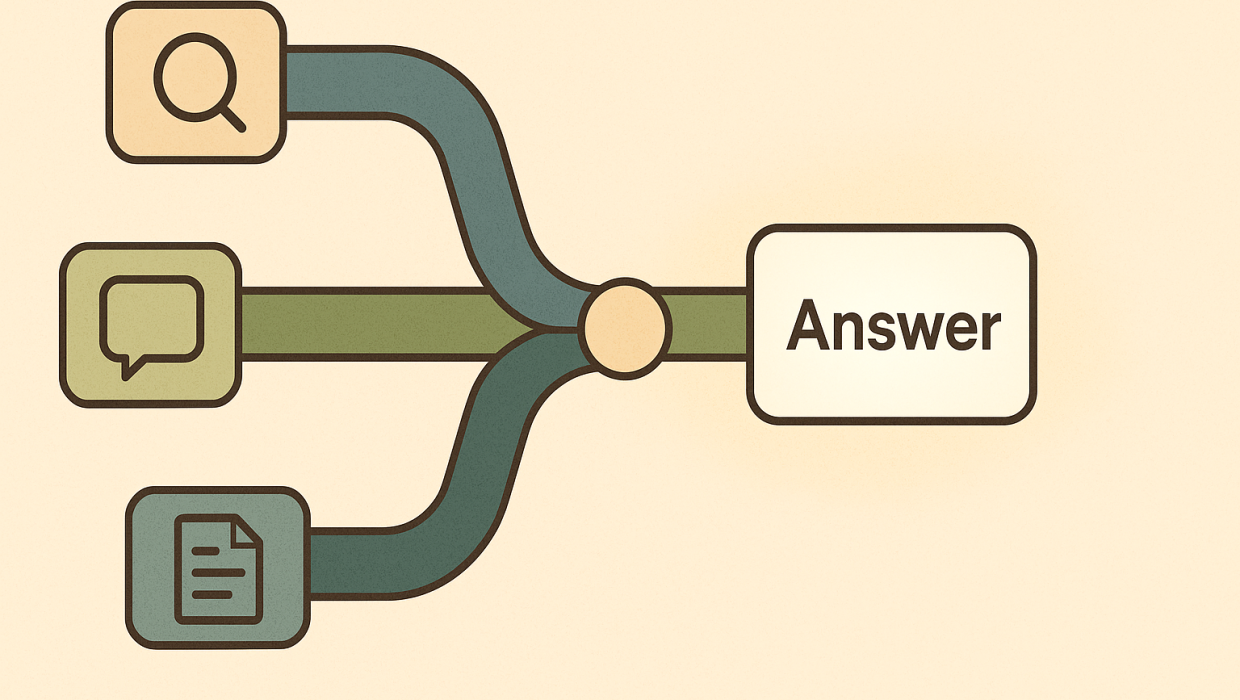
If you’re still measuring marketing success purely by keyword rankings and click-through rates, you’re optimizing for a search landscape that’s already half gone. A modern GEO marketing strategy — one built for generative and answer engines, not just traditional search — has become the difference between brands that show up in AI-generated answers and brands that quietly disappear from the conversation entirely.
This isn’t a hypothetical shift. It’s already reshaping how buyers research vendors, compare solutions, and make decisions before a human salesperson ever enters the picture.
What a GEO Marketing Strategy Actually Means
Generative Engine Optimization (GEO) is the practice of structuring your content, data, and digital presence so that AI systems — large language models, AI search overviews, and conversational answer engines — can accurately retrieve, interpret, and cite your business when someone asks a relevant question. It sits alongside, but is distinct from, traditional SEO and the newer discipline of answer engine optimization, which focuses specifically on earning placement in direct-answer formats like featured snippets, voice search responses, and AI-generated summaries.
The distinction matters. Traditional SEO asks: will this page rank? GEO asks a different question entirely: will this content be understood, trusted, and surfaced by a system that’s synthesizing an answer from dozens of sources at once? Those are not the same optimization problem, and treating them as interchangeable is one of the most common strategic mistakes we see in B2B marketing right now.
The Shift from Search Engines to Answer Engines
For twenty years, the mental model was simple: rank high, get clicked, convert. That model is breaking down. A growing share of research queries now never produce a click at all — the user gets their answer directly from an AI-generated summary and moves on. For B2B buyers researching complex technology or service decisions, this shift is even more pronounced, because these are exactly the kinds of multi-step, comparison-heavy queries that generative engines are built to handle well.
This is the heart of the current search engine trends every B2B marketer needs to understand: visibility is no longer just about appearing on a results page. It’s about being the source an AI model chooses to pull from, paraphrase, or cite by name. If your content isn’t structured in a way that makes your expertise legible to a machine, you can have the best answer in your industry and still never be seen.
Why Most Marketing Strategies Are Falling Behind
Here’s the uncomfortable truth: most companies’ current marketing strategy was built for a search environment that no longer fully exists. Content calendars optimized around keyword volume. Landing pages built to rank rather than to answer. Technical SEO audits that check for broken links but never ask whether a page’s structure would make sense to a language model parsing it for facts.
This gap isn’t about lacking effort — it’s about measuring the wrong things. A page can rank on page one and still be functionally invisible to an AI answer engine if it lacks clear structure, authoritative sourcing, and direct, extractable answers to the questions your buyers are actually asking.
This is where a dedicated SEO, AEO, and GEO strategy becomes less of a nice-to-have and more of a baseline requirement for staying competitive. The companies pulling ahead right now aren’t necessarily producing more content — they’re producing content engineered to be understood by both human readers and machine readers at once.
Building a GEO Marketing Strategy That Actually Works
Diagnose Before You Build
It’s tempting to respond to GEO anxiety by producing more content, faster. That’s almost always the wrong move. Before touching a single page, you need a clear diagnosis: which queries in your space are already being answered by AI engines, which sources those engines currently trust, and where the gaps are between what your buyers are asking and what your existing content actually addresses.
A diagnosis-before-build approach means auditing your current content against real buyer questions, mapping your technical infrastructure for machine readability, and identifying which pieces of your site already carry the authority and structure to be cited — before you invest in building anything new. Skipping this step is how companies end up with beautifully written content that generative engines simply never find useful enough to surface.
Traditional SEO asks: will this page rank? GEO asks a different question entirely: will this content be understood, trusted, and surfaced by a system that’s synthesizing an answer from dozens of sources at once?
If you’re not sure where your own strategy stands, that diagnosis is exactly the kind of conversation worth having before committing budget to a rebuild — you can start that conversation here.
Structured Content and Schema as Infrastructure
Generative engines rely heavily on structured signals to understand what a page is actually saying. Schema markup, clear heading hierarchies, FAQ formatting, and consistent entity naming aren’t cosmetic SEO details anymore — they’re infrastructure. They tell an AI system, in a language it can parse reliably, exactly what question a section of your content answers and how confidently it can attribute that answer to you.
This is also where answer engine optimization and GEO overlap most directly. A well-structured FAQ section, for instance, serves double duty: it answers real user questions in a scannable format, and it gives generative engines a clean, citable block of text to pull from when constructing an AI-generated response.
Technical Foundations Still Matter
None of this works if the underlying site can’t support it. Page speed, crawlability, clean site architecture, and mobile performance remain foundational — generative engines still depend on the same crawling and indexing infrastructure that traditional search engines use to discover content in the first place. A content strategy built on a slow, poorly structured site is building on sand. This is often where technical site architecture work and content strategy need to move together rather than as separate workstreams handled by separate vendors.
Generative Engine Strategies for B2B Specifically
B2B buying cycles are long, research-heavy, and involve multiple stakeholders — which makes them particularly exposed to generative engine influence. A CTO researching infrastructure vendors, a marketing director comparing agencies, a procurement lead vetting software options: all of them are increasingly likely to ask an AI tool to summarize options before ever visiting a vendor’s website directly.
Effective generative engine strategies for B2B companies tend to share a few traits. They prioritize depth over volume — fewer, more authoritative pieces outperform a high-volume blog of shallow posts. They lean on original data, named case studies, and specific claims rather than generic industry commentary, because generative engines favor content that reads as a primary source. And they treat the underlying technology stack powering their content and data as part of the strategy, not an afterthought to it.
Proof matters here too. Buyers evaluating a potential partner want evidence, not assertions — which is part of why well-documented case studies function as some of the most GEO-friendly content a B2B company can produce. They’re specific, factual, and structured in a way that’s easy for both humans and AI systems to extract and trust.
What This Means for Decision-Makers
If you’re a CTO, marketing director, or agency owner evaluating whether your current strategy is keeping pace, the honest test is simple: ask an AI answer engine a question your business should be winning, and see what comes back. If your company isn’t mentioned — or worse, a competitor is cited with less depth and authority than you actually have — that’s a visibility gap, not a content-quality problem.
Closing that gap requires the same discipline as any serious technology investment: a clear-eyed audit of what’s working, a structural plan for what needs to change, and a partner who understands that GEO isn’t a bolt-on tactic but a shift in how your entire content and technical ecosystem needs to function together.
Getting Started
The companies that will dominate AI-driven search over the next few years aren’t the ones producing the most content — they’re the ones whose content and infrastructure were built, from the ground up, to be legible to the systems now mediating so much of the buyer journey. That’s a strategic posture, not a one-time project, and it starts with an honest diagnosis of where you stand today.
If you’re ready to find out where the gaps actually are, our SEO, AEO, and GEO team can walk through a full assessment of your current visibility across both traditional and AI-driven search — and build a roadmap from there.
Let’s make it happen.
RELATED QUESTIONS
What is a GEO marketing strategy?
A GEO marketing strategy is an approach to marketing that optimizes content, technical infrastructure, and data structure so that generative AI systems — like ChatGPT, Perplexity, and Google’s AI Overviews — can accurately find, interpret, and cite a business when answering user questions. It goes beyond traditional SEO by focusing on how AI models synthesize and attribute information, not just how pages rank in search results.
How is answer engine optimization different from traditional SEO?
Traditional SEO focuses on ranking pages highly in search engine results so users click through to a website. Answer engine optimization focuses on getting content surfaced directly within AI-generated answers, featured snippets, or voice responses, where the user may never click through at all. This requires clearer structure, more direct question-and-answer formatting, and stronger factual authority than ranking alone demands.
Why do generative engines matter for B2B companies specifically?
B2B buying cycles typically involve lengthy research and multiple stakeholders, which makes them especially likely to involve AI tools during early-stage vendor comparison. A CTO or marketing director researching options may ask an AI system to summarize vendors before ever visiting a company’s website directly, meaning B2B companies that aren’t optimized for generative engines risk being left out of the conversation entirely.
What does “diagnosis before build” mean in a GEO context?
Diagnosis before build means auditing existing content, technical infrastructure, and real buyer questions before creating new content or restructuring a site. It identifies which queries AI engines are already answering in your industry, which sources they currently trust, and where the actual gaps are, so that any new investment is targeted rather than speculative.
Does schema markup still matter for generative engine optimization?
Yes, schema markup remains important because it gives AI systems a clear, structured signal about what a page contains and how confidently that information can be attributed to a source. Combined with clean heading hierarchies and direct FAQ-style formatting, schema helps both traditional search engines and generative AI systems understand and cite content accurately.
Find Out Where Your GEO Strategy Actually Stands
Start a conversation with Sapiens + Machines to discuss your goals, challenges, and next steps.