If your team is still measuring SEO success by blue-link rankings alone, you’re already behind. The rise of generative AEO trends — answer engine optimization built for AI-driven search — is quietly rewriting how buyers find vendors, compare solutions, and make decisions, often without ever clicking through to a website. For B2B decision-makers, that’s not a future problem. It’s happening in this quarter’s pipeline data, whether you’ve noticed it or not.
The Shift from Search Engines to Answer Engines
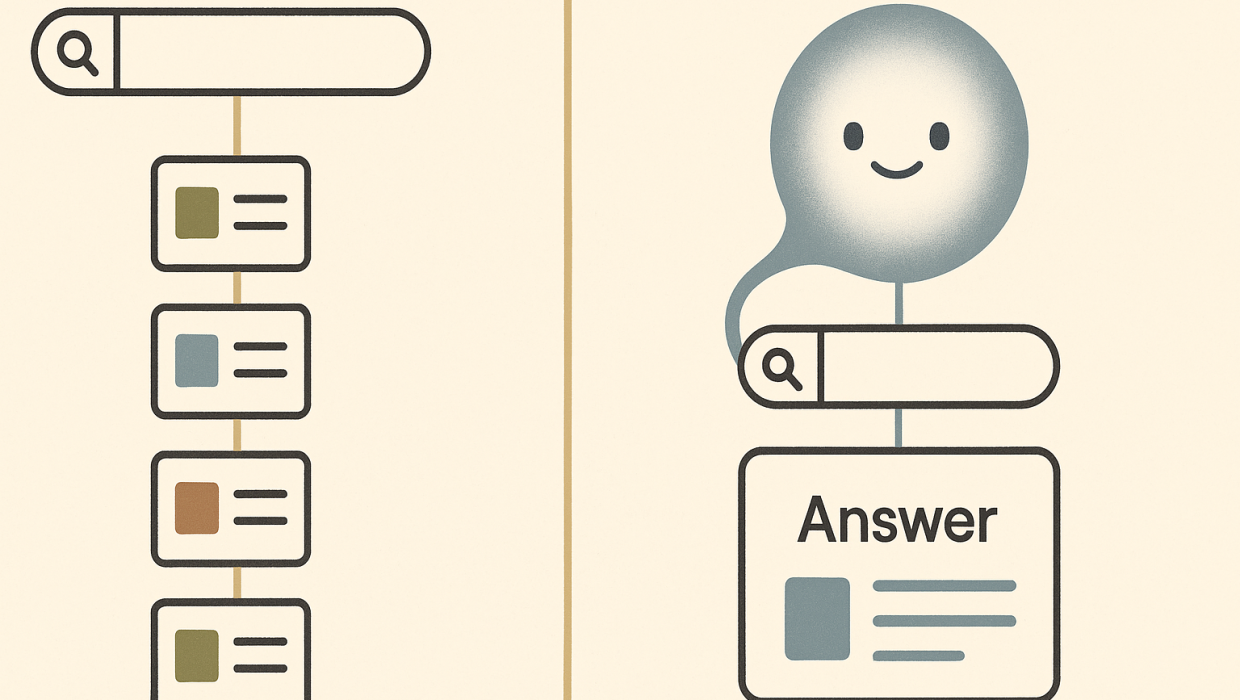
For two decades, SEO optimization meant one thing: rank higher on a results page so a human clicks your link. That model assumed a search engine’s job was to point people toward content. Generative AI has changed the job description. Tools like ChatGPT, Perplexity, Google’s AI Overviews, and Microsoft Copilot don’t just point — they synthesize. They read dozens of sources, extract the relevant facts, and hand the user a complete answer, often with no click required at all.
This is the core mechanic behind answer engine optimization: instead of optimizing content to rank, you’re optimizing content to be understood, trusted, and quoted by a machine that’s assembling an answer on someone else’s behalf. The difference sounds subtle. It isn’t. It changes what “visibility” even means.
What Generative AEO Trends Mean for Business Decision-Makers
For CTOs and marketing directors, the practical implications land in three places:
Traffic patterns are changing shape. Zero-click searches were already rising before generative AI; now they’re accelerating. A user asking an AI assistant “what’s the best CRM integration partner for a mid-size logistics company” may get a confident, specific answer without ever seeing a list of websites.
Citation is the new ranking. AI engines pull from sources they consider authoritative, structured, and unambiguous. If your content is vague, poorly organized, or buried behind a paywall of marketing jargon, it’s far less likely to be the source an AI model chooses to cite or paraphrase.
The buyer journey is compressing. Decision-makers increasingly use AI tools to shortlist vendors before a human salesperson ever enters the picture. If your brand isn’t part of that AI-generated shortlist, you may be losing deals you never knew existed.
This is precisely why forward-looking teams are re-architecting their SEO, AEO, and GEO strategy as one integrated discipline rather than three separate line items on a marketing plan.
Where Traditional SEO Optimization Falls Short
Classic SEO optimization still matters — technical performance, backlinks, keyword relevance, and site architecture haven’t become obsolete. But they were built to satisfy a crawler looking for the best page, not a language model looking for the best fact.
Here’s where the gap shows up in practice:
Structure Over Volume
AI engines favor content that answers a specific question clearly and early, then supports it with evidence. A 2,000-word blog post that buries its actual answer in paragraph fourteen is far less useful to a generative model than a tightly structured page that states the answer, defines the terms, and backs it with data.
Schema and Machine Readability
Structured data — schema markup, clear headings, FAQ formatting — isn’t a nice-to-have anymore. It’s how you tell a machine, in its own language, exactly what your content means. Businesses that have ignored schema markup because “it never moved the needle much” are going to feel that decision more acutely as generative engines become the primary interface for discovery.
Trust Signals Machines Can Verify
Generative models weigh authorship, consistency, and corroboration across the web. A single well-written page on an otherwise thin site won’t carry the same weight as a page that’s part of a coherent body of expertise, reinforced by consistent facts across your domain and reputable third-party mentions.
Diagnosis Before You Rebuild Anything
It’s tempting to respond to generative AEO trends by throwing a checklist at your content team — add more FAQs, sprinkle in schema, rewrite meta descriptions. That’s the wrong starting point. Before you change anything, you need an honest picture of how AI engines currently perceive your business: what they cite, what they ignore, and what they get wrong.
This is where a diagnosis-before-build approach earns its keep. Auditing how your brand shows up (or doesn’t) across AI Overviews, Perplexity answers, and chatbot responses tells you whether your problem is technical, structural, or a genuine content gap. We’ve seen companies with strong domain authority still get skipped over by AI engines simply because their content answered questions the market stopped asking two years ago. You can see how this plays out for real organizations in our case studies, where diagnosis consistently uncovered a different root cause than the client expected walking in.
Skipping that step and jumping straight to “AEO tactics” is how companies end up with a pile of new content that still doesn’t get cited — because the underlying architecture, trust signals, or topical clarity were never actually the bottleneck.
The Future of Search Is Multi-Surface
The future of search isn’t a single interface — it’s a fragmented ecosystem where Google, AI chat assistants, voice search, and vertical-specific AI tools each surface answers differently, pulling from different signals and rewarding different content structures.
That fragmentation is exactly why generative AEO trends can’t be bolted onto an existing SEO plan as an afterthought. Optimizing for one surface at the expense of the others is a losing strategy long-term. A page engineered purely for Google’s classic algorithm might rank well there while being functionally invisible to an AI assistant summarizing options for a buyer. The technology stack behind your content — how it’s structured, tagged, hosted, and updated — increasingly determines whether machines can parse it at all. If your technology infrastructure wasn’t built with machine readability in mind, no amount of clever copywriting will fully compensate.
Building an Answer Engine Optimization Strategy That Works
A durable answer engine optimization strategy rests on a few non-negotiables:
Answer the question in the first two sentences. Machines and impatient humans both reward directness. Save the nuance and caveats for after the answer, not before it.
Structure content the way a machine parses it. Clear headings, defined terms, comparison tables, and FAQ blocks aren’t just readability tools — they’re the scaffolding generative engines use to extract meaning.
Reinforce expertise across the whole domain, not just one page. A single optimized article rarely moves the needle. Consistency across your site, paired with real subject-matter depth, is what earns citation over time.
Treat structured data as infrastructure, not decoration. Schema markup is one of the clearest, lowest-effort signals you can give a generative engine about what your content actually means.
Monitor what AI engines are actually saying about you. This is new territory for most marketing teams, and it requires ongoing measurement, not a one-time audit.
If your internal team is stretched thin trying to keep pace with both traditional rankings and this new answer-engine layer, that’s a reasonable moment to bring in outside expertise. Our SEO, AEO, and GEO service was built specifically around this diagnosis-first approach, because guessing at generative AEO trends wastes budget faster than almost anything else in modern marketing.
What This Means for Your Business, Practically
None of this suggests you abandon fundamentals. Site speed, mobile performance, and clean information architecture still matter — in fact they matter more, since a slow or poorly structured site gives both crawlers and AI models less to work with. If your underlying site itself needs attention before any content strategy can succeed, that’s worth addressing through web development improvements rather than layering more content on a shaky foundation.
It’s also worth recognizing where automation genuinely helps versus where it introduces risk. AI can accelerate research, drafting, and structured-data implementation, but the judgment about what’s actually true, differentiated, and worth citing still belongs to people who understand your business. Teams exploring AI automation for content and research workflows should apply the same diagnosis-before-build discipline here — automate the mechanical work, not the thinking.
Search results are becoming answers, and if your content isn’t structured to be the source of that answer, you’re not losing rankings — you’re losing the conversation entirely.
Search results are becoming answers, and if your content isn’t structured to be the source of that answer, you’re not losing rankings — you’re losing the conversation entirely.
That’s the shift business decision-makers need to internalize now, not after the next earnings review shows organic traffic quietly declining while competitors show up inside AI-generated answers.
Where to Start
You don’t need to overhaul everything at once. You need an honest diagnosis of where your content currently stands with AI engines, a prioritized plan based on what’s actually broken, and a partner who understands that generative AEO trends are a discipline, not a marketing buzzword. If you’re ready to find out where the gaps actually are, let’s start a conversation about what your search presence looks like through the eyes of both a search engine and an answer engine — because increasingly, they’re not the same audience at all.
RELATED QUESTIONS
What is answer engine optimization and how is it different from SEO?
Answer engine optimization (AEO) is the practice of structuring content so AI systems like ChatGPT, Perplexity, and Google’s AI Overviews can understand it, trust it, and cite it directly in a synthesized answer. Traditional SEO optimizes for ranking on a results page so a human clicks through, while AEO optimizes for being the source an AI model quotes or paraphrases, often without any click at all.
Why are generative AEO trends important for B2B companies specifically?
B2B buyers increasingly use AI assistants to research and shortlist vendors before ever speaking to a salesperson, which means a company can lose a deal simply by not appearing in an AI-generated answer. Because B2B purchases often involve complex comparisons, generative engines are frequently used to summarize options, making citation in those answers a new and critical form of visibility.
Does traditional SEO still matter if generative AI is changing search?
Yes, traditional SEO fundamentals like site speed, clean architecture, and keyword relevance remain essential because they form the foundation AI engines also rely on to parse and trust content. The difference is that SEO alone no longer guarantees visibility in AI-generated answers, so it needs to be paired with structural and trust signals built specifically for generative engines.
How can a business tell if AI engines are already citing or ignoring its content?
The most reliable way is to directly query AI tools like ChatGPT, Perplexity, and Google’s AI Overviews with the questions your customers would realistically ask, then observe whether your company appears, is cited accurately, or is missing entirely. A proper audit goes further by analyzing site structure, schema markup, and content clarity to diagnose why an engine is or isn’t surfacing your brand.
What should a company do first before trying to improve its AEO performance?
Before making any content or technical changes, a company should diagnose exactly how AI engines currently perceive its existing content, since jumping straight to tactics like adding FAQs or schema markup often misses the actual root cause. A diagnosis-before-build approach reveals whether the real problem is technical structure, unclear content, or a genuine topical gap, which determines what should actually be fixed first.
Find Out Where Your Brand Stands in the Answer Economy
Start a conversation with Sapiens + Machines to discuss your goals, challenges, and next steps.