Every few years, a piece of technical jargon crosses over from developer forums into boardroom conversation. “Headless CMS” is having that moment. CTOs are hearing it from vendors, marketing directors are hearing it from agencies, and agency owners are hearing it from clients who read one too many articles calling monolithic websites obsolete. But a headless CMS transformation is not a trend to adopt — it’s an architectural decision with real cost, real risk, and real upside, and it only pays off if your organization is actually positioned to benefit from it.
This is the question worth asking before any vendor conversation: is your website’s architecture actually ready for this shift, or are you solving a content problem with an infrastructure solution?
What “Headless” Actually Means (and Why It Matters Now)
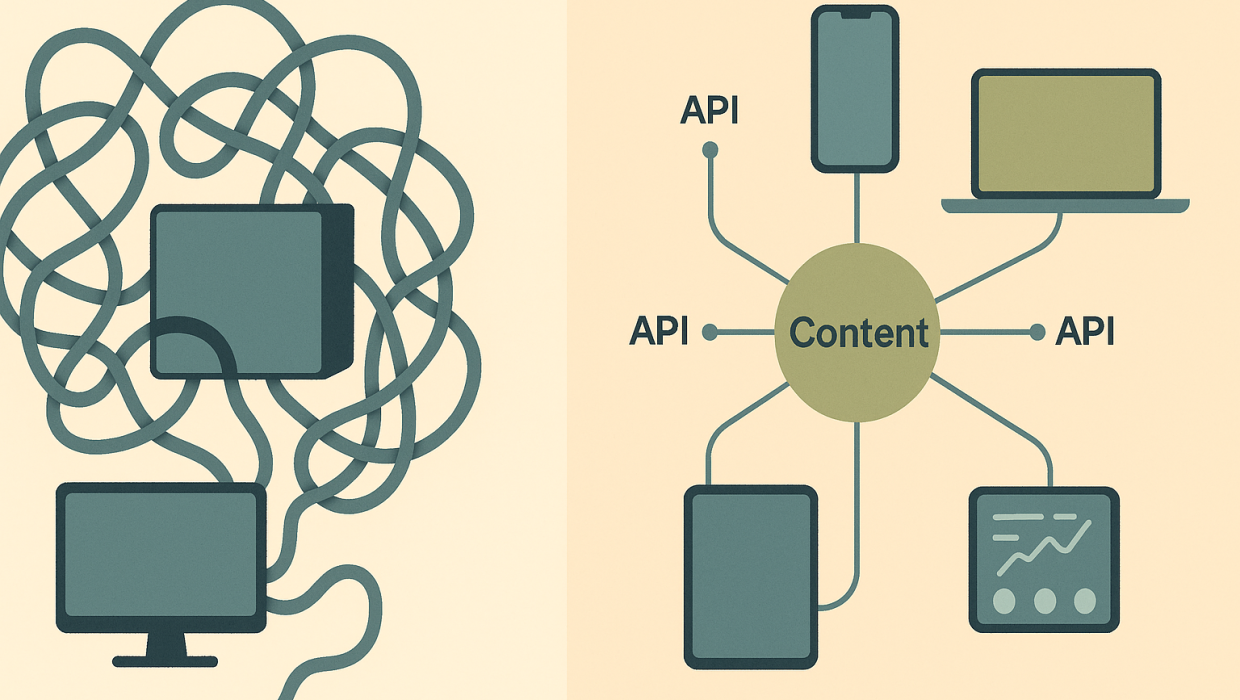
A traditional CMS — think classic WordPress, Drupal, or an older enterprise platform — bundles content management and content presentation into one system. The database that stores your blog posts is directly wired to the templates that render them on your website. Change the front end, and you risk breaking the back end. Add a new channel — a mobile app, a partner portal, a digital kiosk — and you’re often rebuilding content logic from scratch.
A headless content management system separates those two functions entirely. Content lives in a structured, API-accessible repository. Front-end experiences — your website, your app, your email platform, your sales enablement tools — pull that content through APIs and render it however they need to. The “body” of content management stays put; the “head” (the presentation layer) becomes interchangeable.
This matters now because B2B buying journeys have fragmented. Prospects encounter your brand across search results, LinkedIn, review sites, sales decks, and increasingly, AI-generated answers pulled from your published content. A rigid, monolithic website architecture wasn’t built for that reality. A headless approach was.
The Real Question: Is Your Website Architecture Ready?
Readiness isn’t about company size or budget — we’ve guided lean B2B teams through successful headless transformations and talked larger enterprises out of one because the underlying problem wasn’t architectural at all. Readiness comes down to a handful of concrete signals.
Signs Your Current Architecture Is Holding You Back
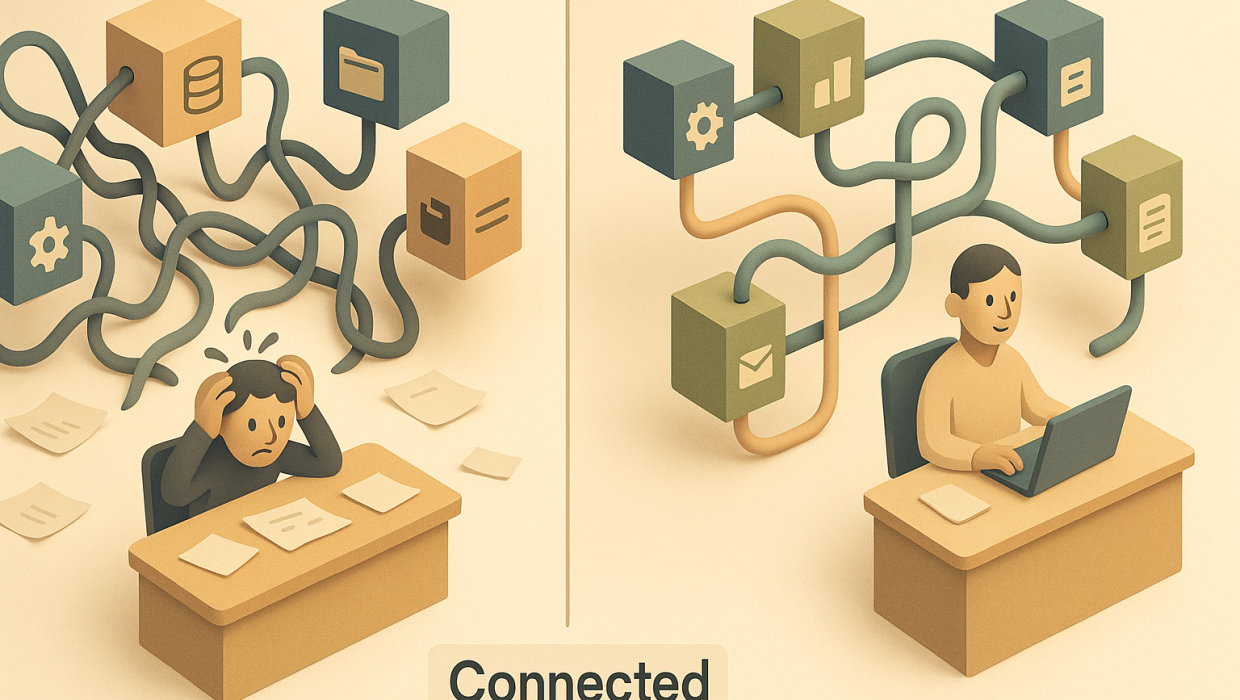
Every content change requires a developer. If your marketing team can’t update a landing page, adjust a pricing table, or launch a new resource without submitting a ticket, your presentation and content layers are too tightly coupled.
You’re publishing the same content to multiple places, manually. Copy-pasting a case study from your website into your app, your sales deck, and your email tool is a symptom of a system that was never designed for multi-channel distribution.
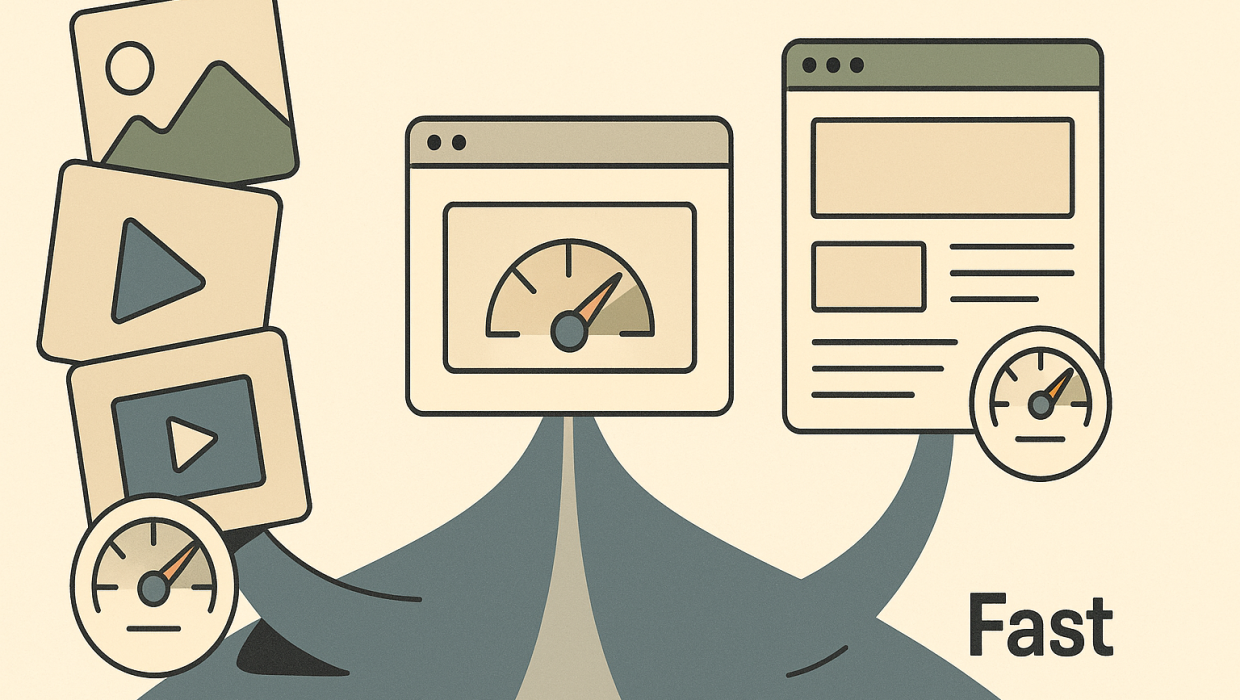
Page speed and Core Web Vitals are chronically poor. Monolithic platforms carry a lot of rendering overhead. If your site is sluggish despite reasonable hosting and image optimization, the architecture itself may be the bottleneck — something we dig into during any serious web development engagement before recommending any rebuild.
Your roadmap includes channels that don’t exist yet. A product portal, a partner-facing dashboard, an AI chat interface pulling from your knowledge base — if any of these are on a 12-to-24-month roadmap, a headless architecture will save you from rebuilding your content layer every time you add a channel.
Your SEO and content team is fighting the platform, not each other. If structured data, schema markup, and content modeling feel like workarounds rather than native capabilities, that’s an architecture problem, not a content strategy problem — and it directly undermines efforts around technical SEO and answer engine visibility.
If you recognize two or more of these, it’s worth a real conversation. If you recognize none of them, a headless CMS transformation is probably solving a problem you don’t have yet — and that’s a legitimate, defensible position too.
What Diagnosis-Before-Build Looks Like for a Headless CMS Transformation
We don’t start any architecture conversation with a recommendation. We start with a diagnosis: an audit of your current stack, your content workflows, your team’s technical fluency, and your actual growth plans over the next two to three years. This matters because headless architecture introduces genuine complexity — more moving parts, more integration points, more dependency on developer resources for initial setup — in exchange for long-term flexibility.
The diagnosis usually surfaces one of three outcomes. Sometimes the honest answer is that your current platform, properly optimized, can carry you another two years — and spending six figures on a rebuild would be premature. Sometimes the answer is a hybrid approach: decoupling specific high-friction sections (a resource library, a product catalog) while leaving the rest of the site intact. And sometimes the answer is a full transformation, because the organization has genuinely outgrown its foundation. We’ve walked clients through all three outcomes, and you can see how that diagnostic process plays out in practice across our case studies.
The Case for Scalable Web Development
The strongest argument for headless isn’t speed or novelty — it’s optionality. Scalable web development means building infrastructure that accommodates growth you haven’t fully mapped yet: new product lines, new markets, new integrations with your CRM or your internal software systems, new front-end frameworks that didn’t exist when you first built the site.
Content Velocity vs. Content Chaos
There’s a meaningful difference between publishing more content and publishing content faster with more control. A headless setup allows marketing and content teams to work independently of the development calendar — building landing pages, updating structured data, and launching campaigns without waiting on a sprint cycle. But without disciplined content modeling from day one, that same flexibility produces chaos: duplicate fields, inconsistent taxonomies, and a content repository nobody fully understands six months later. This is precisely why the technical and content strategy conversations need to happen together, not sequentially.
Where Headless Falls Short (Being Honest)
An editorial approach to this topic means naming the downsides plainly. Headless architectures typically cost more upfront, require more sophisticated developer support on an ongoing basis, and can slow down small, simple sites that never needed that much flexibility in the first place. If your website is five pages, updated twice a year, a headless CMS transformation is very likely the wrong investment. The value curve bends in your favor as content volume, channel count, and team size increase — not before.
Building the Business Case
If the diagnosis points toward transformation, the business case should rest on three pillars: reduced developer dependency for routine content work, measurable performance gains that support both user experience and search visibility, and architectural readiness for whatever channel comes next — including the AI-driven interfaces increasingly pulling structured content directly into search and chat experiences. That last point deserves particular weight: as more discovery happens through AI-generated answers rather than traditional search results, a structured, API-first content layer isn’t just a developer convenience — it’s becoming a prerequisite for staying visible at all.
A headless CMS transformation isn’t a technology purchase — it’s an architecture decision that will shape how fast your organization can move for the next five years. That’s the frame decision-makers should bring into any vendor or partner conversation, and it’s the frame we bring into every website architecture project we scope.
A headless CMS transformation isn’t a technology purchase — it’s an architecture decision that will shape how fast your organization can move for the next five years.
What This Means for Your Team
None of this happens in a vacuum. A successful transformation touches your marketing team’s workflows, your developers’ ongoing responsibilities, and often your broader technology stack and its integrations. The organizations that get the most out of headless architecture are the ones that treat it as an operating model change, not just a platform migration — training content teams on structured authoring, aligning SEO strategy with the new content model, and setting clear ownership for what lives where.
If you’re genuinely unsure whether your architecture is ready, the fastest path to clarity isn’t another whitepaper — it’s a direct conversation about your specific stack, your team’s capacity, and your growth plans. That’s exactly the kind of conversation worth having before committing budget in either direction, and it’s one we’re glad to start with you.
The honest answer to “is our website ready for a headless CMS transformation” is rarely a simple yes or no. It’s a question that deserves a real diagnosis, grounded in how your team actually works and where your business is actually headed — not in whatever platform happens to be trending this quarter.
RELATED QUESTIONS
What does it mean for a website to be “headless”?
A headless website separates content management from content presentation. Instead of a single system controlling both what content exists and how it’s displayed, content lives in a structured repository accessible via APIs, and separate front-end systems — a website, app, or other channel — pull and render that content independently. This separation allows teams to update content or launch new channels without rebuilding the entire system.
How do I know if my company needs a headless CMS transformation?
Your organization is likely ready if marketing teams constantly need developer help for simple content updates, if you’re manually republishing the same content across multiple channels, if page performance is chronically poor despite basic optimization, or if you have concrete plans to launch new digital channels like apps or portals within the next two years. If none of these apply, a headless transformation may be premature.
Is a headless CMS more expensive than a traditional CMS?
Generally yes, at least upfront — headless architectures typically require more sophisticated development work to set up the front-end experiences that a traditional CMS provides out of the box. The cost pays off over time through reduced developer dependency for routine content changes and easier expansion into new channels, but for small, low-complexity websites, a traditional CMS often remains the more cost-effective choice.
Can I move to a headless CMS gradually instead of all at once?
Yes, and this hybrid approach is often the most practical starting point. Many organizations decouple only their highest-friction sections first — such as a resource library, blog, or product catalog — while leaving the rest of the existing website intact, then expand the headless architecture as the benefits prove out and team capacity grows.
Does a headless CMS help with SEO and AI search visibility?
A well-structured headless CMS can significantly improve technical SEO because it typically offers better performance, cleaner structured data, and more native support for schema markup than older monolithic platforms. This structured, API-first content model is also increasingly important for visibility in AI-generated search answers, which rely on clearly organized, machine-readable content rather than loosely templated web pages.
Let's Diagnose Your Website's Readiness for Headless
Start a conversation with Sapiens + Machines to discuss your goals, challenges, and next steps.