Every enterprise has already automated the obvious things. Invoicing, basic reporting, email sequences — the low-hanging fruit was picked years ago. But ask most CTOs or operations leaders where their teams still lose hours to manual, repetitive work, and you’ll get a long, specific list. That list is where AI workflow automation earns its keep, and it’s almost never where companies think to look first.
The uncomfortable truth is that most organizations are automating what’s easy to see, not what’s actually costly. The real opportunities — the ones that quietly drain hours, introduce errors, and slow decisions — tend to live in the seams between systems and departments, not inside any single tool. Finding them requires a different kind of looking.
The Automation You Can See vs. The Automation You Can’t
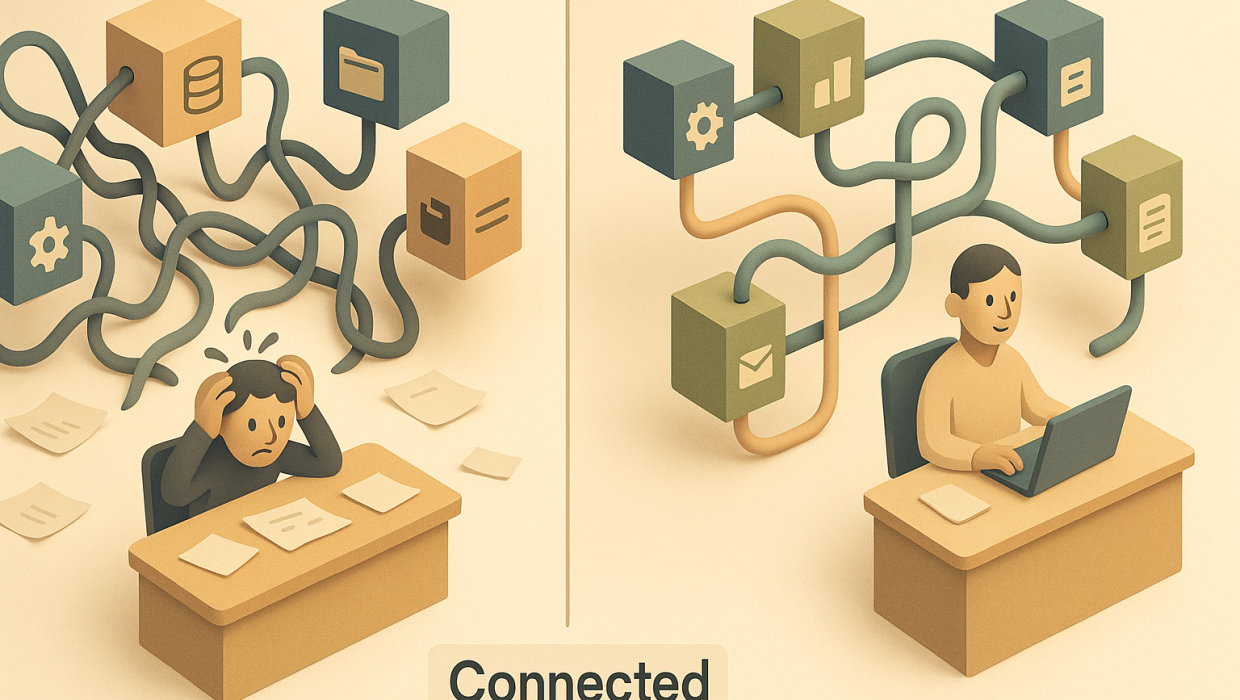
Visible automation is the stuff that shows up in a demo: chatbots, auto-generated reports, scheduling assistants. It’s easy to sell and easy to justify because you can point at it. Invisible automation is different. It’s the reconciliation step between your CRM and your finance system that someone does manually every Friday. It’s the three people who each re-enter the same client data into three different platforms. It’s the approval chain that exists on paper but actually runs through Slack messages and tribal memory.
These invisible processes rarely appear on anyone’s roadmap because no one owns them end-to-end. They exist in the gaps between departments — which is exactly why they’re expensive and exactly why they’re overlooked. Enterprise automation efforts that focus only on department-level tools miss the workflows that cross department lines entirely.
Why Enterprises Miss Hidden Workflow Automation Opportunities
There are a few consistent reasons capable, well-resourced organizations still leave this value on the table.
The Diagnosis Gap
Most technology initiatives start with a tool, not a problem. A leadership team hears about a new AI platform, buys it, and then goes looking for a use case to justify the purchase. This is backwards. It produces automation that looks impressive in a slide deck but doesn’t touch the actual friction employees deal with daily.
The alternative is a diagnosis-before-build approach: mapping how work actually moves through your organization — not how the org chart says it should — before evaluating a single piece of technology. This is slower at the start and faster everywhere after, because you’re building toward a confirmed bottleneck instead of a hypothetical one.
Nobody’s Job Is to Look for This
Individual department heads optimize their own function. IT optimizes infrastructure. Marketing optimizes campaigns. Sales optimizes pipeline velocity. But the handoffs between these functions — where data gets re-keyed, where approvals stall, where one team waits on another — don’t belong to anyone. That ownership vacuum is precisely where hidden opportunities in AI accumulate, unnoticed, for years.
Fear of Disrupting “Good Enough”
A process that technically works, even if it’s inefficient, feels safer to leave alone than to touch. This is rational risk aversion, but it’s also how six-figure inefficiencies survive year after year inside otherwise sophisticated companies.
Where the Hidden Opportunities Actually Live
Once you start looking in the right places, the patterns are remarkably consistent across industries.
Approval Bottlenecks
Contract reviews, budget sign-offs, content approvals — these chains often involve more steps than necessary because nobody has revisited them since the company was a third of its current size. AI-assisted routing and pre-screening can compress a five-day approval cycle into hours by flagging what needs human judgment and clearing what doesn’t.
Document and Data Handoffs
Sales teams re-typing proposal data into contracts. Support teams manually summarizing tickets for engineering. Finance reconciling numbers that already exist correctly in two other systems. This is classic business process automation territory, and it’s often the single highest-ROI category because the work is repetitive, rule-based, and currently done by people who are overqualified for it.
The “Swivel Chair” Problem
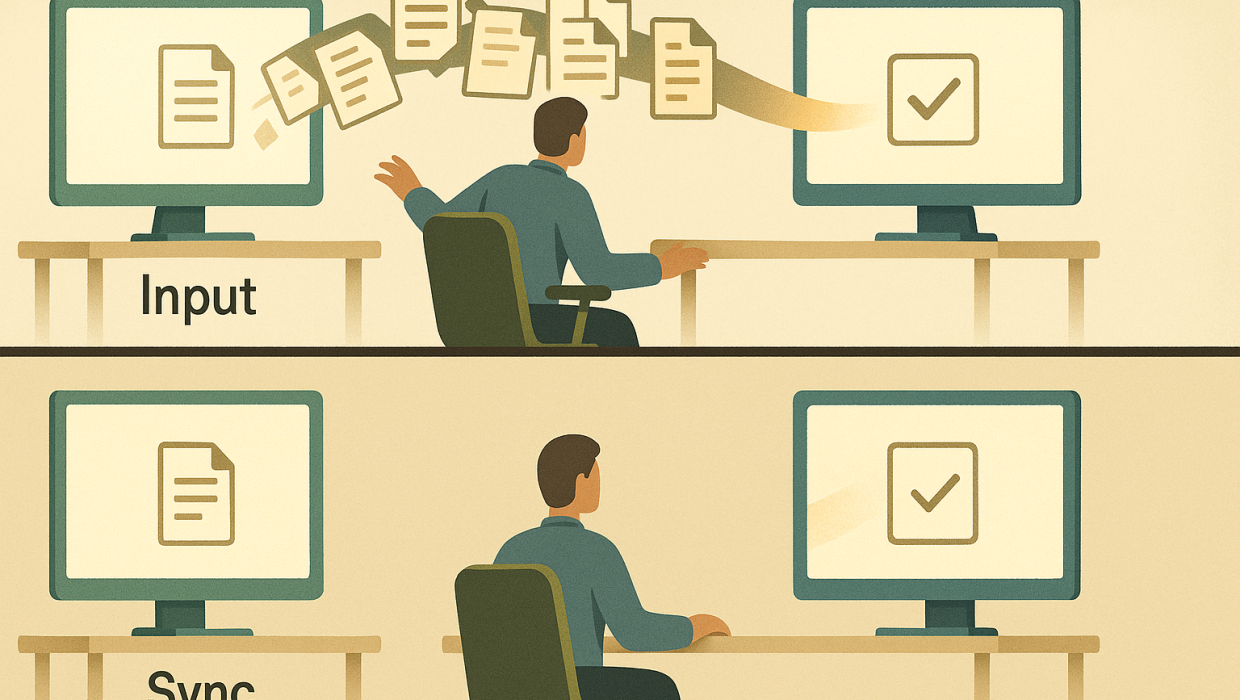
This is the industry term for when an employee’s job is essentially copying information from one screen to another — turning their chair from one system to the next all day. It’s invisible in job descriptions but visible in every timesheet. Modern AI integration and light-touch automation can eliminate the swivel entirely by connecting systems that were never designed to talk to each other.
Companies exploring AI workflow automation for the first time are often surprised that the biggest wins come from these unglamorous middle-of-the-process fixes, not from flashy front-end AI features.
AI Workflow Automation Is Not About Replacing People
It’s worth being direct about this, because it’s the single biggest source of internal resistance to automation projects: the goal is not to remove people from the loop. It’s to remove people from tasks that don’t require their judgment, so their judgment gets spent on things that actually need it.
A financial analyst reviewing every line of an expense report is not using their expertise — they’re using their patience. Automating that first pass and routing only the exceptions to the analyst is a better use of everyone’s time, including theirs. This distinction matters because employees who understand that automation is targeting drudgery, not their role, become allies in finding more of it rather than obstacles hiding it.
Building a Technology Integration Strategy That Finds These Gaps
Spotting hidden automation opportunities isn’t a one-time audit — it needs to be built into how a company evaluates technology on an ongoing basis. A few principles make this repeatable rather than a one-off consulting exercise.
Start with the workflow, not the software. Map the actual sequence of hand-offs for a given process — who touches it, in what order, and where delays consistently occur. Only then evaluate what technology (AI or otherwise) fits that specific gap.
Prioritize by friction, not novelty. The most exciting AI capability isn’t always the most valuable one for your organization right now. A less glamorous fix that saves twelve hours a week across a team beats a sophisticated model that saves twelve minutes.
The most exciting AI capability isn’t always the most valuable one for your organization right now.
Treat integration as the real work. The AI or automation tool itself is rarely the hard part anymore — off-the-shelf models and platforms are commoditized. The differentiator is technology integration strategies that connect these tools cleanly into your existing CRM, ERP, and communication systems without creating new fragility. This is where many internal IT teams, stretched thin on day-to-day support, benefit from a partner who has done this integration work repeatedly across different tech stacks — see our IT solutions and custom software work for examples of what that looks like in practice.
Measure adoption, not just deployment. A workflow automation tool that goes live but isn’t trusted or used correctly by the team is worse than no automation at all — it creates a shadow manual process running alongside the “official” automated one.
A Practical Path Forward
If you suspect your organization has hidden automation opportunities but don’t know where to start looking, the honest first step is a structured diagnostic — not a vendor pitch. Sit down with the teams doing the actual work (not just their managers) and ask where they lose time to repetitive tasks, where they wait on someone else, and where they’ve built their own workaround spreadsheet because the “real” system doesn’t do what they need.
Patterns emerge quickly. Most organizations find their hidden opportunities cluster in three or four specific processes, not scattered randomly across the business. That concentration is good news — it means the fix is targeted, not a company-wide overhaul.
Our own AI and automation practice is built around exactly this sequencing: diagnose the actual workflow first, then design and build the automation layer that fits it — rather than starting with a tool and forcing a use case around it. It’s a slower first step that consistently produces faster, more durable results. You can see how this plays out across different industries in our case studies.
The Cost of Waiting
The math on hidden inefficiency is almost always underestimated because it’s distributed — thirty minutes here, an hour there, spread across dozens of employees over a year. Add it up and it’s frequently the equivalent of a full-time salary or more, quietly funding work that adds no value and that better technology integration strategies would eliminate entirely.
The organizations pulling ahead right now aren’t necessarily using more advanced AI than their competitors. They’re simply better at finding where automation actually belongs before they build it.
If any of this sounds familiar — a process everyone complains about but no one owns, a handoff that’s survived three reorgs unquestioned, a team that’s quietly built its own spreadsheet-based workaround — that’s usually the clearest sign there’s a hidden opportunity worth diagnosing. If you want a second set of eyes on where those opportunities live in your organization, let’s talk about what we’re seeing and map it together.
Let’s make it happen.
RELATED QUESTIONS
What are hidden automation opportunities in a business?
Hidden automation opportunities are the repetitive, time-consuming tasks that exist between departments or systems rather than inside a single tool — things like manually re-entering data across platforms, informal approval chains, or reconciling reports that already exist correctly elsewhere. They’re overlooked because no single team owns the process end-to-end, so the inefficiency never lands on anyone’s roadmap.
How is AI workflow automation different from basic task automation?
Basic task automation typically handles a single, isolated action, like sending a scheduled email. AI workflow automation connects multiple systems and decision points together, using AI to handle judgment-adjacent tasks like flagging exceptions, routing approvals, or summarizing information, so that an entire process runs with minimal manual intervention rather than just one step of it.
Will automating workflows eliminate jobs?
Effective workflow automation is designed to remove repetitive, low-judgment tasks from people’s plates, not to remove the people themselves. The goal is to free up staff time currently spent on data entry, reconciliation, or routine approvals so they can focus on the parts of their role that genuinely require expertise and judgment.
Where should a company start when looking for automation opportunities?
The right starting point is a diagnostic conversation with the people actually doing the work, not a review of available software tools. Mapping real workflows — including the workarounds and spreadsheets employees have built themselves — usually reveals three or four concentrated processes worth automating, rather than a need for a company-wide overhaul.
Why do enterprises often miss these automation opportunities on their own?
Enterprises tend to automate within department boundaries, since that’s how ownership and budgets are structured, which means cross-departmental handoffs and approval bottlenecks fall into a gap nobody is responsible for fixing. There’s also a natural reluctance to touch processes that technically work, even when they’re quietly inefficient, because change feels riskier than tolerating known friction.
Ready to Find the Automation Opportunities Hiding in Your Workflows?
Start a conversation with Sapiens + Machines to discuss your goals, challenges, and next steps.