Most infrastructure failures don’t announce themselves. They accumulate quietly — a server patch delayed six months, a departed employee’s login never revoked, a vendor integration nobody fully documented — until the day they don’t. That’s the uncomfortable truth about IT infrastructure vulnerabilities: by the time they’re visible, they’re usually already expensive. For CTOs, agency owners, and marketing directors managing growing technology stacks, the question isn’t whether vulnerabilities exist. It’s whether anyone has actually looked.
The Blind Spot Every Growing Business Has
Growth creates complexity, and complexity hides risk. A company that started with a handful of cloud tools five years ago now runs a sprawling mix of platforms, integrations, remote access points, and legacy systems that were never designed to work together. Each addition made sense in isolation. Together, they form an infrastructure that almost nobody in the organization can fully picture, let alone audit from memory.
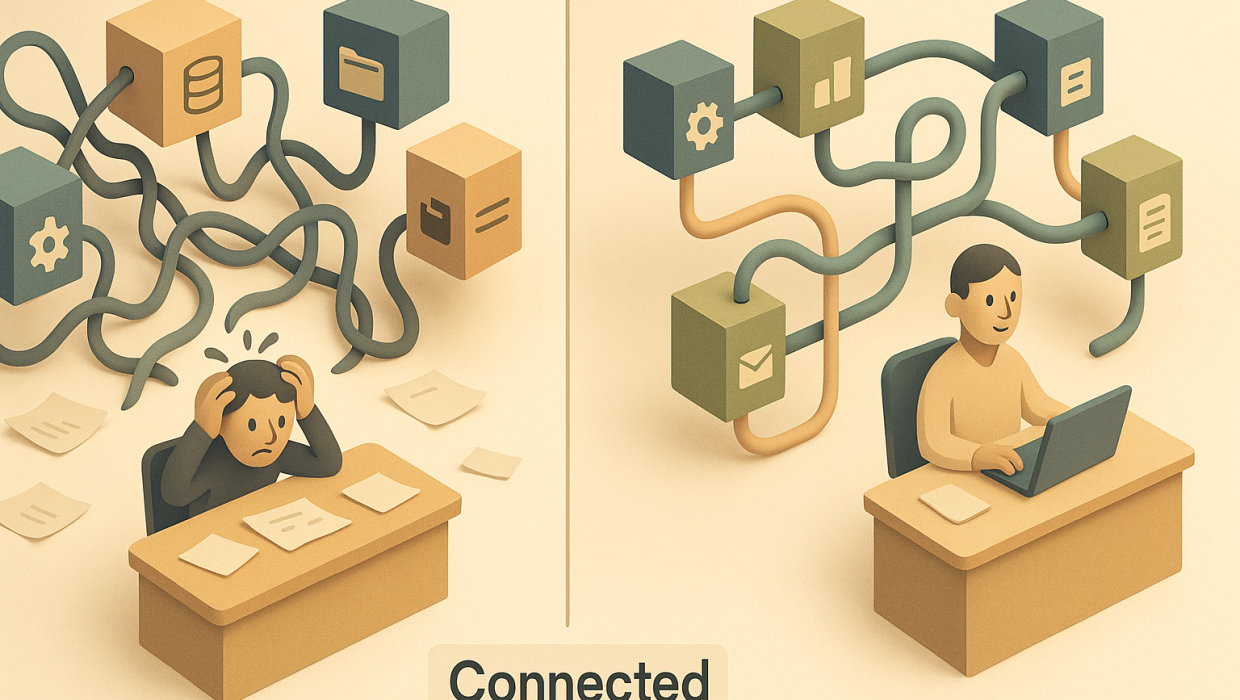
This is the core problem with technology vulnerabilities: they’re rarely the result of one bad decision. They’re the byproduct of dozens of reasonable ones, made under time pressure, without anyone circling back to check how the pieces fit. A marketing team adopts a new automation tool. IT approves it quickly to avoid becoming a bottleneck. Six months later, that tool has admin-level access to customer data and no one remembers granting it, let alone reviewing it since.
What “Hidden” Really Means
When we talk about hidden vulnerabilities, we don’t mean exotic zero-day exploits or sophisticated cyberattacks — though those matter too. We mean the mundane, unglamorous gaps that sit in plain sight:
The Usual Suspects
- Unpatched or end-of-life systems still running because migrating them feels riskier than leaving them alone.
- Orphaned access credentials for employees, contractors, or vendors who no longer need them.
- Undocumented integrations between platforms that were connected by a well-meaning team member and never revisited.
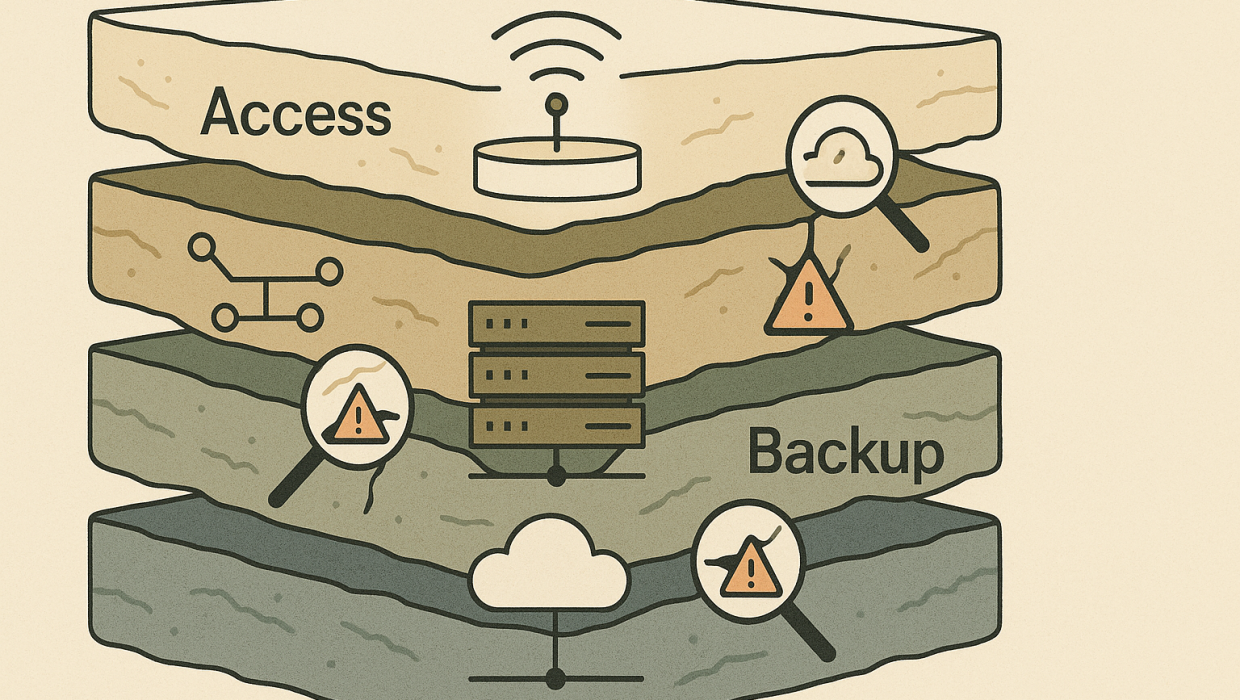
- Inconsistent backup protocols that look fine on paper but haven’t actually been tested with a real recovery drill.
- Shadow IT — tools and apps adopted by individual teams without going through any formal vetting process.
None of these look dramatic day to day. That’s exactly why they’re dangerous. A ransomware headline gets attention; a two-year-old service account with unnecessary admin rights does not — until it’s the entry point for a breach that costs weeks of downtime and a client relationship.
Why Diagnosis Has to Come Before the Fix
The instinct when infrastructure feels shaky is to reach for a solution — a new security tool, a fresh vendor, a bigger budget line. But bolting new technology onto an unexamined system usually just adds another layer of complexity to a foundation nobody has actually mapped. We approach every engagement through a diagnosis-before-build lens for exactly this reason: you can’t responsibly fix what you haven’t accurately assessed.
A real diagnostic goes beyond a surface-level scan. It means mapping every system, access point, and integration against how the business actually operates — not just how the org chart says it should. It means asking uncomfortable questions: Who still has access to systems they no longer use? Which vendor integrations were set up years ago by someone who’s since left the company? What happens, in practice, if your primary server goes down at 2 a.m. on a Friday? Our IT solutions work always starts here, because a diagnosis that skips the uncomfortable questions isn’t really a diagnosis — it’s a checklist.
The Business Cost of Waiting
Infrastructure risk is often framed purely as a security issue, but the real cost is broader than a breach. Downtime from a preventable outage stalls client deliverables. A slow, patchwork system frustrates the internal teams trying to do good work despite it. A vendor integration that quietly breaks can corrupt weeks of campaign or sales data before anyone notices the numbers look wrong.
The businesses that treat infrastructure security as an ongoing discipline — not a one-time project — are the ones that scale without constantly firefighting. That’s the shift worth internalizing: infrastructure isn’t something you fix once and file away. It’s something you manage continuously, the same way you manage cash flow or client relationships.
The businesses that treat infrastructure security as an ongoing discipline — not a one-time project — are the ones that scale without constantly firefighting.
This is where IT risk management earns its keep as an ongoing function rather than an annual checkbox. Regular reviews catch the orphaned account before it becomes an incident report. They catch the vendor contract that’s quietly lapsed on its security certifications. They catch the automation workflow that’s been silently failing for a month because nobody built in a way to notice.
Where Technology Vulnerabilities Hide in Plain Sight
Modern marketing and operations stacks make this more complicated, not less. As teams adopt more automation and AI-driven tools to move faster, they’re also expanding the number of systems with access to sensitive data — CRM records, campaign analytics, customer communications. Each new integration is a new door. Most organizations are diligent about locking the front door and far less diligent about auditing every side entrance they’ve added over the years.
The same applies to custom-built tools and internal software. A platform built quickly to solve an urgent problem often becomes permanent infrastructure without ever getting the security review a purpose-built enterprise IT solution would receive. It works, so it stays — and it stays exactly as exposed as it was the day someone shipped it under deadline pressure.
What Strong Infrastructure Security Looks Like in Practice
Strong infrastructure security isn’t about achieving a fortress-like, unchangeable system — that’s neither realistic nor useful for a business that needs to keep moving. It’s about building visibility and resilience into how the infrastructure evolves. In practice, that tends to include:
- A current, accurate map of every system, integration, and access point — reviewed on a set schedule, not just when something breaks.
- Clear ownership for each piece of infrastructure, so “who’s responsible for this” is never a mystery during an incident.
- Tested backup and recovery procedures, verified with actual drills rather than assumed to work.
- A defined process for vetting new tools before they’re connected to core systems, so shadow IT doesn’t quietly expand the attack surface.
- Regular access reviews that remove permissions as soon as they’re no longer needed, not months later.
None of this requires exotic technology. It requires discipline, documentation, and someone whose job it is to keep asking the questions that get skipped when everyone’s focused on shipping the next project. That’s precisely the gap our managed IT and infrastructure support is built to close — pairing technical expertise with the operational habit of actually following through on what an audit finds.
Turning Audit Into Action
Finding vulnerabilities is only half the work. The harder, more valuable half is prioritizing what actually matters and building a realistic plan to address it — because not every gap deserves the same urgency, and treating them all as five-alarm fires burns trust and budget fast. A good diagnostic ranks findings by real business impact: what could actually take down operations versus what’s technically imperfect but low-risk.
We’ve seen this play out across client engagements documented in our case studies — the businesses that made the most progress weren’t the ones with the biggest security budgets. They were the ones willing to look honestly at what an audit surfaced and act on the highest-impact items first, rather than trying to fix everything simultaneously and stalling out.
If it’s been a while since anyone took a genuine, systematic look at your infrastructure — not a quick scan, but a full diagnostic against how your business actually runs — that’s usually the clearest sign it’s time to. The businesses that wait for a visible failure to prompt that review almost always pay more for the fix than they would have paid for the diagnosis. If you’re ready to find out what’s actually hiding in your systems, let’s start a conversation about what a real assessment would look like for your infrastructure.
Vulnerabilities don’t wait for a convenient time to surface. The organizations best positioned to handle them are the ones who went looking first.
RELATED QUESTIONS
What are hidden IT infrastructure vulnerabilities?
Hidden IT infrastructure vulnerabilities are gaps in a company’s systems that go unnoticed during normal operations — things like unpatched software, orphaned user access, undocumented integrations, or untested backup systems. They’re not usually the result of one big mistake, but rather the slow accumulation of small, reasonable decisions that were never revisited. They tend to surface only after a failure, breach, or outage forces a closer look.
How often should a business audit its IT infrastructure?
Most growing businesses benefit from a full infrastructure review at least once a year, with lighter access and integration reviews happening quarterly. Companies that add new tools, vendors, or team members frequently should audit more often, since each addition can introduce new access points or dependencies. The right cadence depends on how fast the infrastructure is changing, not a fixed calendar rule.
What’s the difference between IT risk management and cybersecurity?
Cybersecurity typically focuses on defending against external threats like attacks, malware, and breaches. IT risk management is broader — it includes cybersecurity but also covers operational risks like system downtime, vendor dependency, data loss, and process gaps that could disrupt the business even without a malicious actor involved. A strong infrastructure strategy addresses both together rather than treating them as separate concerns.
Why do IT vulnerabilities often go unnoticed until something breaks?
Vulnerabilities go unnoticed because they’re usually mundane rather than dramatic — an old login that was never deactivated, a backup that hasn’t been tested in months, an integration nobody documented. These issues don’t interrupt daily operations, so there’s no natural trigger prompting someone to investigate. Without a scheduled, systematic review, they simply persist until a failure forces attention.
What should a real IT infrastructure diagnostic include?
A real IT infrastructure diagnostic should map every system, integration, and access point against how the business actually operates day to day, not just what’s documented on paper. It should include a review of access permissions, a test of backup and recovery procedures, and an audit of any tools adopted outside formal IT approval. Findings should be prioritized by actual business impact so the highest-risk issues get addressed first.
Ready to Find What's Hiding in Your Infrastructure?
Start a conversation with Sapiens + Machines to discuss your goals, challenges, and next steps.