Every few months, a headline reminds the business world how fragile its digital foundations really are. A cloud provider goes dark for an afternoon. A ransomware attack locks a hospital system out of its own patient records. A single misconfigured update takes down airline check-in systems worldwide. Each time, the postmortems say the same thing: the disruption itself wasn’t the real failure — the lack of preparation was. That’s the essence of IT infrastructure resilience, and it’s no longer a back-office concern reserved for your systems administrator. It’s a board-level question.
For CTOs, marketing directors, and agency owners alike, the stakes have changed. Infrastructure now underpins everything from client deliverables to campaign data to revenue operations. When it breaks, it doesn’t just interrupt IT — it interrupts the business. So the question worth asking isn’t whether disruption will happen. It’s whether your organization is built to absorb it.
What “Digital Disruption” Actually Means Today
The term gets used loosely, but digital disruption isn’t limited to dramatic cyberattacks. It includes the mundane and the catastrophic alike:
- A SaaS vendor your team depends on suddenly changes its API or shuts down a feature you built workflows around.
- A key employee’s laptop is compromised through a phishing email, exposing client data.
- A regional cloud outage takes your customer-facing tools offline during a product launch.
- A legacy on-premise server fails with no documented recovery process.
None of these require a sophisticated nation-state actor. Most require nothing more than time, complexity, and neglect. Organizations tend to prepare for the disruption they can imagine — a dramatic hack — while the disruption that actually hits them is far more pedestrian: an expired certificate, an unpatched vulnerability, an employee using a personal device with no oversight.
This is why mitigating IT threats has to be thought of as an ongoing discipline, not a single project. Threat surfaces change every time you add a new tool, a new vendor, or a new remote employee. Resilience isn’t a state you reach; it’s a practice you maintain.
Threat surfaces change every time you add a new tool, a new vendor, or a new remote employee. Resilience isn’t a state you reach; it’s a practice you maintain.
Why Most Infrastructure Isn’t as Resilient as Leaders Assume
In our work helping companies diagnose their technology stacks, we consistently find a gap between perceived and actual resilience. Leadership assumes redundancy exists because “IT handles that.” But when we dig in, we often find:
Backup systems that have never been tested. A backup that hasn’t been restored in a simulated failure isn’t a safety net — it’s an assumption. Plenty of organizations discover their backups are corrupted, incomplete, or years out of date only after they need them.
No clear ownership during a crisis. When something breaks, who has authority to make decisions? Who talks to customers? Who talks to vendors? Without a documented chain of command, even a minor outage turns into hours of confused Slack threads while the actual problem festers.
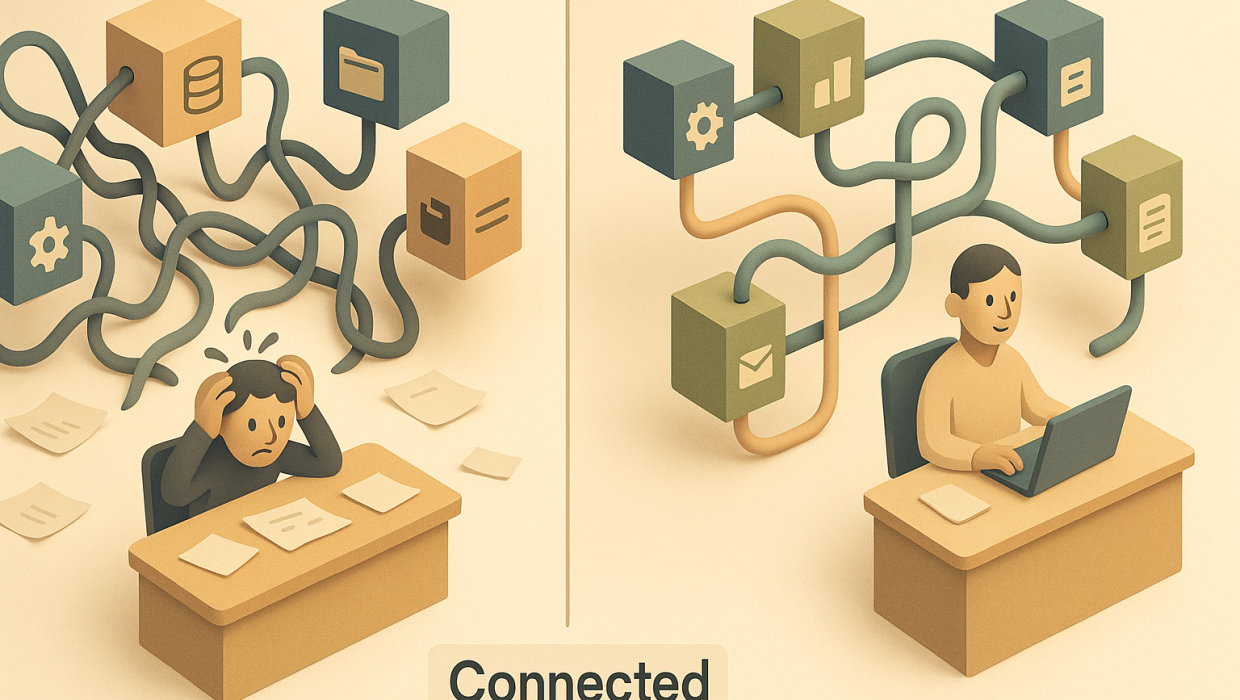
Fragmented systems with no single source of truth. Years of point solutions, quick fixes, and departmental software purchases leave many companies with a patchwork of platforms that don’t talk to each other — and no one who fully understands how they connect.
Underinvestment in the boring stuff. Password management, access controls, and patch schedules aren’t glamorous, but they are disproportionately responsible for the breaches that make headlines. Resilience is rarely lost through some catastrophic failure of imagination — it’s lost through unmanaged, accumulated small risks.
This is precisely why we start every engagement with a diagnosis before we touch a single system. You cannot fix what you haven’t accurately mapped, and too many resilience initiatives fail because they jump straight to new software or new hardware without understanding where the actual fragility lives. Our IT infrastructure services begin by identifying exactly where your current setup would buckle — before recommending a single fix.
Building Real Business Continuity Planning
Business continuity planning has a reputation for being a dusty binder nobody reads until it’s too late. Done well, it’s the opposite: a living, tested set of decisions that your team can execute under pressure, without having to improvise.
Start With Impact, Not Just Risk
Most continuity plans start by listing threats — a fire, a cyberattack, a power outage — and working backward. A more useful starting point is impact: what would actually happen to revenue, client relationships, and operations if a given system went down for an hour, a day, or a week? Ranking systems by business impact, rather than by technical complexity, tells you where to spend your limited time and budget.
Document the First 60 Minutes
The earliest moments of a disruption determine how bad it becomes. Who gets notified? What’s the communication plan for clients and staff? Which systems get isolated to prevent spread? Organizations that survive disruptions gracefully aren’t necessarily the ones with the most advanced technology — they’re the ones with the clearest first-hour playbook.
Test It Like You Mean It
A continuity plan that has never been rehearsed is a hypothesis, not a plan. Tabletop exercises — walking through a simulated outage or breach with the actual people who’d respond — routinely surface gaps that look fine on paper but fall apart in practice. This is the single highest-leverage exercise most organizations skip.
The Role of Technology Partners in Digital Disruption Response
A capable digital disruption response depends on more than internal staff, especially for mid-sized companies without a dedicated security or infrastructure team. The right technology partner brings pattern recognition from having seen dozens of failure modes across industries — insight that’s difficult to build in-house if you’ve only experienced your own outages.
This is also where the augmentation-over-automation mindset matters most. Automated monitoring tools and AI-driven alerting can catch anomalies faster than any human watching a dashboard, but the judgment about what those alerts mean — and what to do next — still belongs with people who understand your business context. We’ve seen organizations lean too far into “set it and forget it” tooling, only to discover the tooling was quietly generating false confidence. The goal isn’t to remove human oversight from infrastructure decisions; it’s to give the humans making those decisions faster, clearer information. Our approach to AI and automation reflects that same philosophy — technology should sharpen judgment, not replace it.
If your organization is evaluating whether current systems can hold up, that evaluation is worth doing before a disruption forces the question. It’s a conversation we have often, and one worth having early — you can start a conversation with our team to walk through where your infrastructure currently stands.
Practical Steps Toward Infrastructure Resilience
Resilience isn’t achieved through a single audit or purchase. It’s built through a layered set of practices:
1. Map dependencies. Know exactly which vendors, platforms, and integrations your critical operations rely on — including the ones nobody remembers signing up for.
2. Segment access. Not every employee needs access to every system. Reducing the blast radius of a compromised account is one of the cheapest, highest-impact security moves available.
3. Automate backups, but verify manually. Scheduled backups reduce human error, but someone still needs to periodically confirm a restore actually works.
4. Update your custom software with the same rigor as off-the-shelf tools. Homegrown systems and internal tools often get neglected because there’s no vendor sending patch reminders. If your team relies on custom software solutions, they need a maintenance plan just as much as your commercial applications do.
5. Revisit your plan quarterly. Infrastructure changes fast. A continuity plan built around last year’s tech stack may not reflect what you’re actually running today.
None of these steps requires a massive budget. Most require discipline, documentation, and a willingness to test assumptions rather than trust them.
Resilience as a Competitive Advantage
There’s a version of this conversation that frames resilience purely as risk avoidance — insurance against a bad day. That’s true, but incomplete. Companies with genuinely resilient infrastructure move faster in ordinary circumstances too. They onboard new tools with less friction because their systems are well-documented. They recover from vendor changes without panic because they’ve mapped their dependencies. They win enterprise clients who ask hard questions during procurement about uptime, security, and continuity — questions that eliminate less-prepared competitors before the pitch even happens.
In that sense, IT infrastructure resilience isn’t a defensive posture. It’s a growth lever, quietly working in the background every day disruption doesn’t happen, and loudly proving its worth on the one day it does.
If it’s been a while since anyone stress-tested your systems against a realistic worst case, that’s usually the clearest sign it’s time to. Our team’s managed IT and infrastructure support is built around exactly that kind of diagnostic-first approach — understanding what you actually have, what’s actually fragile, and what’s worth fixing first.
RELATED QUESTIONS
What does IT infrastructure resilience actually mean?
IT infrastructure resilience is the ability of an organization’s technology systems to keep functioning, or recover quickly, when faced with disruptions like outages, cyberattacks, or vendor failures. It goes beyond having backups — it includes tested recovery processes, clear ownership during a crisis, and documented continuity plans that get rehearsed, not just written and filed away.
How often should a company test its business continuity plan?
Most organizations should revisit and test their business continuity plan at least quarterly, since infrastructure, vendors, and staff change faster than most plans get updated. A tabletop exercise, where the actual response team walks through a simulated outage or breach, is the most effective way to surface gaps that look fine on paper but fail under real pressure.
What are the most common IT threats businesses overlook?
The most commonly overlooked threats aren’t sophisticated hacks — they’re untested backups, unclear crisis ownership, unpatched internal software, and overly broad employee access to systems. These accumulated small risks are responsible for far more outages and breaches than dramatic cyberattacks, making them the highest-priority areas for mitigating IT threats.
Why do backup systems fail when companies actually need them?
Backup systems often fail during real emergencies because they were never tested with an actual restore, only assumed to be working. Corrupted files, incomplete backups, and outdated data can go unnoticed for years until the moment a company urgently needs to recover, which is why regular manual verification of backups is essential alongside automated scheduling.
How should a company prioritize which systems to protect first?
Companies should prioritize systems based on business impact rather than technical complexity, asking what would actually happen to revenue, operations, and client relationships if each system went down for an hour, a day, or a week. Ranking systems this way directs limited time and budget toward the failures that would hurt the most, rather than the ones that are simply easiest to fix.
Let's Stress-Test Your IT Infrastructure Before Something Else Does
Start a conversation with Sapiens + Machines to discuss your goals, challenges, and next steps.