Most B2B companies don’t have a lead problem. They have a lead handling problem — and no amount of additional ad spend or content production will fix a funnel that leaks qualified prospects through manual handoffs, stale spreadsheets, and sales reps guessing which inbound form-fill is worth a callback. That’s the case for lead generation automation: not as a buzzword, but as the structural fix for a process that was never built to scale.
Most B2B companies don’t have a lead problem. They have a lead *handling* problem
If your team is still manually exporting leads from a form tool, eyeballing them for fit, and pasting them into a CRM two days later, you’re not running a funnel. You’re running a queue — and queues lose deals to competitors who respond in minutes instead of days.
The Problem With “More Leads” as a Strategy
When pipeline slows down, the instinctive response is to generate more leads. More campaigns, more content, more spend. But volume without infrastructure just moves the bottleneck downstream. Marketing hands off a bigger pile of unqualified contacts, sales spends more time sorting than selling, and conversion rates quietly erode even as top-of-funnel numbers look healthy in a dashboard.
The real diagnostic question isn’t “how do we get more leads?” It’s “why aren’t the leads we already have converting at the rate they should?” Nine times out of ten, the answer lives in the gaps between systems — the moment a lead fills out a form and the moment a human actually acts on it. That gap is where automation earns its keep.
What Lead Generation Automation Actually Means
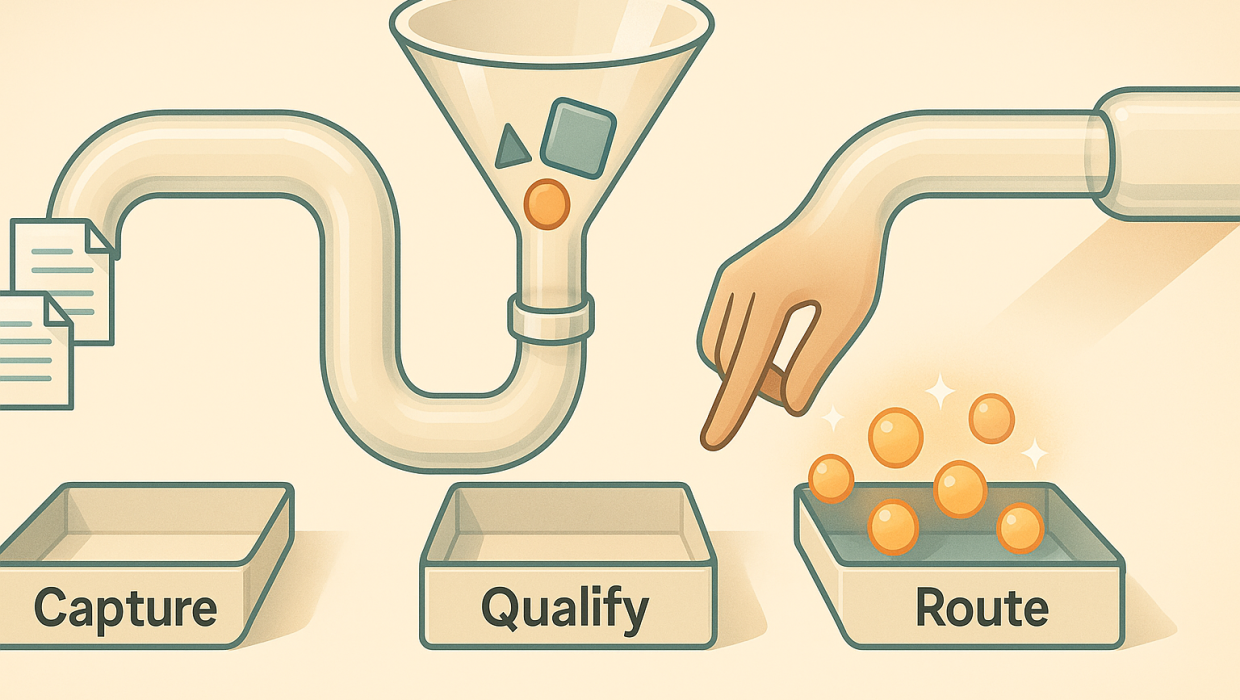
Lead generation automation isn’t a single tool or a chatbot bolted onto your website. It’s the connective architecture between three functions that, in most companies, currently operate as disconnected silos: capturing prospect data, qualifying it against real buying signals, and routing it to the right person before interest cools.
Done well, this architecture runs quietly in the background. A prospect fills out a form, downloads a resource, or engages with a sales conversation on your site. Within seconds, that activity is enriched with firmographic data, scored against your ideal customer profile, and pushed into your CRM with the correct owner already assigned and the correct sequence already triggered. No exports. No manual review queue. No lead going cold because it sat in an inbox over a weekend.
This is the foundation of a serious prospect funnel strategy — not more top-of-funnel noise, but a system engineered to convert the interest you’re already earning.
Capture: Where Most Funnels Quietly Lose Data
Capture sounds simple, but it’s usually where the first leak happens. Forms that don’t sync in real time, chat tools that don’t pass conversation context to sales, and disconnected landing pages that never talk to the CRM at all — these create blind spots before qualification even starts. A properly automated capture layer treats every touchpoint, from a demo request to a pricing page visit, as a signal worth logging and acting on immediately.
Qualify: Scoring Instead of Guessing
Route: Getting the Right Lead to the Right Person, Fast
Even a perfectly qualified lead is wasted if it sits in a shared inbox or gets assigned by whoever happens to check the CRM next. Routing logic — by territory, deal size, product line, or rep capacity — should be automatic and instant, not a manual triage step someone gets to “when they have time.”
Why CRM Integration Is the Load-Bearing Wall
Everything above depends on one thing working correctly: CRM integration. Your CRM is the system of record for every deal in motion, which means it has to be the destination for every signal your funnel produces — form fills, email engagement, website behavior, ad interactions, even offline touches like trade show scans. If those signals don’t land in the CRM cleanly, automatically, and in real time, your qualification and routing logic has nothing reliable to act on.
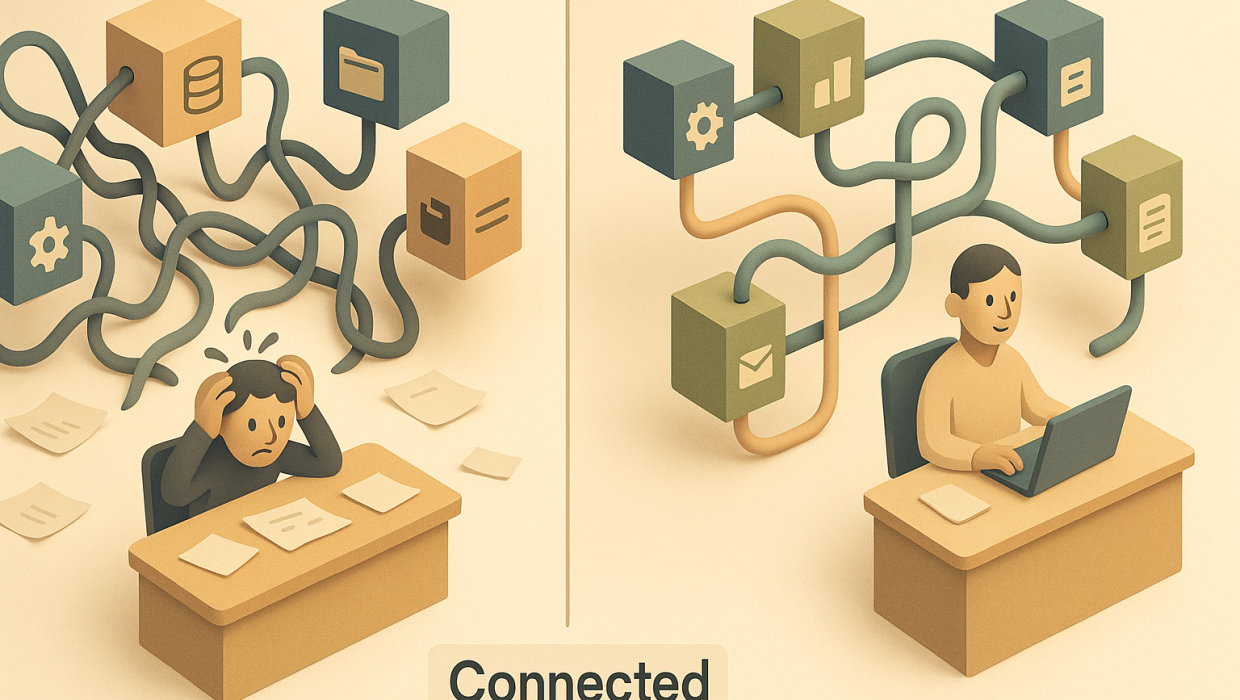
This is where a lot of well-intentioned automation projects quietly fail. Teams buy a scoring tool or a chatbot without first confirming that data flows cleanly between systems. The result is automation layered on top of broken plumbing — reports that don’t match reality, duplicate records, and sales reps who stop trusting the CRM entirely and fall back on gut instinct. Fixing that plumbing, not adding another point solution, is usually the highest-leverage move available. It’s also exactly why our own engagements start with an audit of your existing stack — including the specific tools already in your funnel — before we recommend anything new.
Lead Qualification Systems: Scoring, Not Guessing
A qualification system’s job is to answer one question consistently: is this lead worth a human’s time right now? That answer should never depend on which rep happens to see it first or how their morning is going.
Modern lead qualification systems combine explicit signals — job title, company size, industry, budget indicators — with behavioral signals: page visits, content downloads, email opens, pricing page returns. Weighted correctly, these produce a score that tells sales exactly where to focus first. A director-level visitor who’s viewed pricing twice this week should never sit in the same queue as someone who downloaded a single blog post six months ago, but in most unautomated funnels, they do.
The scoring model itself has to be built from your actual closed-won data, not generic industry assumptions. This is precisely the kind of work that benefits from diagnosis before build: reviewing twelve to twenty-four months of pipeline history to see what genuinely correlates with a closed deal, rather than guessing which fields feel important. Get this step wrong and you’ll automate a bias, sending your best reps chasing signals that look promising but never actually close.
Diagnosis Before Build: Where Most Overhauls Go Wrong
The temptation with any automation initiative is to start buying software. A new scoring tool here, a routing app there, a chatbot bolted onto the homepage. But automation layered onto an undiagnosed process just automates the dysfunction faster.
The more durable approach starts with mapping the funnel as it actually exists today — not as it appears in a slide deck, but as leads genuinely move (or stall) between marketing and sales. That means auditing where leads are created, how they’re currently scored (if at all), who receives them, and how long each handoff takes in practice. Only once that diagnosis is complete does it make sense to design the qualification logic, routing rules, and CRM integration that will replace it. This is the same diagnosis-before-build discipline we apply across every engagement, and it’s especially critical for lead generation systems, where a poorly diagnosed funnel can quietly misroute your highest-value prospects for months before anyone notices.
What This Looks Like in Practice
Consider a mid-sized B2B software company generating a healthy volume of inbound demo requests but converting only a fraction into actual pipeline. The diagnosis revealed the real issue: leads sat unassigned in a shared CRM view for an average of eighteen hours, and there was no scoring layer distinguishing an enterprise buyer from a student researching a school project.
The fix wasn’t more leads. It was building an automated qualification layer that scored inbound requests against firmographic and behavioral data in real time, paired with routing rules that assigned enterprise-fit leads directly to senior reps within seconds of form submission — with instant CRM integration so no manual export step existed anywhere in the chain. Response time dropped from hours to minutes, and pipeline from existing traffic increased without a single additional dollar of ad spend. You can see how this pattern plays out across different industries in our case studies.
In most of these engagements, the automation itself is almost boring in its simplicity — a well-configured workflow tool, a clean data model, and integration logic that respects how your sales team actually works. The complexity is never in the software. It’s in getting the diagnosis right before anything gets built, and in resisting the urge to add tools before the underlying data is trustworthy. Where the process genuinely calls for more sophisticated logic — predictive scoring models, custom routing across multiple product lines, or workflows that span several systems — that’s where deeper automation and AI capabilities earn their place, layered on top of a foundation that already works.
Getting Started
If your current funnel relies on manual review, delayed handoffs, or a CRM that sales quietly distrusts, the fix isn’t a bigger campaign budget — it’s an honest look at the machinery underneath it. That starts with mapping how leads actually move through your organization today, identifying where automation would remove friction rather than add complexity, and building qualification and routing logic around data you can actually trust.
That’s the work worth doing before anything else. If you want a second set of eyes on where your funnel is leaking, let’s talk it through — the diagnosis costs you nothing but an honest conversation about where your current process breaks down.
RELATED QUESTIONS
What is lead generation automation?
Lead generation automation is the connected system that captures prospect data, scores it against your ideal customer profile, and routes qualified leads to the right salesperson without manual handoffs. Instead of relying on someone to export, review, and reassign leads by hand, the process runs automatically the moment a prospect engages, ensuring qualified interest reaches sales in minutes rather than days.
How do lead qualification systems actually score a lead?
Lead qualification systems combine explicit data, like job title, company size, and industry, with behavioral signals such as pricing page visits, content downloads, and email engagement. These factors are weighted based on what has actually correlated with closed deals in your historical pipeline data, producing a score that tells sales which leads deserve immediate attention. The most accurate models are built from your own closed-won history rather than generic industry templates.
Why is CRM integration so important for lead generation?
CRM integration matters because the CRM is the system of record every qualification and routing decision depends on. If form fills, website behavior, and email engagement don’t flow into the CRM automatically and accurately, scoring and routing logic has no reliable data to act on, and sales teams end up falling back on guesswork instead of trusting the system.
What does “diagnosis before build” mean in a lead generation context?
Diagnosis before build means mapping exactly how leads move through your organization today, including where they stall, how they’re currently scored, and who actually receives them, before designing or purchasing any new automation tools. Skipping this step typically results in automation that reinforces existing dysfunction rather than fixing it, since the underlying data and process were never actually understood.
How quickly can a company see results from automating its lead funnel?
Many companies see measurable improvement within weeks of implementing automated qualification and routing, since the biggest gains often come from eliminating delays that already exist in the current process, such as leads sitting unassigned for hours or days. Response time to inbound leads is usually the first metric to improve, followed by conversion rate as qualified prospects reach sales while their interest is still active.
Ready to Rebuild Your Lead Funnel Around Automation?
Start a conversation with Sapiens + Machines to discuss your goals, challenges, and next steps.