Local listings hijacking sounds like a problem reserved for careless small businesses — until it happens to a company with a full marketing team, a six-figure ad budget, and an agency of record. It doesn’t discriminate by size. It discriminates by exposure: how many people have access to your Google Business Profile, how well that access is managed, and how quickly someone notices when something changes. For B2B decision-makers who treat local presence as a minor line item next to paid media and SEO, that’s the uncomfortable part. A hijacked listing isn’t a hypothetical edge case — it’s a predictable outcome of an unmanaged asset sitting in plain sight.
What “Hijacking” Actually Means for a Google Business Profile
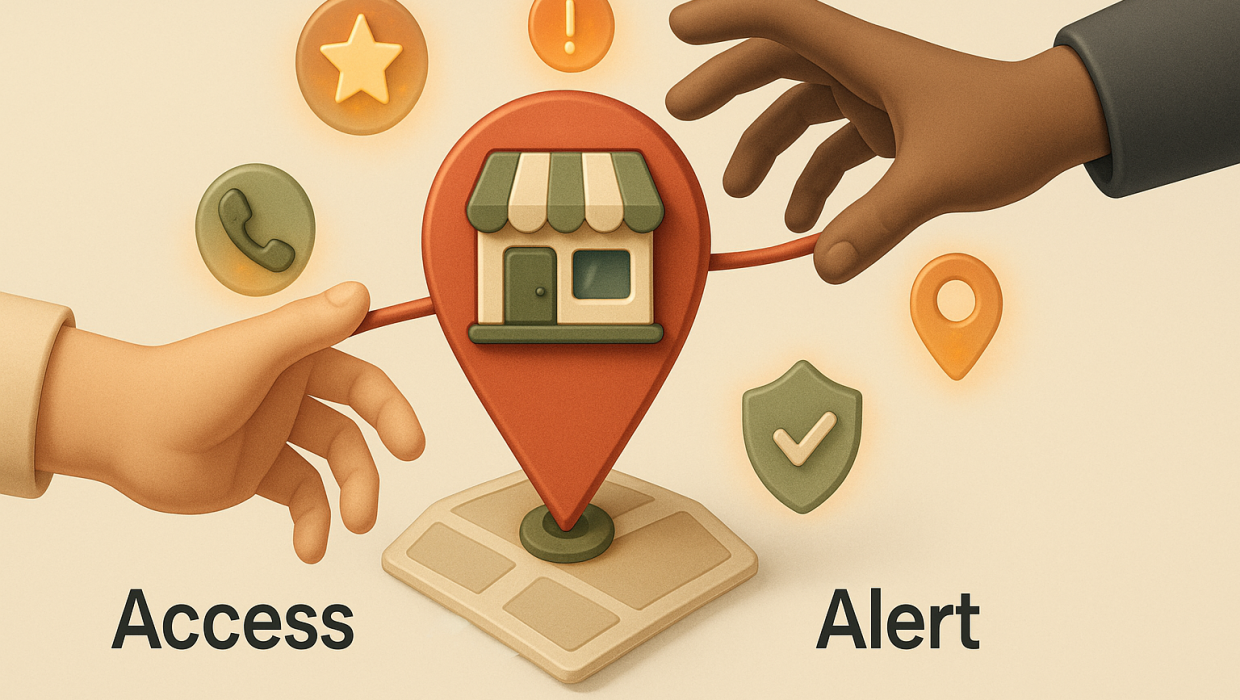
A Google Business Profile (GBP) is technically owned by whoever Google’s system currently recognizes as the verified manager — not necessarily by the business itself. That distinction is the entire vulnerability. Hijacking happens when someone outside your organization requests management access, disputes your ownership, or exploits a gap in verification to take control of the listing.
Once in control, they can change your business name, swap your phone number for a call-tracking number that routes to a competitor, alter your service categories, edit your address, or quietly redirect your website link. In more aggressive cases, they suspend the listing entirely, cutting off your visibility in the map pack while they build out a duplicate profile designed to absorb your reviews and search equity. A hijacked Google Business Profile isn’t a technical inconvenience — it’s a hostile takeover of the digital storefront your customers trust most.
A hijacked Google Business Profile isn’t a technical inconvenience — it’s a hostile takeover of the digital storefront your customers trust most.
How Local Listings Hijacking Actually Happens
Most hijacking incidents fall into three categories, and understanding which one you’re vulnerable to determines how you defend against it.
Ownership Transfer Exploits
Google allows multiple people to request management access to a listing, and ownership can be transferred or disputed through Google’s own tools. If your GBP was set up years ago by an employee who’s since left, a freelancer who never handed off credentials, or an agency relationship that ended without a formal offboarding process, that access often still exists. Anyone with lingering login credentials — or anyone who successfully files an ownership request that goes unanswered — can take control.
Verification Loopholes
New or recently edited listings sometimes trigger re-verification. Bad actors monitor for these moments and submit competing verification requests, particularly for businesses with common names or overlapping service areas. If nobody on your side is watching for that notification, the window to contest it closes fast.
Competitor Manipulation
Not all hijacking is opportunistic. In competitive local markets — home services, healthcare, legal, multi-location retail — deliberate sabotage is common. A competitor or an unscrupulous local SEO operator files a fraudulent edit, suggests a name change, or flags your listing for policy violations to trigger a suspension. It’s rarely personal. It’s a numbers game, and an unmonitored listing is the easiest target on the board.
The Business Cost of a Hijacked Listing
The damage compounds faster than most leadership teams expect. A wrong phone number doesn’t just lose a call — it loses a call to a competitor who now looks more responsive than you. A suspended listing doesn’t just disappear from the map pack; it can take weeks to reappear even after the issue is resolved, during which your local search visibility effectively goes dark. Reviews, one of the strongest local trust signals you have, become unmanageable if you no longer control the response function. And if you’re running paid local campaigns, budget continues flowing toward a landing experience — your GBP — that a stranger now controls.
For B2B organizations managing multiple locations or franchise networks, this scales linearly. One hijacked listing is a fire drill. A dozen is a crisis that touches sales, customer service, and brand trust simultaneously, which is why organizations serious about local presence treat GBP the same way they treat any other system in the core technology stack — with defined ownership, access logs, and monitoring, not an assumption that Google’s default settings will protect them.
What Happens If Your Local Listings Are Hijacked
The sequence typically unfolds in a predictable pattern, and knowing it in advance is the difference between a controlled response and a scramble.
First, something changes without your team’s involvement — a new phone number appears, the business hours shift, or the listing shows “suspended” when you search your own brand name. Second, your map pack ranking drops or vanishes, because Google treats suspended or disputed listings as ineligible for local search placement. Third, if a competitor’s edit introduced a redirect or altered contact information, you start losing inbound calls and directions requests without an obvious explanation — often for days before anyone connects the drop in leads to the listing itself. Fourth, if reviews are involved, customer complaints about incorrect information start appearing publicly, compounding the reputational hit.
The organizations that recover fastest are the ones who catch step one immediately, not step three or four. That requires someone actively watching the listing — not just setting it up once and forgetting it exists.
Recovering a Suspended, Hijacked, or Verification-Locked Listing
GBP account recovery is a formal process, and Google does not make it fast. Reclaiming a hijacked or suspended listing generally requires filing an ownership verification request, providing documentation that proves your legal right to represent the business (business licenses, utility bills, tax documents), and, in contested cases, escalating through Google’s Business Profile support channels — which can involve back-and-forth over days or weeks depending on the complexity of the dispute.
Verification-locked listings — where Google flags a profile for re-verification and won’t release full functionality until it’s resolved — present their own challenge, particularly for businesses without a physical storefront or with multiple service-area locations that don’t map cleanly to Google’s verification logic.
This is the point where most internal marketing teams hit a wall: they know something is wrong, but they don’t have the process fluency to navigate Google’s dispute system efficiently, and every day spent figuring it out is a day of lost visibility. This is precisely the kind of situation our local services team steps into directly — diagnosing the type of lockout, assembling the right documentation, and managing the recovery process end to end so leadership isn’t relearning Google’s policies during a live crisis.
Preventing Local Listing Hijack Before It Starts
Recovery is reactive by definition. Local business listing protection is proactive, and it’s considerably cheaper in time, money, and lost leads. A few practices separate businesses that never get hijacked from businesses that do:
Centralize access. Every person or agency with management rights to your GBP should be documented, and access should be revoked immediately when a relationship ends. This is basic Google Business Profile security hygiene, but it’s the single most commonly skipped step.
Use a business Google Workspace account, not a personal Gmail. Ownership tied to an individual’s personal account creates a single point of failure if that person leaves or their credentials are compromised.
Monitor continuously, not periodically. Preventing local listing hijack means someone checks the listing on a schedule — not just when a customer mentions something looks off. Automated alerting for profile changes closes the gap between an unauthorized edit and your response to it.
Treat GBP as part of your broader local visibility strategy, not an isolated task. A listing that’s actively posted to, responsive to reviews, and well-maintained is also less attractive to opportunistic hijackers, because it clearly has an active owner watching it. This overlaps meaningfully with local search optimization more broadly — the same signals that support local search visibility and map-pack ranking also make a listing harder to quietly take over unnoticed.
Apply the same access discipline you use for other business-critical systems. If your organization already has structured credential management through your IT and account security practices, extend that same rigor to GBP rather than treating it as a marketing-only asset outside IT’s purview.
Where This Fits Into a Broader Local Presence Strategy
Local listings hijacking is ultimately a symptom of a larger pattern: treating high-value digital assets as set-it-and-forget-it line items instead of managed systems. The businesses that avoid it are the ones running ongoing GBP management — regular posts, timely review responses, accurate profile maintenance, and active monitoring — as a standing discipline rather than a project that ended when the listing was first claimed.
We’ve seen this play out across client engagements where a diagnosis-before-build approach caught access vulnerabilities before they became incidents, and you can see examples of how that discipline applies across different local and technical challenges in our case studies. The pattern holds regardless of industry: listings that are actively managed rarely get hijacked, and listings that get hijacked were almost always unmanaged first.
If your team is currently unsure who has access to your Google Business Profile, whether it’s been recently edited without your knowledge, or you’re already dealing with a suspended or locked listing, the smartest next step is a direct conversation rather than a guessing game. Our local services and account recovery specialists can assess exposure, recover control where needed, and put monitoring in place so it doesn’t happen again — and you can start that conversation whenever you’re ready.
Local presence isn’t a side project sitting beneath your paid media and SEO budgets. It’s the storefront most of your customers see first. Protecting it deserves the same seriousness you’d apply to any other system your revenue depends on.
RELATED QUESTIONS
What does it mean when a Google Business Profile is hijacked?
It means someone outside your organization has gained management control of your listing, usually through an ownership dispute, a verification loophole, or leftover access credentials from a former employee or agency. Once in control, they can change your business name, phone number, address, or category, often redirecting customers to a competitor or effectively disabling your local visibility.
How do I know if my business listing has been hijacked?
Common warning signs include your listing showing as suspended when you search your own business name, unfamiliar phone numbers or addresses appearing on your profile, sudden drops in map-pack ranking, or reviews and calls that don’t match your actual customer activity. The safest approach is monitoring your listing on a regular schedule rather than waiting to notice a problem by accident.
How long does it take to recover a hijacked or suspended Google Business Profile?
Recovery timelines vary widely, from a few days for straightforward ownership disputes to several weeks for contested or verification-locked listings that require documentation and escalation through Google’s support channels. Businesses that catch the hijack immediately and respond with proper documentation typically recover faster than those who wait until customer complaints reveal the problem.
Can a competitor hijack my Google Business Profile on purpose?
Yes. In competitive local markets, competitors or bad-faith local SEO operators sometimes file fraudulent edits, suggest false ownership changes, or flag a listing for policy violations to trigger a suspension. Unmonitored listings with unclear access controls are the easiest targets, which is why active management and monitoring are the strongest deterrents.
What’s the best way to prevent local listing hijacking?
The most effective prevention combines centralized access control, using a business Google Workspace account rather than a personal email, continuous monitoring for unauthorized changes, and treating the listing as an actively managed asset rather than a one-time setup task. Businesses that post regularly, respond to reviews, and keep their profile current are also less attractive targets, since active management signals an engaged owner watching for changes.
Get Your Google Business Profile Secured and Recovered
Start a conversation with Sapiens + Machines to discuss your goals, challenges, and next steps.