Most organizations don’t choose reactive IT. They back into it — one deferred upgrade, one “we’ll deal with it later” server, one skipped audit at a time. By the time leadership asks whether the company’s IT strategy should prioritize proactive infrastructure management, the honest answer is usually: it should have months, or years, ago.
This isn’t a technical footnote. It’s a business decision with real financial and reputational consequences, and it deserves the same rigor CTOs and agency owners apply to revenue forecasting or client retention.
The Cost of Waiting for Something to Break
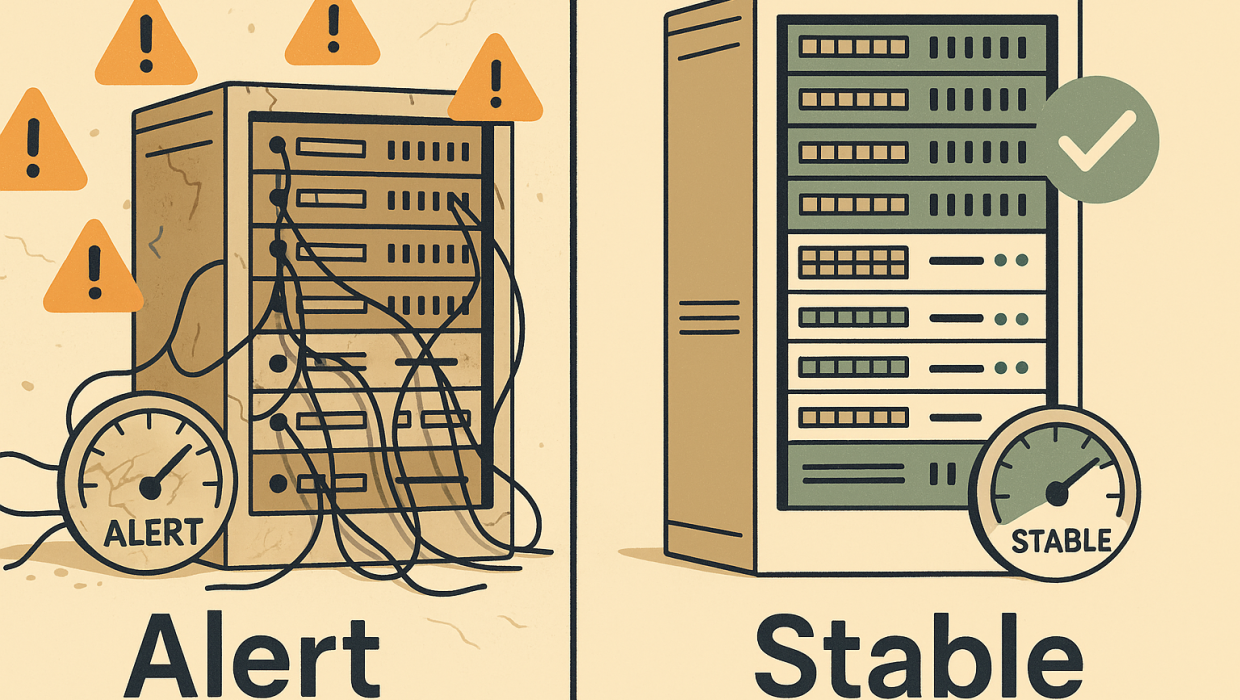
Reactive IT has a seductive logic: if nothing is broken, why spend money fixing it? The problem is that “nothing is broken” is rarely true — it’s just that nothing has broken visibly yet. Aging servers, unpatched software, fragmented backup systems, and inconsistent access controls accumulate quietly until a single failure — a ransomware event, a server crash during a product launch, a vendor outage with no failover — turns into a multi-day operational crisis.
The math is not close. Emergency IT remediation typically costs three to five times more than the maintenance that would have prevented it, before you even count lost productivity, missed deadlines, or client trust damaged by an outage they had to notice from the outside. For agencies and B2B service firms in particular, infrastructure problems don’t stay internal — they show up in client-facing deliverables, delayed campaigns, and support tickets nobody wants to explain.
What Proactive Infrastructure Management Actually Means
Proactive infrastructure management is the discipline of continuously monitoring, maintaining, and optimizing your technology environment before problems surface — not after. It covers patch management, network monitoring, backup verification, capacity planning, and security hardening as ongoing operational rhythms rather than annual projects.
The distinction matters because most companies believe they’re already doing this when what they actually have is scheduled maintenance with no real visibility between check-ins. True proactive management means someone — or some system — is watching your infrastructure in near real time, flagging anomalies, and acting on early warning signs.
From Reactive Firefighting to Predictable Operations
The shift from reactive to proactive isn’t just a change in tooling; it’s a change in posture. Reactive IT teams measure success by how fast they resolve incidents. Proactive teams measure success by how few incidents occur in the first place — and by how predictable operating costs become when surprise emergencies stop eating the budget.
This is where a well-designed managed IT services partnership earns its keep. Instead of a break-fix relationship where your vendor only appears when something has already failed, you get continuous oversight, scheduled infrastructure reviews, and a clear escalation path before small issues become large ones.
Why This Belongs at the Center of Your IT Strategy
For CTOs and agency owners, the temptation is to treat infrastructure as a cost center to be minimized rather than a strategic asset to be optimized. That framing gets the priorities backward. Every growth initiative — a new product launch, a client onboarding surge, a shift to hybrid work — depends on infrastructure that can absorb the load without buckling.
An IT strategy that doesn’t explicitly prioritize proactive infrastructure management is, by default, a strategy built on hope. It assumes the servers will hold, the backups will work when needed, and the security patches were applied on schedule. Those assumptions are exactly the kind of unexamined risk that a serious technology partner should be helping you eliminate, not ignore.
This is also where infrastructure decisions intersect with everything else in the technology stack. Custom software solutions, automated workflows, and client-facing platforms all inherit the stability — or instability — of the infrastructure underneath them. A brilliant automation build means little if the servers running it go down every quarter.
The Diagnosis-Before-Build Difference
Too many infrastructure conversations start with a vendor pitching a solution before anyone has properly diagnosed the problem. New firewall, new backup platform, new monitoring dashboard — sold before anyone has mapped what’s actually failing, where the real exposure sits, or what the business genuinely needs to function reliably.
We take the opposite approach. Before recommending a single tool or contract, we assess your current environment: hardware age and lifecycle, patch cadence, backup integrity, password and access hygiene, network architecture, and where single points of failure are hiding in plain sight. The goal isn’t to sell you more infrastructure — it’s to make the infrastructure you already depend on boring, in the best possible sense: predictable, monitored, and quietly reliable.
The goal isn’t to sell you more infrastructure — it’s to make the infrastructure you already depend on boring, in the best possible sense: predictable, monitored, and quietly reliable.
That diagnostic-first approach also determines how automation fits into the picture. Once infrastructure is stable, there’s often a compelling case for layering in AI and automation to handle monitoring alerts, routine maintenance tickets, or capacity forecasting — but automation built on top of shaky infrastructure just automates the chaos faster.
Infrastructure Optimization Is a Continuous Discipline, Not a Project
One of the most persistent myths in IT strategy is that infrastructure optimization is something you do once — a migration, an upgrade cycle, a security overhaul — and then move on from. In reality, infrastructure optimization is closer to fitness than surgery. It requires ongoing attention: capacity reviews as usage grows, security patching as new vulnerabilities emerge, and periodic reassessment of whether your current architecture still matches your business’s actual needs.
Consider a mid-sized agency that scales from 20 to 60 employees in eighteen months. The email system, file storage, and VPN setup that worked fine at 20 people will strain — often silently — at 60. Login delays creep in. Backup windows start missing their targets. Nobody notices until a device is lost or a account is compromised and there’s no clean recovery path. Proactive infrastructure management catches these drift patterns early, through regular audits and monitoring, rather than waiting for the breaking point to announce itself.
This is also where infrastructure optimization pays for itself in ways that are easy to underestimate: fewer support tickets, faster onboarding for new hires, and IT costs that scale predictably with headcount instead of spiking unpredictably during growth periods.
What to Look for in a Managed IT Services Partner
Not every managed IT provider actually practices proactive management, even when their marketing says otherwise. A few questions separate genuine proactive partners from reactive vendors wearing a proactive label:
Do they conduct regular infrastructure audits, or only respond when you call? Can they show you monitoring data and trend reports, or only invoices for work already completed? Do they have a documented business continuity and disaster recovery plan specific to your environment, or a generic template? And critically — do they explain why they recommend a given fix, grounded in your actual environment, or do they default to whatever tools they happen to resell?
The organizations getting this right tend to treat infrastructure work the way they’d treat any other strategic function — with clear reporting, defined service levels, and a partner who explains tradeoffs rather than issuing verdicts. You can see how this plays out in practice across a range of client environments in our case studies, where infrastructure stabilization consistently precedes any larger digital transformation work.
Making the Shift
If your organization is still operating in reactive mode, the shift doesn’t need to happen all at once. Start with an honest audit: when was your backup system last tested with an actual recovery drill, not just a completion notification? How current are your patch cycles? Is there a single person who holds critical infrastructure knowledge that would walk out the door with them?
From there, prioritize based on risk and business impact rather than convenience. Security patching and backup verification tend to offer the highest risk reduction per dollar spent, followed by monitoring and capacity planning. Larger architectural changes — cloud migration, network redesign — should follow, not precede, that foundational work.
This sequencing reflects a broader point about how we approach technology decisions generally, outlined in more depth on our technology philosophy page: tools should follow diagnosis, not the other way around.
If you’re evaluating whether your current infrastructure approach is quietly putting your business at risk, that’s a conversation worth having before the next outage forces it. Start a conversation with our team and we’ll walk through what a genuinely proactive infrastructure strategy could look like for your environment.
The Bottom Line
Proactive infrastructure management isn’t a luxury reserved for enterprises with unlimited IT budgets — it’s a discipline available at almost any scale, and one that pays for itself through avoided crises alone. The organizations that treat infrastructure as a strategic priority, rather than an afterthought, are the ones that scale smoothly, recover quickly when something does go wrong, and spend their technology budget on growth instead of damage control.
An IT strategy without a proactive infrastructure component isn’t really a strategy — it’s a bet that nothing will go wrong before someone gets around to fixing it. Given what’s at stake, that’s rarely a bet worth making.
RELATED QUESTIONS
What is proactive infrastructure management?
Proactive infrastructure management is the ongoing practice of monitoring, maintaining, and optimizing IT systems before problems occur, rather than responding after something fails. It includes continuous network monitoring, regular patching, backup verification, and capacity planning as standard operational routines. The goal is preventing outages and security incidents rather than reacting to them after the fact.
How is proactive IT management different from managed IT services?
Managed IT services is the broader relationship or contract under which a provider handles your technology environment, while proactive management describes the operating philosophy behind how that work gets done. A managed IT provider can still operate reactively, only responding when something breaks, unless proactive monitoring, auditing, and maintenance are explicitly built into the engagement. The best managed IT partnerships treat proactive management as the default, not an upgrade.
How much does reactive IT actually cost a business?
Emergency IT remediation typically costs three to five times more than the preventive maintenance that would have avoided the issue, and that figure doesn’t include lost productivity, missed deadlines, or client trust damaged by visible outages. For client-facing businesses like agencies, infrastructure failures often become customer-facing problems, compounding the financial impact well beyond the direct repair cost.
What should I look for when choosing a proactive IT infrastructure partner?
Look for a partner who conducts regular infrastructure audits rather than only responding to problems, and who can show monitoring data and trend reports instead of just invoices for completed repairs. They should have a documented, environment-specific business continuity and disaster recovery plan, and should explain the reasoning behind recommendations rather than defaulting to whatever tools they resell. A genuinely proactive partner diagnoses before proposing solutions.
Is infrastructure optimization a one-time project or an ongoing process?
Infrastructure optimization is an ongoing process, not a one-time project. As a business grows, adds employees, or adopts new tools, infrastructure that once worked well can quietly become inadequate, showing up as slow logins, missed backup windows, or security gaps. Regular audits and continuous monitoring catch this drift early, before it turns into a costly failure.
Ready to Move From Reactive IT to a Proactive Infrastructure Strategy?
Start a conversation with Sapiens + Machines to discuss your goals, challenges, and next steps.