Every B2B leader has heard the pitch: automate everything, cut headcount, let the algorithm handle client relationships. It’s a seductive story, and it’s also the wrong one. The organizations actually seeing results from AI-driven automation aren’t using it to replace the humans who manage client relationships — they’re using it to give those humans back the time and information they need to do their best work. That distinction is the difference between a technology rollout that clients notice and one that quietly makes everything better.
The Client Relationship Problem Nobody Talks About
Ask any account director, CTO, or agency owner what actually erodes client trust, and the answer is rarely “we didn’t use enough AI.” It’s slower things: the status update that arrives a day late, the renewal conversation that starts with a surprise instead of a heads-up, the support ticket that bounces between three people before anyone actually reads it. These are workflow failures, not relationship failures — but clients experience them as relationship failures every time.
This is where most automation conversations go wrong. Companies buy a tool, bolt it onto an existing process, and wonder why nothing improved. The tool didn’t fail; the diagnosis did. Before any system gets built, you need a clear picture of where information actually breaks down between teams, tools, and the client — not where you assume it does.
What AI-Driven Automation Actually Changes
Done properly, AI-driven automation doesn’t sit on top of your client relationships as a layer of chatbots and canned responses. It sits underneath them, quietly making sure the right person has the right information at the right moment. That’s a structural change, not a cosmetic one, and it shows up in three specific places.
From Reactive to Predictive
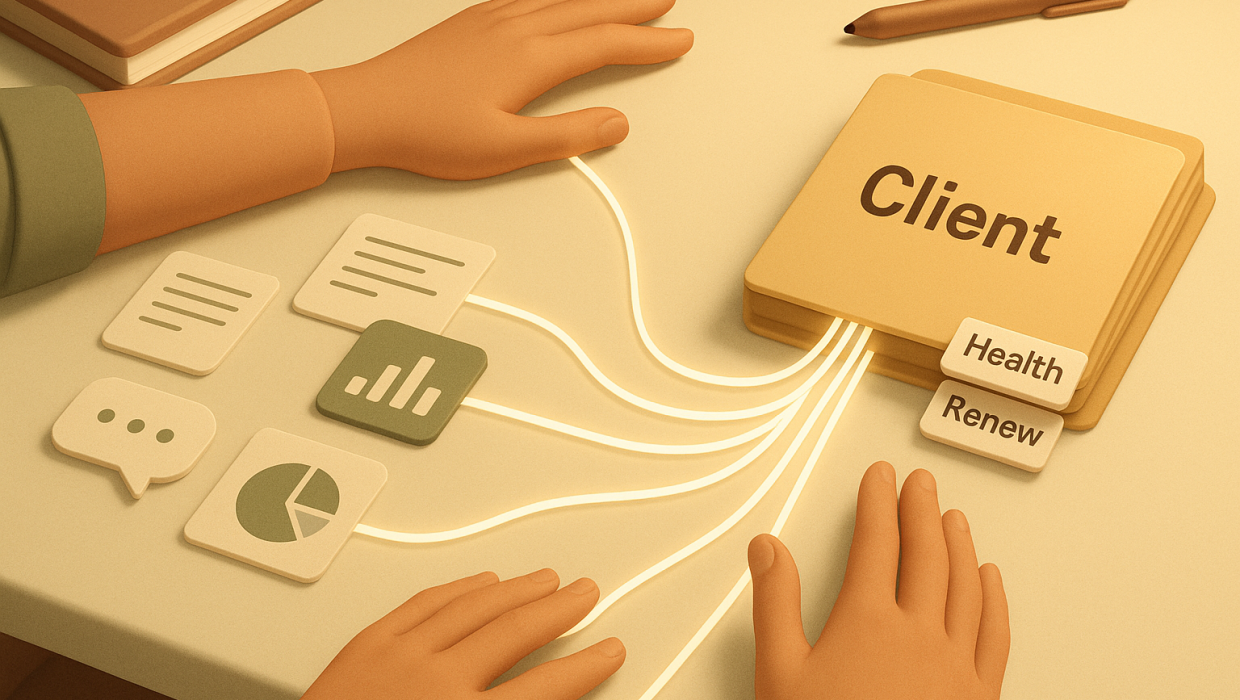
Most client-facing teams operate in reaction mode: a client emails, someone responds; a contract nears renewal, someone scrambles to prepare. Intelligent systems flip that sequence. By connecting CRM data, usage patterns, and communication history, automation can flag a cooling account, a stalled onboarding, or a support pattern that predicts churn — weeks before a human would have caught it manually. The account manager still makes the call on what to do. The system’s job is simply to make sure they’re looking at the right account at the right time.
The Data Trust Problem
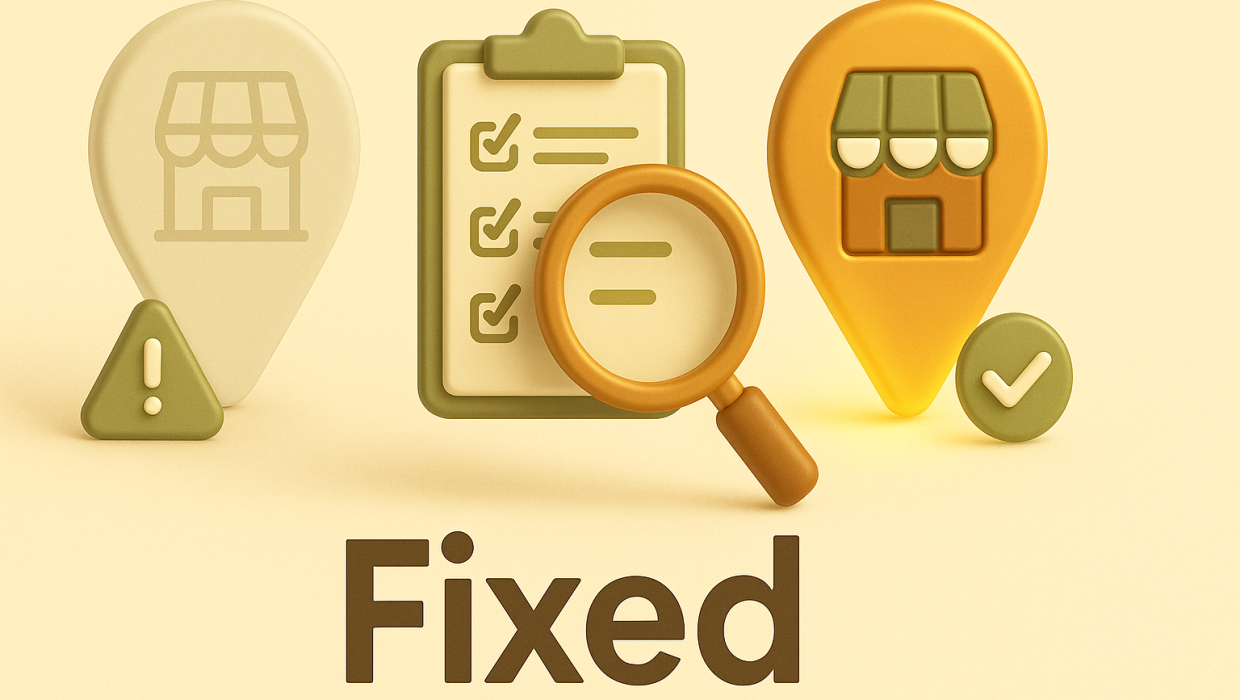
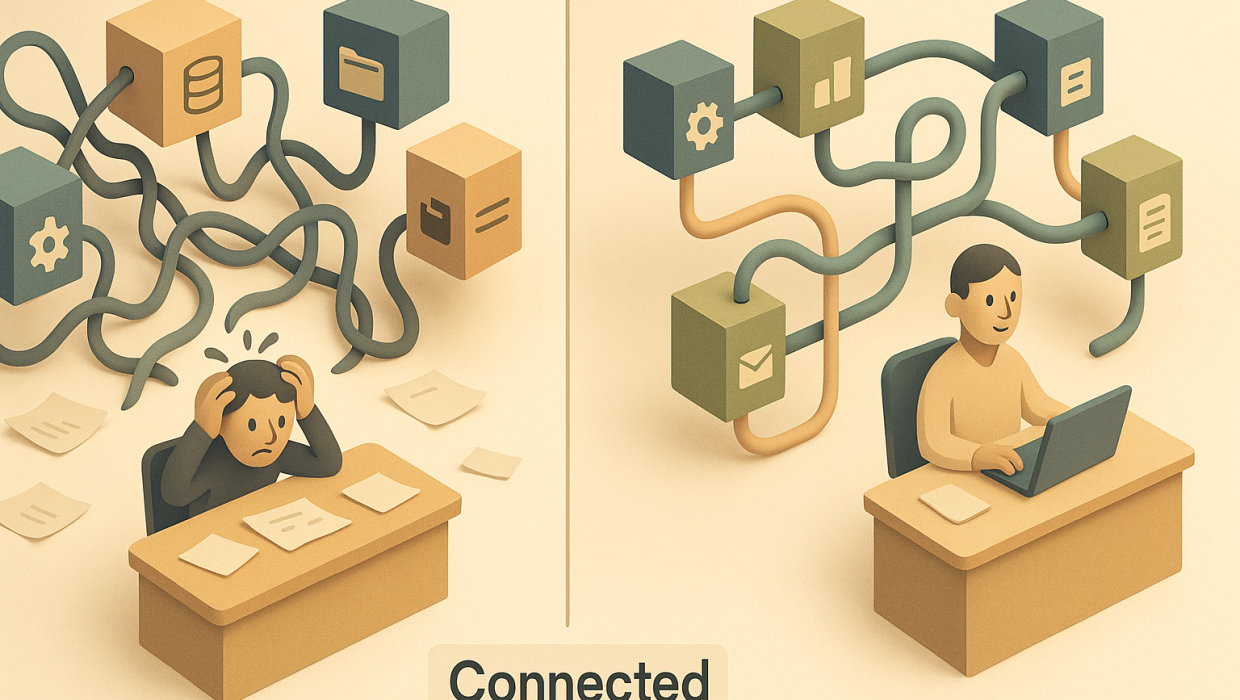
None of this works if the underlying data is bad. We’ve walked into more than one engagement where a client’s CRM, support platform, and billing system each told a slightly different story about the same account. Automating on top of inconsistent data doesn’t fix the inconsistency — it just executes bad decisions faster. This is why any serious AI-driven automation initiative has to start with an honest audit of where data lives, how clean it is, and whether systems are actually talking to each other before a single workflow gets automated.
Workflow Optimization That Clients Can Feel
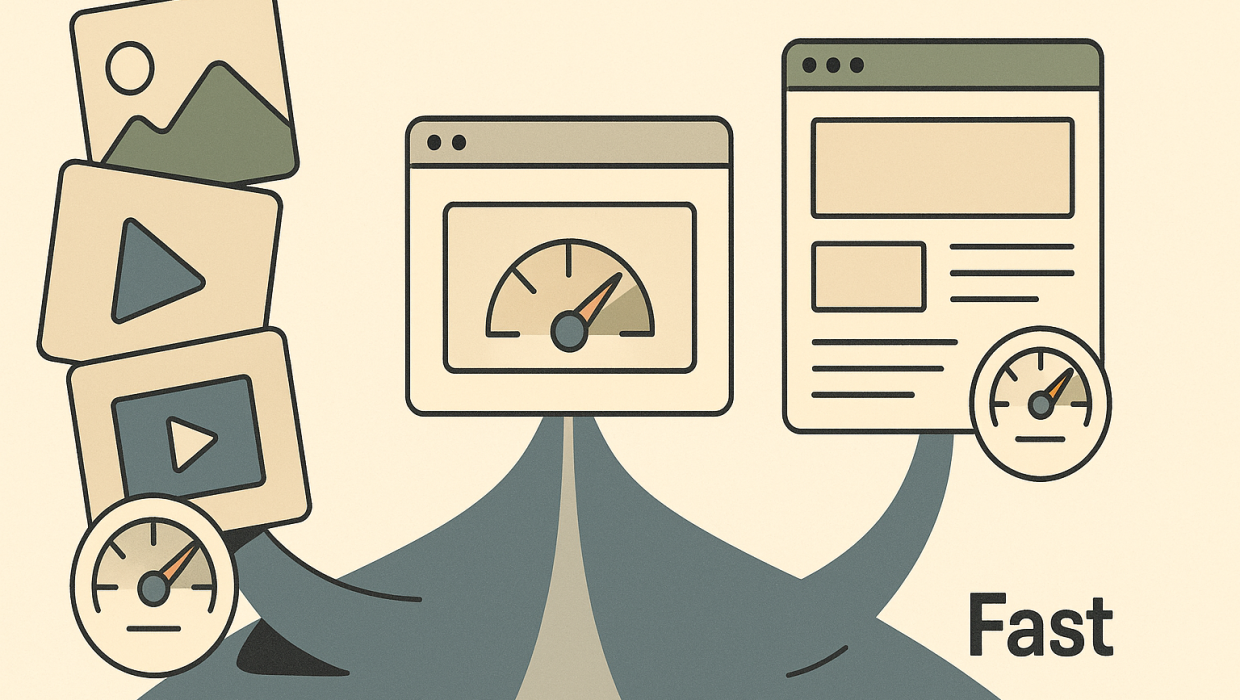
The best test of whether automation is working isn’t an internal efficiency metric — it’s whether the client notices anything changed at all, other than things getting smoother. When workflow optimization is done well, proposals go out faster, follow-ups never slip, and account teams walk into renewal conversations already knowing the answer to the question the client is about to ask. That’s the quiet, compounding value of getting the plumbing right.
Diagnosis Before Build: Why Order Matters
There’s a reason we don’t start engagements by recommending a platform. Every enterprise we’ve worked with has a slightly different mix of legacy systems, team habits, and client expectations, and a tool that transformed one company’s client relationships can do nothing for another’s — or actively make things worse — if it’s dropped in without understanding the existing workflow first.
Diagnosis-before-build means mapping the actual client journey: every handoff, every system a piece of information touches, every place a human currently has to manually reconcile data that should already be connected. Only after that map exists does it make sense to talk about what to automate, what to leave alone, and what needs a human checkpoint no matter how advanced the technology gets. This is also where a lot of well-intentioned automation projects go sideways — teams automate the parts that are easiest to automate, rather than the parts that actually cause the client pain.
We’ve seen this play out concretely in our own case studies: the highest-impact automation projects were rarely the most technically ambitious ones. They were the ones that targeted a specific, named point of friction in the client relationship and solved it precisely.
Where This Shows Up in Practice
For a B2B enterprise, AI-driven automation tends to concentrate in a handful of high-friction zones:
Client onboarding. New account setup often involves the same information being entered into three or four systems by three or four different people. Automating that handoff doesn’t just save time — it eliminates the version of “we already told you this” that damages trust in the first thirty days of a relationship.
Account health monitoring. Instead of a quarterly business review being the first time anyone notices an account is struggling, connected systems can surface early warning signs continuously, giving account teams room to intervene rather than explain.
Proposal and reporting cycles. Recurring reports and renewal materials are prime automation candidates, particularly when they draw from the same underlying data every cycle. This is often where custom software and workflow automation intersect — a purpose-built internal tool can pull from a CRM, a project management system, and a billing platform to assemble a draft report in minutes instead of days.
Support triage. Not every support request needs a senior person, but every support request deserves to reach the right person quickly. Intelligent routing, informed by past ticket patterns, does that without a client ever knowing the routing happened.
In each case, the goal isn’t to remove a human from the interaction. It’s to remove the friction that stood between the human and doing their job well.
The Human Judgment Layer
This is worth stating plainly, because it’s the part that gets lost in most automation marketing: the technology’s job is to make the human’s judgment sharper, faster, and better-informed — not to replace it. A predictive model can flag that an account looks at risk. It cannot decide whether the right move is a discount, a strategy conversation, or simply patience. That call requires context, relationship history, and judgment that no system currently has — and honestly, may never have.
the technology’s job is to make the human’s judgment sharper, faster, and better-informed — not to replace it
This matters for enterprise buyers evaluating technology partners, because it’s a useful filter. Any vendor promising to fully automate client relationships is either overselling the technology or underselling the relationship. The partners worth working with are the ones asking where automation should stop, not just where it can start.
Building for Scale Without Losing the Personal Touch
Growth is usually where client relationships start to fray — not because anyone stops caring, but because the systems that worked for fifty accounts start breaking at five hundred. This is precisely the point where AI-driven automation earns its keep: it lets a growing account team maintain the same level of attentiveness at scale that they used to be able to offer manually.
That said, scaling automation well requires the same systems thinking that applies everywhere else in enterprise technology. It needs to connect cleanly to existing infrastructure — which is why automation projects so often surface, and sometimes resolve, deeper IT infrastructure questions along the way. A workflow automation initiative that ignores the underlying systems architecture tends to produce fragile results: fast in a demo, brittle in production.
Getting the Sequence Right
If there’s one operating principle worth taking from all of this, it’s that AI-driven automation succeeds or fails based on sequence, not sophistication. Diagnose the actual friction point in the client relationship. Confirm the data underneath it is trustworthy. Automate the narrow, high-impact process rather than the whole workflow at once. Keep a human decision point wherever judgment, not just data, is required. Measure whether the client experience actually improved — not just whether a dashboard says it did.
Enterprises that follow that sequence tend to end up with automation clients never notice directly, except in the form of faster answers, fewer dropped balls, and account teams who seem to always be one step ahead. Enterprises that skip the sequence end up with expensive software that nobody trusts, including the people who bought it.
If your client relationships are being slowed down by systems that don’t talk to each other, or by manual processes standing between your team and the information they need, it’s worth having that conversation before choosing a tool. We’d be glad to help you map it out — start a conversation with us and we’ll tell you honestly whether automation is even the right first move for where you are.
RELATED QUESTIONS
What is AI-driven automation in the context of client relationships?
AI-driven automation in client relationships refers to using intelligent systems to handle repetitive, data-heavy tasks — like onboarding, reporting, and account health monitoring — so that account teams can focus on judgment-based work like strategy and trust-building. It’s designed to support human decision-making with better, faster information, not replace the human relationship itself.
Can AI automation replace account managers or client relationship teams?
No, and the businesses that try this approach typically see relationships suffer rather than improve. AI can flag risks, surface data, and handle repetitive tasks, but decisions that require context, history, and judgment — like how to handle a struggling account — still require a human. The most effective automation strategies keep people in the decision-making seat and use technology to inform their choices.
Why do automation projects fail even with good technology?
Automation projects usually fail because they skip diagnosis and jump straight to implementation, automating whichever process is easiest rather than the one causing the most friction. Poor underlying data quality is another common cause, since automating on top of inconsistent systems just executes bad decisions faster. Success depends on mapping the real workflow first, then automating narrowly and deliberately.
What business processes benefit most from workflow automation?
Client onboarding, account health monitoring, recurring reporting cycles, and support ticket triage are among the highest-impact areas for workflow automation in B2B relationships. These are typically high-friction, repetitive processes where manual data re-entry or delayed information sharing directly damages client trust. Automating these specific points tends to produce more noticeable results than broad, unfocused automation efforts.
How should a company decide what to automate first?
Companies should start by mapping their actual client journey to identify where specific friction points occur, rather than assuming which processes need automation. The right starting point is whichever process causes the most real client-facing pain, not the one that’s technically easiest to automate. This diagnosis-first approach prevents costly tools from being built for the wrong problem.
Ready to Automate the Busywork, Not the Relationship?
Start a conversation with Sapiens + Machines to discuss your goals, challenges, and next steps.