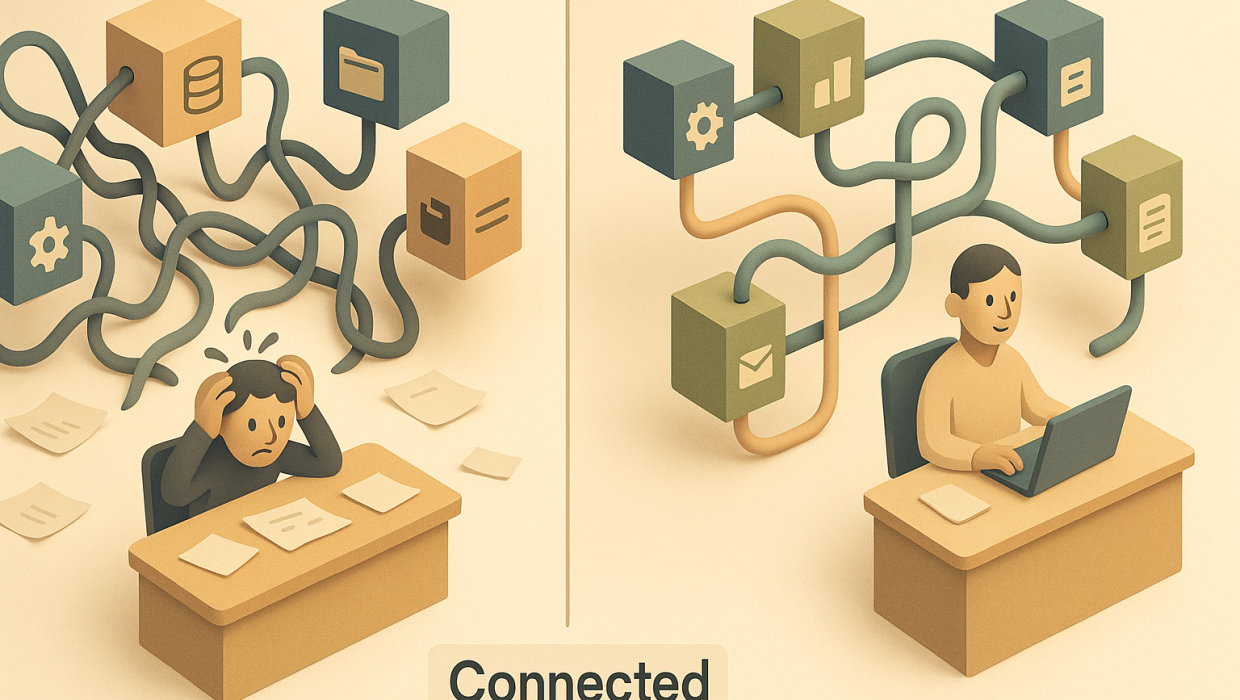
If your marketing team is generating leads but your pipeline still feels thin, the problem probably isn’t top-of-funnel volume. It’s what happens after someone raises their hand. A lead nurturing strategy that looks healthy on a dashboard — decent open rates, steady form fills, a CRM full of contacts — can still be quietly failing to convert, and most B2B organizations don’t notice until a quarter of stalled revenue forces the question.
The uncomfortable truth is that lead nurturing failure rarely announces itself. It hides behind vanity metrics. Marketing sees engagement; sales sees silence. Somewhere between those two views, prospects are losing interest, losing trust, or simply losing track of why they cared in the first place.
The Silent Failure Points in Your B2B Sales Funnel
Every B2B sales funnel has a handful of places where momentum quietly dies. Understanding where yours is leaking is more useful than any generic nurture template.
Leads Go Cold Before Sales Ever Sees Them
In a lot of organizations, a lead fills out a form, gets dropped into a generic email sequence, and waits days — sometimes weeks — before a human being acknowledges they exist. By the time sales reaches out, the prospect has forgotten the context, evaluated two competitors, or lost the internal champion who requested the demo in the first place. Speed-to-lead isn’t a nice-to-have metric; it’s often the single biggest predictor of whether a prospect converts at all.
Your CRM Is a Graveyard, Not a Pipeline
A CRM full of unqualified, duplicated, or stale records isn’t a growth engine — it’s a filing cabinet. When sales reps have to manually sift through records to figure out who’s worth calling, good leads get buried under noise. This is usually a sign that lead scoring, routing rules, and data hygiene were never properly architected — they were bolted on after the fact. A properly built lead generation system treats routing and qualification as core infrastructure, not an afterthought.
Five Signs Your Lead Nurturing Strategy Is Failing to Convert
If you’re trying to diagnose the health of your own nurture program, these are the patterns worth watching for.
1. High open rates, flat pipeline. Your emails perform well by every surface-level metric, but sales-qualified leads haven’t moved. This usually means your content is interesting but not decision-relevant — it entertains without advancing the buyer’s actual evaluation.
2. Sales and marketing disagree about lead quality. If your sales team routinely says “these leads aren’t ready” while marketing insists they’re delivering on target, the two teams are likely using different definitions of a qualified lead — and no one has ever reconciled them in writing.
3. Long, unexplained gaps in the funnel. A prospect downloads a whitepaper, then disappears for six weeks before a demo request. That gap isn’t neutral; it’s a sign the nurture sequence isn’t doing its job of maintaining relevance and prospect conversion momentum during the consideration stage.
4. One-size-fits-all messaging. If every lead — regardless of industry, company size, or where they entered the funnel — receives the same three-email drip, you’re nurturing an average prospect who doesn’t exist. Real lead engagement requires segmentation based on behavior and fit, not just a static list.
5. No feedback loop from closed-won or closed-lost deals. If your nurture content hasn’t changed in a year despite dozens of deals closing or dying, you’re not learning from your own funnel. That’s a strategy running on autopilot, not intelligence.
Why Generic Nurture Sequences Kill Lead Engagement
Most nurture programs are built around a content calendar, not a buyer’s actual decision-making process. That’s backwards. A prospect evaluating a six-figure software purchase moves through distinct psychological stages — problem awareness, solution exploration, vendor comparison, internal buy-in, risk assessment — and each stage requires a different kind of message. Sending the same “here’s why we’re great” email to someone in week one and someone in week eight ignores everything you actually know about where they are.
This is where automation, done well, becomes a force multiplier rather than a crutch. Behavioral triggers — a pricing page visit, a case study download, a second stakeholder joining a webinar — should change what a prospect receives next. Done thoughtfully, this kind of orchestration lives at the intersection of workflow automation and human judgment: the system flags intent and adjusts sequencing, but a real strategist decides what “ready” actually looks like for your specific buyer. Automation without that judgment just sends the wrong message faster.
Diagnosing Before You Rebuild
It’s tempting to respond to underperformance by buying new martech or rewriting every email in the sequence. Resist that instinct. Most nurture failures trace back to a small number of root causes — unclear lead definitions, broken handoffs between marketing and sales, missing behavioral data, or scoring models that were never validated against actual closed deals.
This is why we start every engagement with diagnosis, not tools. Before recommending a single platform change, we map the entire journey from first touch to closed deal, identify exactly where prospects disengage, and pressure-test your current lead scoring against real outcomes. In several of our client engagements documented in our case studies, the biggest lift came not from new software but from fixing a scoring model that had been quietly misrouting high-intent leads to the wrong sales reps for over a year.
A lead nurturing strategy doesn’t fail because of bad content — it fails because it optimizes for volume when it should be optimizing for readiness.
A lead nurturing strategy doesn’t fail because of bad content — it fails because it optimizes for volume when it should be optimizing for readiness.
If your team is at this point — data everywhere, no clear picture of why conversion has stalled — it’s worth having a conversation before committing budget to another platform migration. You can start a conversation with us about what a proper funnel audit would actually surface.
What a Working Lead Nurturing Strategy Actually Looks Like
A strategy that converts shares a few consistent traits, regardless of industry or deal size.
Clear, shared lead definitions. Marketing and sales agree, in writing, on what makes a lead marketing-qualified versus sales-qualified — and that definition is reviewed quarterly against actual close rates, not set once and forgotten.
Behavior-driven segmentation. Prospects are grouped and messaged based on what they’ve actually done — pages visited, content consumed, roles represented — not just which list they landed on.
Fast, intelligent routing. The moment a lead crosses a qualification threshold, it’s routed to the right rep with full context, not dropped into a generic queue. This is core to what a well-built lead routing and CRM integration system should deliver — the technology should make sales faster and sharper, not replace their judgment about which deals are worth chasing.
A CRM that reflects reality. Data hygiene isn’t glamorous, but a CRM with accurate, deduplicated, enriched records is the foundation everything else depends on. If your underlying systems can’t talk to each other cleanly, even the best nurture content will underperform — which is often a signal that the issue sits deeper in your systems architecture than in your marketing copy.
Continuous feedback from the sales floor. The reps closing deals every week know exactly which nurture touches actually influenced a buyer’s decision. That intelligence needs a formal channel back into the marketing team, not an occasional Slack complaint.
The Cost of Waiting
Every month a broken nurture strategy runs uncorrected, it compounds. Leads that could have converted go cold and get re-engaged by a competitor. Sales reps lose confidence in marketing-sourced leads and start hunting on their own, fragmenting your pipeline data further. And the CRM, unchecked, accumulates more noise that makes the eventual fix harder and more expensive.
The organizations that convert well aren’t the ones with the most sophisticated tech stack — they’re the ones that diagnosed their actual failure points before building anything new. If you suspect your funnel has a leak somewhere between first contact and closed deal, the fastest path forward isn’t guessing. It’s mapping the journey, testing your assumptions against real data, and rebuilding only the parts that are genuinely broken.
RELATED QUESTIONS
What are the biggest signs a lead nurturing strategy isn’t working?
The clearest signs are high engagement metrics (opens, clicks) paired with flat pipeline growth, ongoing disagreement between sales and marketing about lead quality, long unexplained gaps between touchpoints, generic one-size-fits-all messaging, and no feedback loop from closed deals back into the nurture content. Any one of these on its own is worth investigating, but two or more together usually indicates a structural problem rather than a content problem.
Why do B2B leads go cold even after they’ve shown interest?
Leads go cold most often because of slow response times, irrelevant follow-up content, or a lack of segmentation that treats every prospect the same regardless of where they are in their decision process. A prospect who filled out a form expecting quick, relevant follow-up will disengage if they instead receive a delayed response or a generic drip sequence that doesn’t reflect their actual intent.
How is lead scoring different from lead routing?
Lead scoring assigns a value to a prospect based on their fit and behavior, indicating how likely and how ready they are to buy. Lead routing is the process of getting that scored lead to the right salesperson quickly and with the right context. Both need to work together — a well-scored lead that sits in the wrong queue for days is just as wasted as an unscored lead sent to a random rep.
Should we buy new marketing automation software to fix our nurture strategy?
Not necessarily, and often not first. Most nurture failures stem from unclear lead definitions, poor data hygiene, or broken handoffs between marketing and sales — problems that new software won’t fix on its own. A proper diagnosis of where prospects are actually disengaging should come before any platform investment, since the right fix is sometimes a process or data change rather than a new tool.
How often should a B2B company review its lead nurturing strategy?
At minimum, quarterly — reviewing scoring models, segmentation rules, and content performance against actual closed-won and closed-lost outcomes. Buyer behavior, competitive positioning, and internal sales processes all shift over time, so a nurture strategy that isn’t revisited regularly will gradually drift out of sync with how prospects actually make decisions.
Ready to Diagnose Why Your Leads Are Going Cold?
Start a conversation with Sapiens + Machines to discuss your goals, challenges, and next steps.