Somewhere inside your enterprise right now, a pattern is forming. A subtle shift in customer behavior. A slow leak in supply chain efficiency. A churn signal buried in a support ticket queue nobody has time to read closely. That’s the quiet cost of overlooking AI-driven predictive analytics — not a dramatic failure, but a thousand small opportunities passing unnoticed while your teams make decisions from last quarter’s dashboards.
For the CTOs, marketing directors, and agency owners evaluating technology partners today, the question isn’t whether predictive analytics works. That debate is settled. The real question is whether your organization has the data discipline, the systems architecture, and the operational will to put it to work before a competitor does it first.
What AI-Driven Predictive Analytics Actually Does
Strip away the buzzwords and predictive analytics is fundamentally about pattern recognition at scale. Machine learning models ingest historical and real-time data — transaction records, customer interactions, equipment sensor readings, campaign performance — and identify statistical relationships that humans would take months to spot manually, if they spotted them at all. The output isn’t a guarantee. It’s a probability-weighted forecast that tells you where to look next.
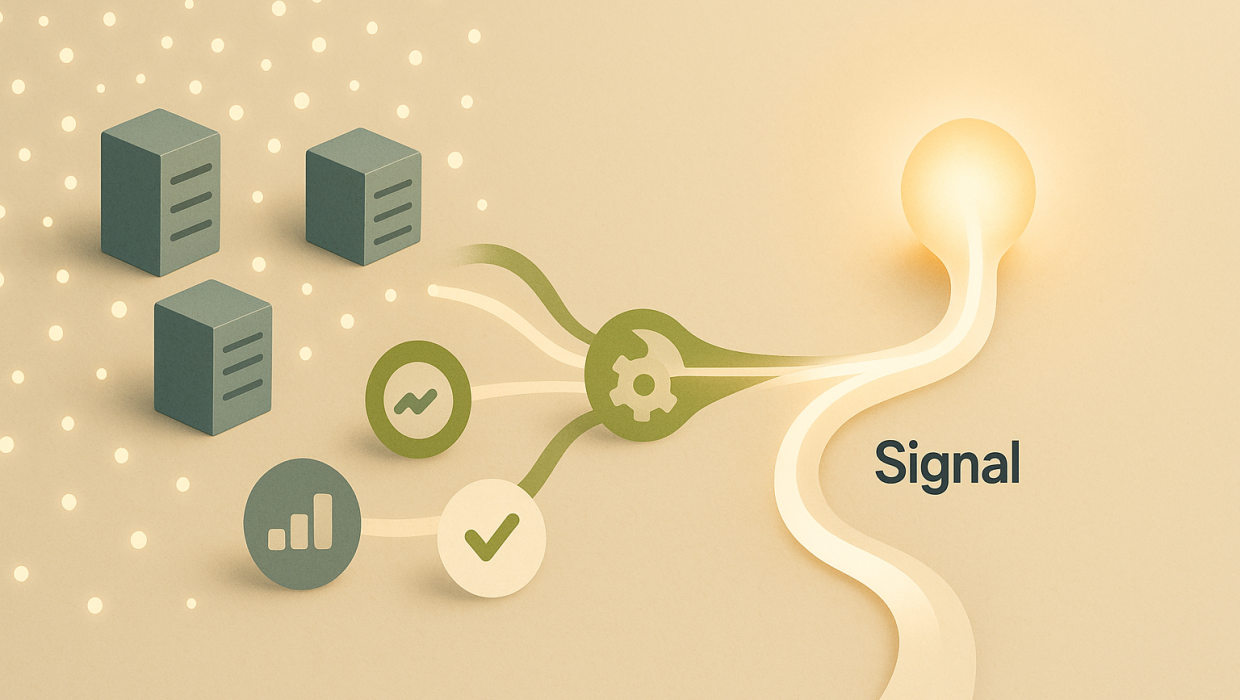
In practice, this shows up in forms most B2B leaders already recognize but may not have connected to a single discipline: lead scoring that ranks prospects by likelihood to close, demand forecasting that adjusts inventory before a shortage hits, churn models that flag at-risk accounts weeks before a cancellation email arrives, and predictive maintenance schedules that catch equipment failure before it takes down a production line. Each of these is AI-driven predictive analytics doing the same underlying job: converting historical noise into forward-looking signal.
The Real Predictive Analytics Benefits for Enterprises
The predictive analytics benefits that matter most to enterprise leaders aren’t abstract — they’re measured in cycle time, waste reduction, and revenue capture. Sales teams stop chasing cold leads because scoring models tell them which accounts are actually warm. Marketing budgets shift mid-quarter instead of waiting for a post-mortem. Operations teams schedule maintenance on a predictive window instead of a fixed calendar, cutting both downtime and over-servicing.
Turning Data Exhaust Into Decision Fuel
Most enterprises are already generating the data needed for this — CRM entries, website behavior, support logs, transaction histories — but it sits as exhaust rather than fuel. It’s collected, stored, occasionally reported on, and rarely modeled. The gap isn’t data volume; it’s the absence of a system built to interrogate that data continuously and route findings to the people who can act on them. This is precisely where enterprise AI integration earns its keep — not as a novelty layer bolted onto existing reporting, but as the connective tissue between raw data and daily decision-making.
Why Enterprise AI Integration Stalls Before It Starts
Here’s what we see repeatedly when enterprises attempt this on their own: they buy a predictive analytics platform before they’ve diagnosed what decision the platform needs to inform. The tool arrives, the dashboards look impressive in the sales demo, and six months later it’s generating scores that no team trusts enough to act on. The failure isn’t the algorithm. It’s sequencing.
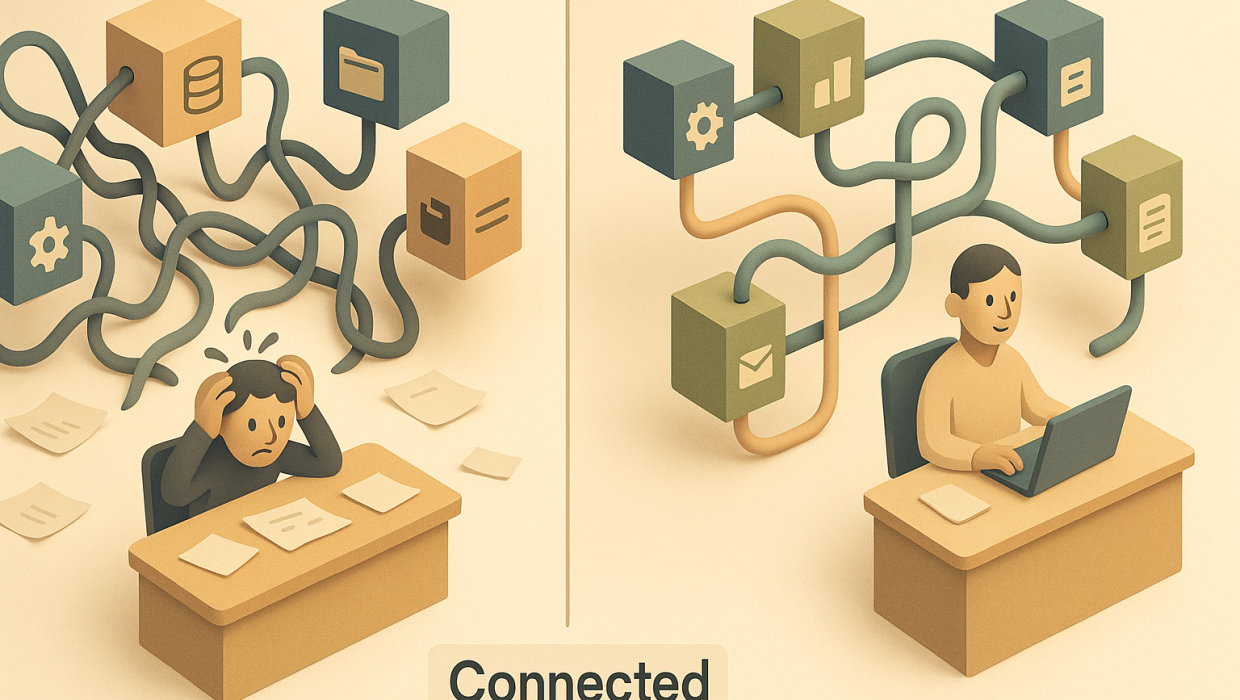
Predictive models are only as credible as the data pipeline underneath them, and most enterprise data lives in silos that were never designed to talk to each other — a CRM that doesn’t sync with the ERP, a marketing automation tool with its own definition of a “qualified lead,” support tickets tagged inconsistently by three different teams. Feeding fragmented, inconsistent data into a predictive model doesn’t produce insight. It produces a confident-sounding number that’s wrong.
The Workflow Automation Layer Nobody Talks About
This is the part of the conversation that gets skipped in most vendor pitches: a prediction is worthless until it’s embedded in a workflow that acts on it automatically or near-automatically. A churn score that lives in a report nobody opens until Monday’s meeting has already lost its value — the moment to intervene passed on Friday. Real return comes from pairing the model with workflow automation that routes the at-risk account to a customer success manager the same day the score crosses a threshold, or that reallocates ad spend the moment a campaign’s predicted performance dips below target. That pairing — prediction plus automated response — is what separates enterprises that talk about AI from enterprises that operationalize it.
That pairing — prediction plus automated response — is what separates enterprises that talk about AI from enterprises that operationalize it.
Diagnosis Before Build: Why We Start With Questions, Not Dashboards
We’ve watched enough failed AI rollouts to know the pattern: a company invests in infrastructure before it has clearly named the business problem it’s solving. The result is technically sophisticated and operationally useless. Our approach inverts that order. Before any model gets built or any platform gets recommended, we spend time understanding what decision your teams are actually struggling to make well — is it lead prioritization, churn prevention, resource allocation, campaign timing — and what data already exists to inform it.
This diagnosis-before-build methodology sounds slower on paper. In practice, it’s faster, because it prevents the single most expensive mistake in enterprise AI: building the wrong thing extremely well. If you’re weighing whether your current systems could even support predictive modeling, that diagnostic conversation is worth having before any procurement decision — and it’s a natural place to start a conversation with a partner who will tell you honestly if you’re not ready yet.
What This Looks Like in Practice
Consider a mid-sized B2B distributor we’ve worked alongside in spirit of the problem, if not always by name in public case studies: sales reps were manually triaging inbound leads based on gut instinct and account size, missing smaller accounts that converted at higher rates and higher lifetime value. A predictive scoring model, fed by cleaned CRM and web engagement data, reordered the queue by actual conversion likelihood. Paired with automated routing, high-probability leads reached a rep within minutes instead of days. The model didn’t replace the sales team’s judgment — it focused that judgment where it mattered most. You can see the pattern play out across different industries in our case studies, where the common thread is never the algorithm itself but the discipline of matching it to a real operational gap.
Building the Right Foundation: Systems, Data, and Trust
Technology Alone Isn’t the Answer
Predictive analytics doesn’t succeed or fail on model accuracy alone — it succeeds or fails on trust. If the sales team doesn’t believe the lead score, they’ll ignore it. If the operations team doesn’t understand why a maintenance window shifted, they’ll override it. Building that trust requires transparency in how models are trained, validation against real outcomes over time, and integration into tools people already use rather than a separate system they have to remember to check.
This is why enterprise predictive analytics initiatives usually succeed or fail on the strength of the underlying technology stack, not just the model itself. Legacy systems that can’t expose clean APIs, reporting tools that can’t ingest real-time signals, and disconnected point solutions all quietly undermine even a well-designed model. A broader look at how your technology stack supports or blocks this kind of intelligence is often the most revealing part of an early diagnostic. In many cases, the missing piece isn’t a new AI tool at all — it’s custom software that bridges systems never designed to share data in the first place.
Getting Started: From Overlooked to Operationalized
The enterprises that treat AI-driven predictive analytics as a bolt-on tool tend to get bolt-on results — a dashboard, a demo, a shelved initiative by year two. The ones that treat it as an operating discipline, backed by clean data, honest diagnosis, and workflows built to act on what the model finds, see something different: decisions that get faster and sharper the longer the system runs, because it keeps learning from outcomes rather than starting from zero each quarter.
If your enterprise has the data but not the system to use it — or the ambition but not yet the diagnosis — that’s exactly the gap worth closing before your next planning cycle, not after. Our AI and automation practice exists precisely for that gap: turning the intelligence already sitting in your systems into decisions your teams can actually make faster.
RELATED QUESTIONS
What is AI-driven predictive analytics in simple terms?
AI-driven predictive analytics is the use of machine learning models to analyze historical and real-time data in order to forecast future outcomes, such as which customers are likely to churn, which leads are likely to convert, or when equipment is likely to fail. Rather than reporting on what already happened, it generates probability-weighted predictions that help teams act before an issue or opportunity fully materializes.
What are the main benefits of predictive analytics for enterprises?
The core predictive analytics benefits for enterprises include faster decision-making, reduced operational waste, better resource allocation, and earlier identification of risk or opportunity. Sales teams can prioritize high-probability leads, operations teams can schedule maintenance before failures occur, and marketing teams can reallocate budget mid-campaign instead of waiting for a post-mortem report.
Why do enterprise AI integration projects often fail?
Enterprise AI integration projects most often fail because organizations buy predictive analytics tools before diagnosing the specific business decision the tool needs to support, and because underlying data lives in disconnected silos that were never designed to share information. The result is a technically functional model producing scores or forecasts that teams don’t trust enough to act on, which makes the investment operationally useless regardless of the algorithm’s accuracy.
How does workflow automation connect to predictive analytics?
Workflow automation is what turns a prediction into an action, and without it, predictive analytics tends to produce reports that sit unread until it’s too late to intervene. For example, a churn score is far more valuable when it automatically routes an at-risk account to a customer success manager the same day, rather than appearing in a weekly report after the opportunity to retain that customer has passed.
How should a company start implementing predictive analytics?
The right starting point is diagnosis, not procurement — identifying the specific decision your teams struggle to make well, and evaluating what data already exists to inform it, before selecting any platform or building any model. This diagnosis-before-build approach prevents the common and costly mistake of building a technically sophisticated system that doesn’t actually address a real operational bottleneck.
Ready to Find Out What Your Data Isn't Telling You Yet?
Start a conversation with Sapiens + Machines to discuss your goals, challenges, and next steps.